
Whether you’ve just broken up a patio, pulled out a sidewalk, or found old bags of mix hardened in your garage, figuring out how to dispose of concrete can be surprisingly frustrating. Most curbside trash services won’t touch it. It’s too heavy, too bulky, and often requires special handling depending on your town’s rules.
The good news is that concrete is one of the most recyclable construction materials out there. You have real options, from recycling facilities and municipal drop-off sites to renting a dumpster that can handle the weight. The right choice depends on how much concrete you’re dealing with and how quickly you need it gone.
At Dump Express, we haul concrete debris across Cape Cod and Plymouth every week. We know which facilities accept it, what the weight limits look like, and how to match you with the right dumpster size so you’re not overpaying. This guide breaks down every practical disposal method, recycling, drop-off, dumpster rental, and more, so you can pick the one that fits your project and move on.
What to know before you dispose of concrete
Before you figure out how to dispose of concrete, a few facts will save you time, money, and a wasted trip to the wrong facility. Concrete isn’t treated the same as regular construction debris. Most disposal sites have specific rules around concrete, and some won’t accept it at all unless it meets certain conditions. Getting clear on these basics upfront keeps you from running into surprises at the gate.
Weight is your first concern
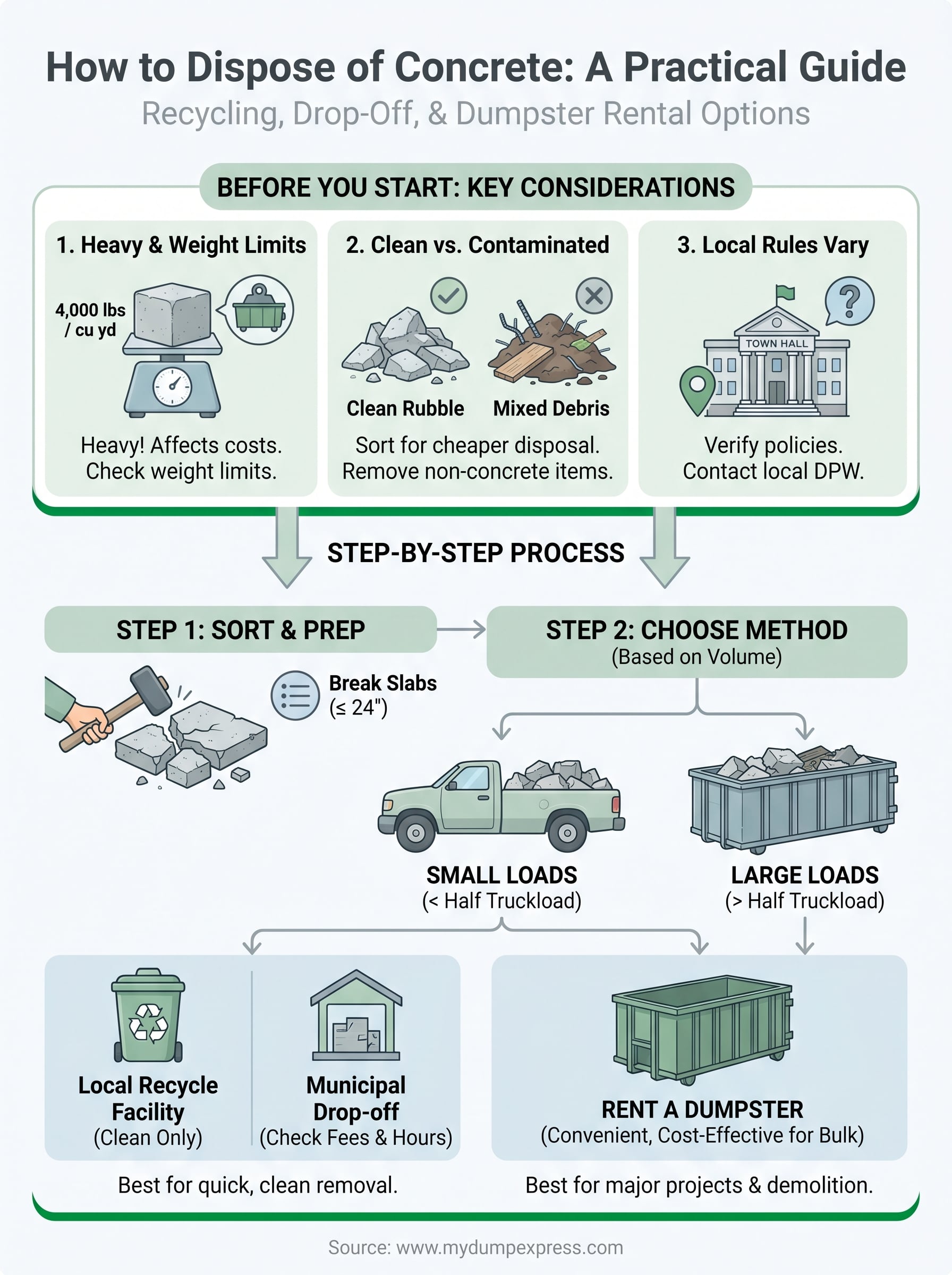
Concrete weighs roughly 4,000 pounds per cubic yard. That number matters because dumpster rentals and haul services come with weight limits, and going over those limits triggers extra charges. A modest pile of broken slabs can weigh far more than you’d expect. Before you schedule anything, estimate your total volume and weight so you can choose the right container size or haul method from the start. Guessing low costs more in the end.
If you’re unsure how much your concrete weighs, assume roughly 2 tons per cubic yard and size your container accordingly to avoid overage fees.
Clean concrete versus contaminated concrete
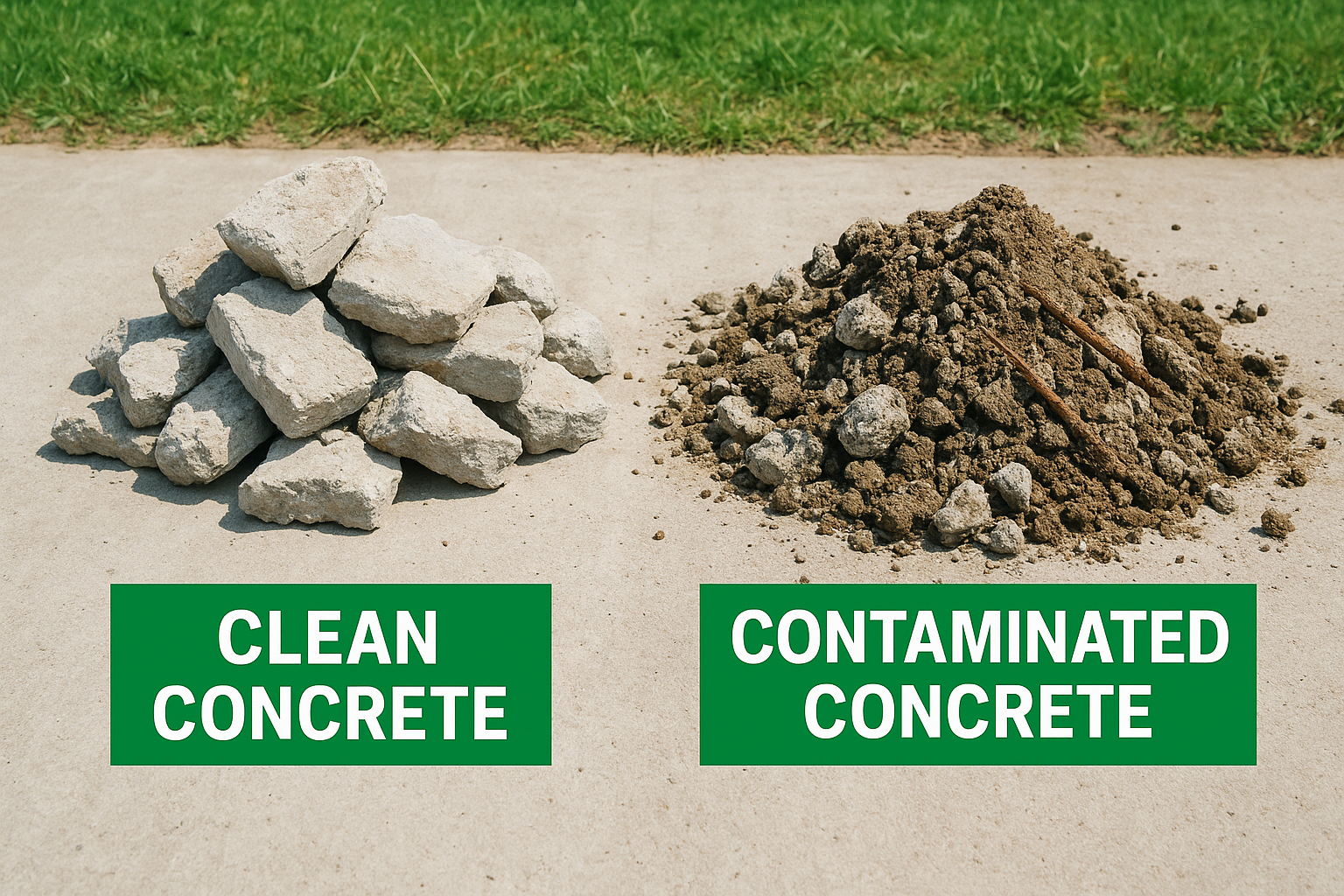
Most recycling facilities only accept clean concrete, meaning slabs or rubble free of attached asphalt, soil, wood, or significant metal rebar. If your concrete is mixed with other materials, your disposal options narrow considerably. Some facilities do accept concrete with embedded rebar, but they typically charge a premium or require you to separate the material before arrival. Knowing exactly what you have before you call saves you from an on-site rejection and an extra haul.
Local rules vary by town
Towns across Cape Cod and the Plymouth area each set their own policies for concrete disposal. Some municipal transfer stations accept small loads of clean residential concrete at no charge or a minimal fee, while others won’t take it at all. Your local Department of Public Works is the fastest way to confirm what your specific town allows. What applies in one town may not apply in the next, so verify before you load up.
Step 1. Sort and prep the concrete
Before you figure out how to dispose of concrete efficiently, you need to know what you’re actually working with. Most recycling centers and transfer stations have strict requirements about what they’ll accept, so doing a quick sort at the site puts you in control before you schedule anything.
Separate clean concrete from mixed debris
Pull out wood, asphalt, dirt, and plastic from your concrete pile before anything else. Clean concrete, meaning slabs and rubble with no attached contaminants, opens up more disposal options and often costs less to haul or drop off. If you have rebar embedded in the slabs, set those pieces aside in a separate pile. Some facilities accept rebar-reinforced concrete, but many don’t, and it helps to know exactly what you’re bringing before you arrive.
Calling ahead to confirm what a facility accepts takes two minutes and can save you an entire extra trip.
Break large slabs into smaller chunks
Large, intact slabs are harder to load, transport, and tip safely at a facility. Break them into pieces no larger than 18 to 24 inches using a sledgehammer or a rented electric jackhammer before loading anything. Smaller pieces also let you stack the load more efficiently in a dumpster or truck bed, which reduces the total number of trips you need to make and helps you stay under weight limits.
Step 2. Choose the right disposal method
Once your concrete is sorted, picking the right disposal method is the decision that saves or costs you the most time. The best option depends on three things: how much concrete you have, whether it’s clean, and how fast you need it gone. Running through these factors before you book anything prevents you from paying for a service that doesn’t fit your actual situation.
Match method to volume
The volume of concrete you have is the clearest guide for how to dispose of concrete correctly. A few broken chunks from a small repair job calls for a completely different approach than a full patio demolition. Use this table to match your load to the right option:
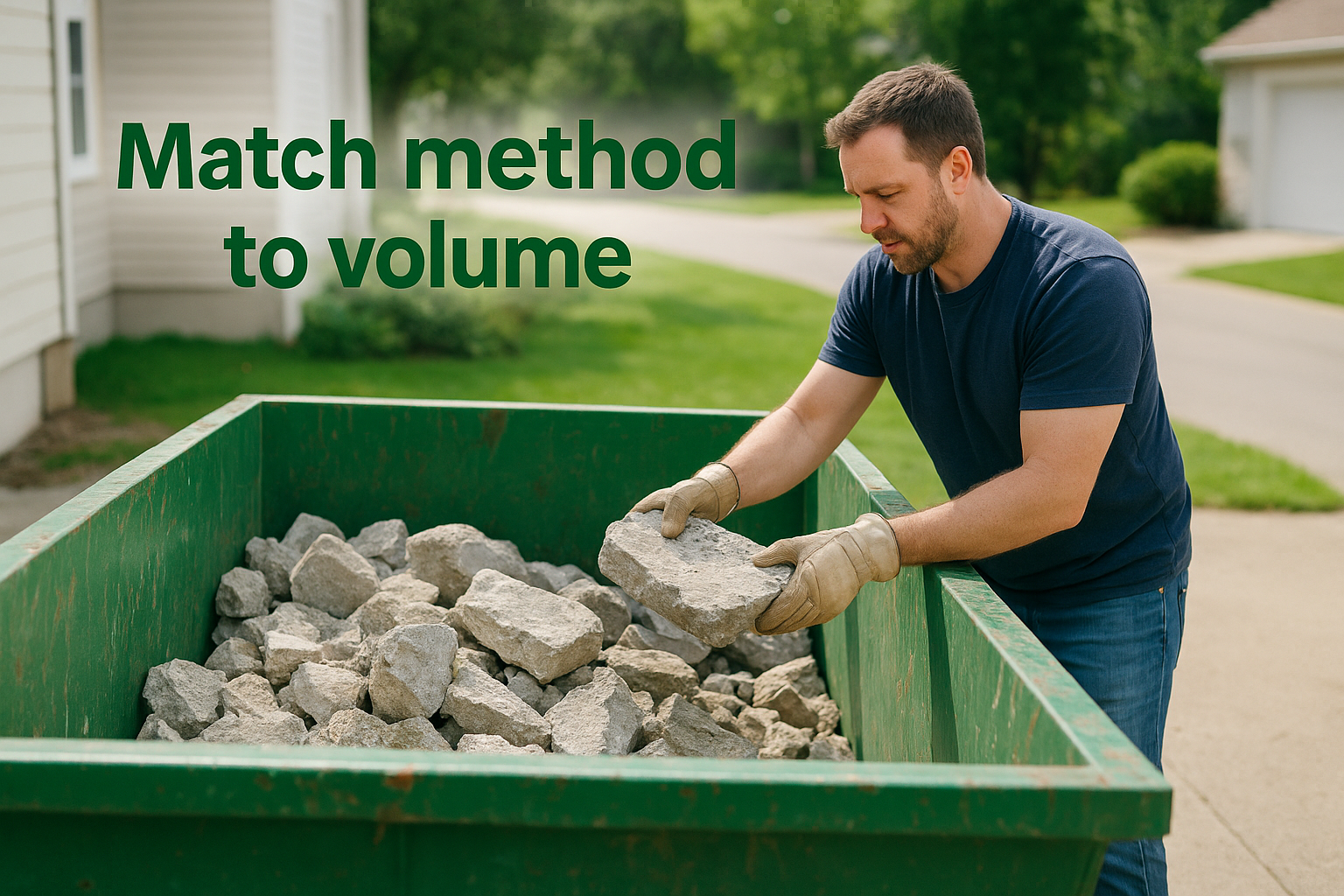
| Volume | Best Option |
|---|---|
| A few chunks or old bags | Curbside bulk pickup or haul to transfer station |
| Up to half a truck bed | Municipal drop-off or recycling facility |
| Full truckload or more | Dumpster rental |
If your load fills more than half a standard pickup truck bed, a dumpster almost always costs less per pound than making multiple haul trips.
Factor in your timeline and site access
Your project timeline and driveway space matter just as much as volume. If you need concrete removed within 24 to 48 hours, same-day or next-day dumpster delivery is your most reliable option. Municipal drop-offs often have limited hours and close on weekends, which can stall your project. If your property has tight access, confirm container dimensions with your rental provider before scheduling so placement goes smoothly.
Step 3. Drop off or recycle concrete locally
Local drop-off and recycling are the most cost-effective ways to handle small to mid-size loads when you know how to dispose of concrete the right way. You do the hauling, and in many cases you pay little to nothing at the gate. The key is calling ahead and confirming the rules before you load your truck.
Find a concrete recycling facility
Concrete recycling facilities crush and process clean rubble into recycled aggregate, which contractors use as road base and fill material. To find one near you, search your county’s public works or waste management website for a list of approved facilities. When you call, ask about three things: whether they accept residential loads, the maximum piece size they’ll take, and whether rebar-reinforced concrete requires an upcharge.
Most recycling facilities charge by the ton, so knowing your estimated weight before you call keeps the conversation short and the quote accurate.
Use your municipal transfer station
Your town transfer station is often the fastest local option for smaller loads, typically under half a truckload. Many Cape Cod and Plymouth area towns allow residents to drop off clean concrete with proof of residency at a minimal fee. Hours vary by town and most close on weekends, so check your town’s Department of Public Works website for current hours and load restrictions before making the trip.
Step 4. Rent a dumpster for bigger concrete jobs
When you’re dealing with a full patio demolition, driveway removal, or any project that fills more than half a pickup truck, renting a dumpster is the most practical way to handle how to dispose of concrete at scale. You load on your own schedule, the dumpster sits on your property until you’re done, and one call handles pickup and disposal. There’s no need to make multiple trips across town or coordinate with a transfer station’s limited hours.
Pick the right dumpster size
Concrete is heavy, and dumpsters for concrete loads are typically filled lower than standard waste to stay within legal road weight limits. A 10-yard dumpster handles most residential concrete jobs, including broken-up sidewalks, small patios, and foundation pieces. For larger demolition work, a 15-yard container gives you more room without pushing into oversized pricing.
Ask your rental provider about weight limits for concrete specifically before you book, since concrete fills weight limits faster than almost any other material.
Book early and confirm access
Same-day and next-day delivery is available in many areas, but booking at least 24 hours ahead gives your provider time to confirm the best placement for your driveway or job site. Make sure the delivery path is clear of vehicles, low-hanging branches, and utility lines so the driver can set the container exactly where you need it.
Next steps
You now have a clear picture of how to dispose of concrete, from sorting and prepping your rubble to choosing between local recycling facilities, transfer stations, and dumpster rentals. The right path depends on your project size and timeline, but the process is straightforward once you know your options.
Start by estimating your total concrete volume and weight before you do anything else. That single step determines which method saves you the most time and money. If your job fills more than half a pickup truck, a dumpster rental is almost always the faster and more cost-effective choice.
For projects across Cape Cod and Plymouth, Dump Express delivers dumpsters sized for concrete loads, with transparent pricing and same-day delivery available in many areas. Get a quote and book your dumpster online before your next concrete removal project.