

If you’ve ever stood in your living room staring at a worn-out sofa wondering how to dispose of a couch, you already know it’s not as simple as dragging it to the curb. Couches are bulky, heavy, and most regular trash services won’t touch them. That leaves you figuring out the best route on your own, donation, municipal pickup, recycling, or renting a dumpster.
The good news: you have more options than you probably think. Some won’t cost you a dime, while others, like tossing it into a dumpster rental from Dump Express, let you handle it on your schedule without waiting on someone else’s timeline. Each method has tradeoffs depending on the couch’s condition, your location, and how quickly you need it gone.
This guide breaks down every practical way to get rid of your old couch, from free donation pickups to paid removal services, so you can pick the option that actually fits your situation.
What to do before you dispose of a couch
Before you pick a removal method, spend 10 to 15 minutes doing a quick assessment of your couch. Rushing into scheduling a pickup or dropping it off somewhere without this step often leads to wasted trips, rejected loads, or paying for a service you didn’t need. Knowing what you’re working with upfront will save you both time and money.
Check the condition honestly
The couch’s condition determines which options are even available to you. Donation centers and charities will turn away furniture that has visible stains, tears, pet damage, broken frames, or strong odors. If you’re hoping to donate or sell it, get honest with yourself before you make any calls.
A couch that still has structural integrity and clean fabric opens up free disposal options. One that’s falling apart narrows your choices quickly.
Run through this checklist before deciding how to dispose of a couch:
- Frame: No broken legs, cracked wood, or bent metal
- Cushions: No collapsed foam, protruding springs, or permanent indentations
- Fabric or leather: No rips, tears, heavy staining, or pet damage
- Smell: No mold, mildew, smoke, or pet odor
- Pests: No signs of bed bugs or fleas (this disqualifies donation entirely)
If your couch passes most of those points, donation and resale are worth pursuing. If it fails on two or more, plan for recycling, junk removal, or renting a dumpster.
Measure it and map the exit route
Couch dimensions matter far more than most people realize until moving day. A standard three-seat sofa runs roughly 84 to 90 inches wide and 30 to 35 inches deep. Before scheduling any removal, measure your couch and then measure every doorway, hallway, and stairwell it needs to pass through on the way out.

Write these down before removal day:
- Couch width, depth, and height
- Width and height of the main exit doorway
- Width of any hallways between the couch and the exit
- Stairwell width if the couch needs to travel up or down stairs
If the couch won’t fit through a doorway intact, you may need to disassemble it first. Many sofas have removable legs, and most sectionals disconnect into smaller pieces. Check the underside for hardware before assuming the whole thing is one solid unit. Knowing this ahead of time prevents a removal service from arriving and charging extra for an unexpectedly difficult job.
Understand what it’s made of
Material type affects where your couch can go for recycling or disposal. Fabric sofas, leather couches, and those with memory foam cushions each have different recycling pathways. Some transfer stations separate foam from frames, while others accept the whole unit together.
Check your couch for these common materials:
- Frame: Wood, metal, or particle board
- Cushion fill: Polyurethane foam, memory foam, or down and feather
- Exterior: Upholstered fabric, leather, or faux leather
Knowing the materials ahead of time helps you ask the right questions when you call a recycling facility or drop-off center, and it prevents your load from being rejected on arrival.
Option 1: Donate, sell, or give it away
If your couch passed the condition check in the previous section, donating, selling, or giving it away is the best route for how to dispose of a couch without spending anything. This approach keeps usable furniture out of landfills and puts it with someone who actually needs it. The key is matching the right channel to your timeline so you’re not stuck waiting weeks with a couch in your way.
Where to donate your couch
Several national and regional organizations accept furniture donations, but most have strict condition requirements and limited pickup availability depending on your area. Call ahead before scheduling anything so you don’t waste a trip or get a rejection at the door.
Many donation centers will turn away a couch on the spot if the driver spots stains or damage, so be upfront about its condition when you call.
Here are the most reliable places to contact:
- Habitat for Humanity ReStores: Accept gently used furniture and offer free pickup in many areas
- Salvation Army: Provide free furniture pickup, though waitlists apply in some locations
- Local shelters and nonprofits: Transitional housing programs and domestic violence shelters often take furniture directly and may arrange transport
- Churches and community centers: Many coordinate furniture drives and will handle pickup themselves
How to sell or give it away
Listing your couch on Facebook Marketplace or Craigslist moves it fast, especially if you price it low or offer it free. Write an honest description and include at least three clear photos taken in good lighting. A simple listing looks like this:
Clean [color] [style] sofa, [dimensions].
No stains, no pet damage.
Buyer must arrange pickup.
Available [date]. Asking $[price] or best offer.
Pricing between $25 and $75 for an average used couch generates serious inquiries quickly. Free listings almost always pull a response the same day, so if speed is your priority, skip the price entirely and include a firm pickup deadline to filter out no-shows.
Option 2: Schedule bulk pickup with your town
Most towns and municipalities offer bulk item or large trash pickup as part of their regular waste management services. This is one of the most straightforward ways to handle how to dispose of a couch without spending money or coordinating with a third party. The catch is that each town runs its program differently, and if you miss the window or skip a required step, your couch sits at the curb uncollected.
How bulk pickup works
Your town’s bulk pickup program typically runs on a set schedule, either monthly, quarterly, or by appointment. You place your couch at the curb before a specified time, and a separate crew collects it outside of your regular trash route. Some towns require advance registration or a phone call, while others simply list collection dates on their municipal website and expect you to show up ready on the right day.
Missing the registration deadline in towns that require it usually means waiting until the next scheduled date, which could be weeks away.
How to find and schedule your town’s program
Start with your town or city’s official website and look for the public works or sanitation department page. Search for terms like "bulk item pickup," "large trash collection," or "oversized waste removal." If you can’t find the information online, call the department directly during business hours.
When you contact them, have these details ready:
- Your address and the number of items you need removed
- The couch dimensions if asked (width, depth, height)
- Whether the couch contains any foam or specialty materials
- Your preferred pickup window if the program offers scheduling by appointment
Some Cape Cod towns limit the number of bulk items per pickup, so ask upfront. If your town caps collections at one or two items and you have additional furniture to remove, pairing bulk pickup with a dumpster rental lets you clear everything in a single effort.
Option 3: Recycle or drop off at a facility
Recycling is a solid way to handle how to dispose of a couch that’s too damaged to donate but still has usable materials inside. Most couches break down into recyclable components, including metal frames, wood, and foam, so a straightforward landfill trip isn’t always your only option. This approach takes more coordination than bulk pickup, but it keeps usable materials out of the waste stream and often costs less than hiring a junk removal crew.
Not every transfer station or recycling center accepts upholstered furniture whole, so call ahead before you load anything into your vehicle.
What gets recycled and what doesn’t
Each material in your couch follows a different recycling path, and knowing this upfront saves you from a rejected drop-off. Metal frames and springs are widely accepted at scrap metal yards, which sometimes pay you per pound. Wood frames go to facilities that process lumber or composite materials. Foam cushions are the trickiest component because not all recycling centers accept polyurethane foam, and some charge a separate processing fee for it.
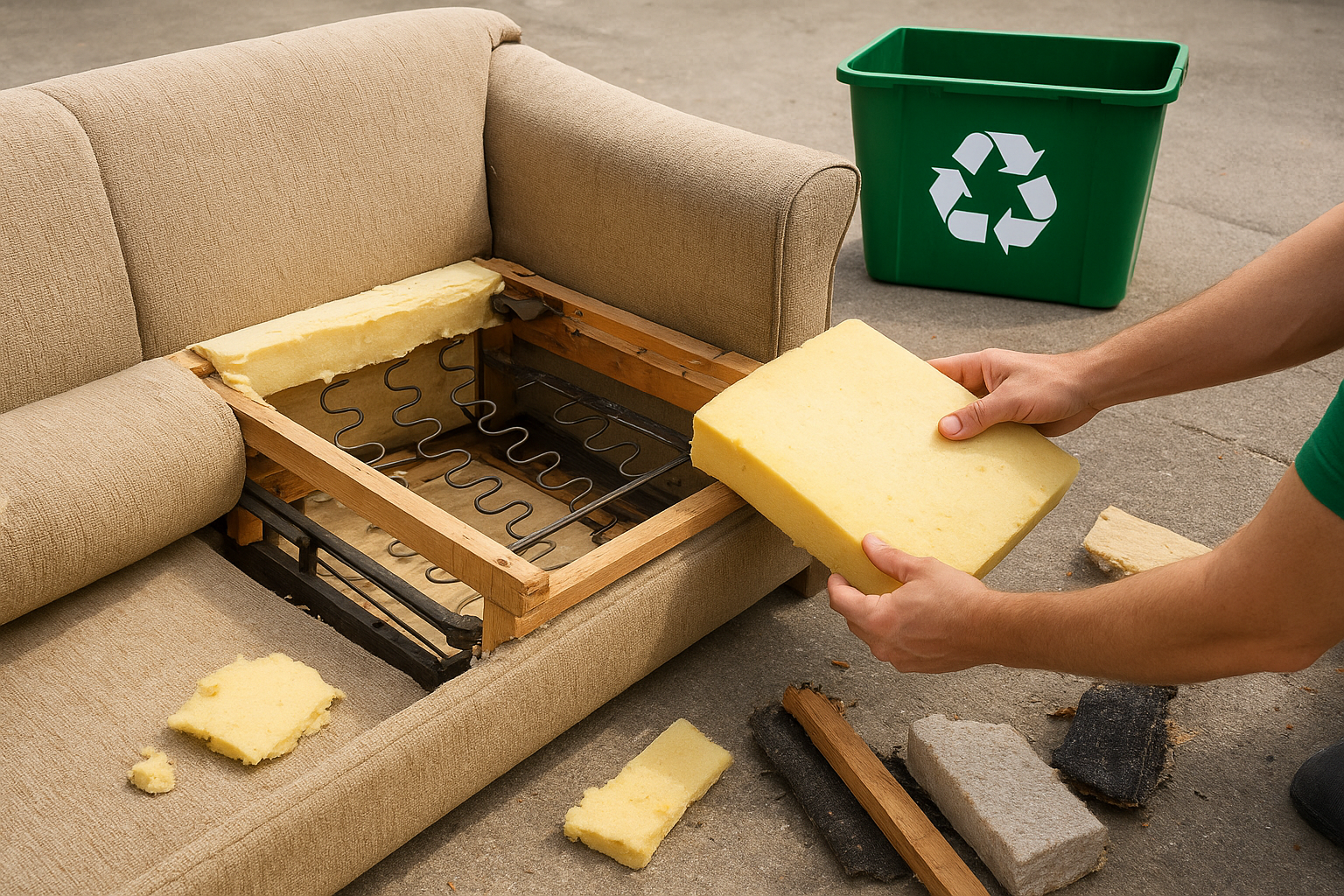
Here is a quick breakdown by material:
| Material | Where it goes | Notes |
|---|---|---|
| Metal frame or springs | Scrap metal yard | May receive small payment |
| Wood frame | Transfer station or lumber recycler | Usually accepted as bulk wood |
| Polyurethane foam | Specialty foam recycler | Call ahead; not universal |
| Fabric or leather upholstery | Textile recycler | Limited availability; often landfilled |
How to find a drop-off location
Start with your county or town’s public works website and look for the nearest transfer station or household waste facility. Search for terms like "furniture drop-off," "bulk waste recycling," or "mattress and couch disposal." For foam-specific recycling, the Foam Recycling Coalition maintains a locator for participating drop-off sites.
When you call, confirm the accepted materials, drop-off hours, and any fees before making the trip. Bringing a disassembled couch rather than one intact unit often speeds up processing and reduces your drop-off cost.
Option 4: Use junk removal or a dumpster
When your couch fails the condition check, your town doesn’t offer bulk pickup, and you have no interest in hauling it yourself, junk removal and dumpster rental are the two paid options worth considering. Both solve how to dispose of a couch quickly and with minimal physical effort on your part, but they fit different situations. Knowing which one matches your needs saves you from overpaying or scheduling the wrong service.
Hire a junk removal crew
Junk removal works best when you want someone else to handle every step, from loading to hauling to disposal. You schedule an appointment, the crew shows up, and the couch is gone within the hour. Most companies charge based on how much space your items take up in their truck, so a single couch typically runs between $75 and $150 depending on your location and the provider.
If you have a few additional items to clear out alongside your couch, junk removal often makes more financial sense since you pay for volume rather than per item.
Use junk removal when:
- You have no other furniture or debris to remove beyond the couch itself
- Physical limitations make loading and hauling difficult
- You need same-day or next-day turnaround without holding onto a rental window
Rent a dumpster
A dumpster rental makes more sense when you are clearing out more than just one piece of furniture. If you are tackling a room cleanout, a renovation, or a full home purge in the Cape Cod area, renting a dumpster from Dump Express lets you fill it at your own pace over several days without coordinating multiple pickups. A 10-yard dumpster handles a couch plus several other large items without maxing out, and you only need one call to arrange delivery and pickup on your schedule.
Renting gives you control over the pace and scope of your project in a way that a single junk removal visit simply cannot match.
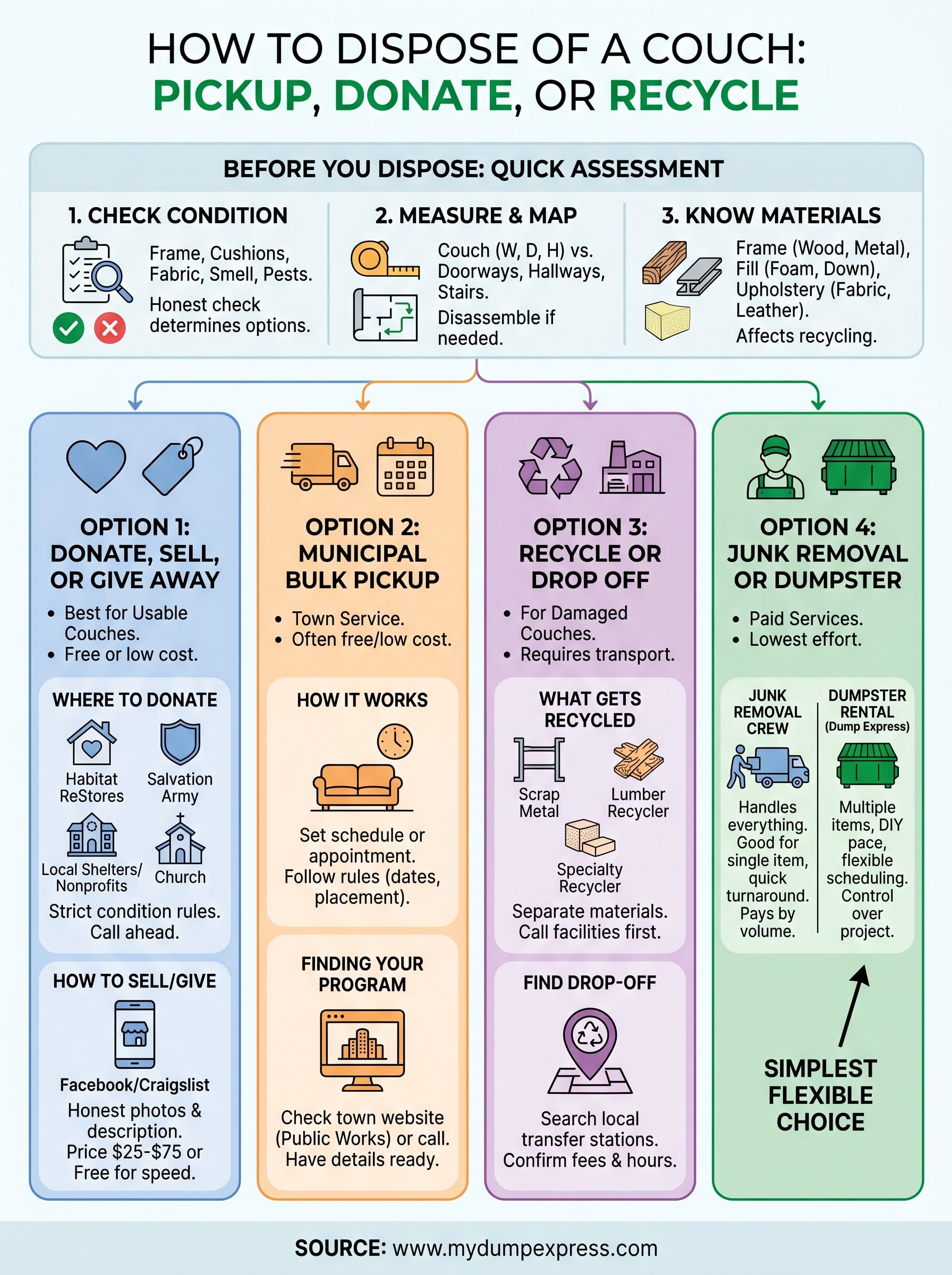
Wrap up and pick the simplest option
Every method covered in this guide solves how to dispose of a couch in a different way, and the right one depends on your couch’s condition, your timeline, and how much effort you want to put in. Donate or sell if the couch is still in good shape and you have a few days to spare. Use bulk pickup if your town offers it and the schedule works for you. Drop it at a recycling facility if you’re willing to make the trip and disassemble it yourself.
When none of those options fit, renting a dumpster is the most flexible and reliable choice, especially if you have more than just a couch to clear out. You fill it on your schedule, and pickup happens when you’re ready. If you’re in the Cape Cod or Plymouth area, schedule a dumpster rental with Dump Express and get it handled without the back-and-forth.