

You’ve got a garage full of old furniture, a basement stacked with boxes, or a renovation site buried in debris, and you need it gone. So how does junk removal work, exactly? It’s a fair question, especially if you’ve never hired someone to haul away your stuff before. The process is more straightforward than most people expect, but the details matter, particularly when it comes to pricing, what happens to your items after pickup, and whether junk removal is even the right call for your project.
Junk removal and dumpster rental are two sides of the same coin. Both solve the same core problem: getting rid of waste you can’t handle on your own. The difference comes down to who does the heavy lifting and how much control you want over the timeline. At Dump Express, we’ve spent over 20 years helping homeowners and contractors across Cape Cod and Plymouth manage waste removal projects of all sizes. That experience gives us a clear view of when junk removal makes sense, when a dumpster rental is the better fit, and how to avoid overpaying for either one.
This guide breaks down the full junk removal process step by step, from booking and labor to pricing structures and disposal methods. By the end, you’ll know exactly what to expect, what it should cost, and how to choose the right approach for your specific project.
What junk removal is and what you get
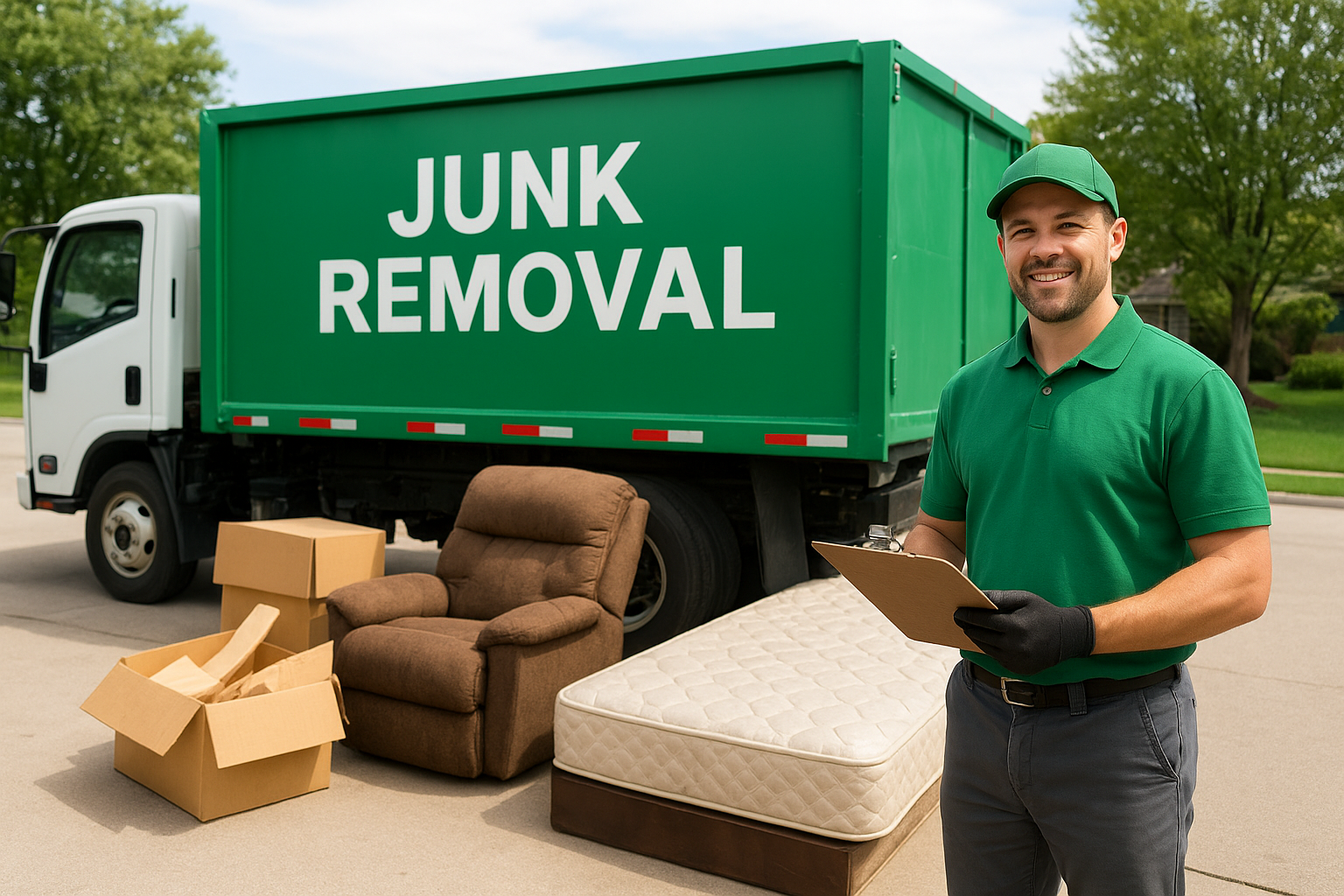
Junk removal is a full-service waste hauling option where a crew shows up, loads everything themselves, and drives it away. You point at the pile, and they handle the rest. That’s the short version of how does junk removal work: you pay for labor, a truck, and disposal, all bundled into one price. It’s built for situations where you can’t or don’t want to haul items yourself, especially when the stuff is heavy, bulky, or spread across multiple rooms.
The labor component
The biggest thing that separates junk removal from renting a dumpster is who does the physical work. With junk removal, the crew carries items from wherever they are in your home or on your property: upstairs bedrooms, back corners of basements, detached garages. You don’t need to drag anything to the curb. Most companies charge based on volume, meaning how much truck space your items take up, but that quote always includes the crew’s time and effort.
The labor component is what makes junk removal worth the higher price point for people who are physically limited, short on time, or dealing with heavy items like appliances, mattresses, or furniture.
For a typical job, you can expect a two-person crew with a large truck capable of holding 10 to 15 cubic yards of material. They bring their own equipment, including dollies and straps, and they’re responsible for getting everything loaded without damaging your walls, floors, or doorframes. A professional crew works quickly and treats your property with care throughout the job.
What junk removal companies take
Most junk removal companies handle a wide range of household and construction materials, and the accepted items list is broader than most people expect. Common items they accept include:
- Furniture (sofas, mattresses, bed frames, dressers)
- Appliances (refrigerators, washers, dryers, dishwashers)
- Electronics (TVs, computers, printers)
- Yard waste and outdoor furniture
- General construction debris (drywall, flooring, lumber)
- Boxes, bags, and general clutter
Hazardous materials are the major exception. Paint, chemicals, propane tanks, asbestos, and similar items fall outside what standard junk removal crews will load. Some companies have partnerships with specialty disposal facilities, but most will tell you upfront that hazardous waste requires a separate removal process. Always confirm the restricted items list before your appointment so there are no surprises on pickup day.
What the price actually covers
When you book junk removal, your single quoted price typically includes labor, truck fuel, landfill or transfer station fees, and any recycling or donation drop-offs the company handles on the back end. This bundled pricing model is different from dumpster rental, where you pay for the container and then disposal is factored in separately based on weight or a flat rate.
The core tradeoff is cost versus control. Junk removal tends to run higher per cubic yard than a dumpster rental because you’re paying for a crew’s time on top of everything else. For small loads or items that are easy to move, that premium may not be worth it. For large, heavy, or spread-out loads where you want zero physical involvement, the bundled price often makes practical sense, and knowing exactly what’s included in the quote before you agree is the single most important step in making sure you’re not paying more than the job is worth.
Step 1. Pick the right option for your project
Before you book anything, you need to decide which removal method actually fits your situation. The right choice depends on three things: the size of your load, whether you can do any of the physical work yourself, and how much flexibility you need in your timeline. Choosing the wrong service costs you money, and in some cases it means calling for a second haul to finish what the first one couldn’t handle.
When junk removal makes the most sense
Junk removal works best when the items are heavy, spread across multiple areas, or too awkward for you to move without help. If you’re dealing with a basement cleanout, a garage packed with old furniture, or a house full of an estate’s worth of items, a crew that handles all the loading is worth the higher price. You stay out of the way, and the whole project wraps up in a single visit, usually within a few hours of the crew arriving.
If you have appliances, mattresses, or large furniture on upper floors, junk removal is almost always the right call. Carrying that weight down stairs is a job for a trained crew, not something to tackle alone.
Here are the clearest signals that junk removal fits your project:
- You physically can’t move the items yourself
- The load is spread across multiple rooms or floors
- You want the job done in one visit with no ongoing rental period
- Your volume is small enough that renting a full dumpster would waste money
When a dumpster rental is the smarter move
A dumpster rental gives you control over the pace and timeline, which matters for renovation and construction projects where debris builds up over several days or weeks. You load the container on your own schedule, and the dumpster stays on your property until you call for pickup. That flexibility makes it a better fit for contractors, large demolition projects, or homeowners working through a cleanout room by room over a long weekend.

Renting a dumpster also tends to cost less per cubic yard than full-service junk removal because you’re providing the labor yourself. If you have the physical ability to move items, some help from a friend or an existing crew, and a project that runs longer than a single day, a dumpster is the more affordable and practical path. Understanding how does junk removal work in comparison to dumpster pricing upfront helps you make the right call before you commit to either option.
Step 2. Understand pricing before you book
Junk removal pricing catches people off guard because it doesn’t work like a flat hourly rate. Most companies price by volume, specifically how much space your items take up in the truck, expressed in fractions of a truckload. Knowing this before you call means you can estimate your load size in advance and compare quotes with a clear head instead of agreeing to a number you don’t fully understand.
How junk removal pricing is calculated
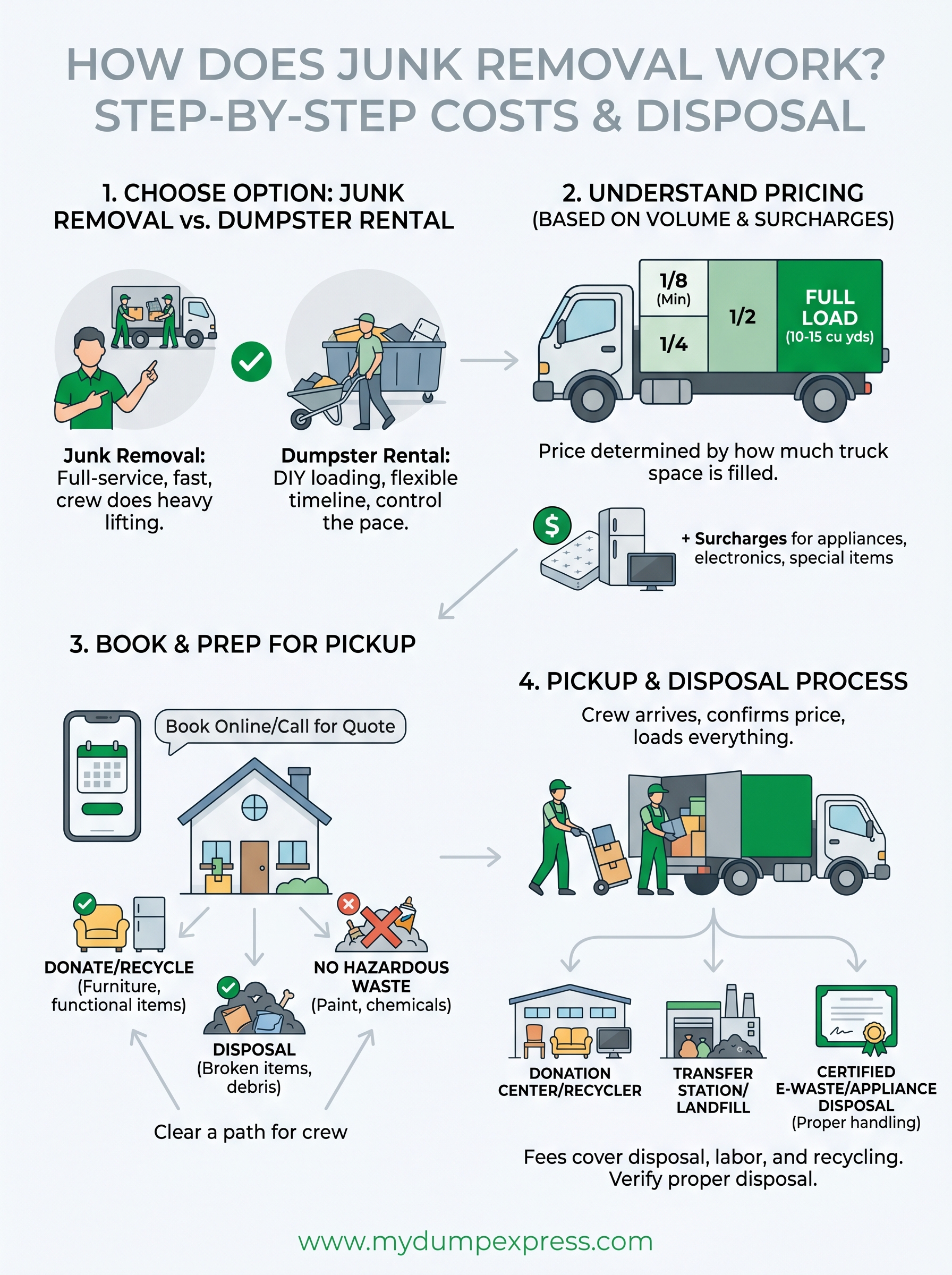
The standard model is truck-based volume pricing. A typical full-size junk removal truck holds 10 to 15 cubic yards of material, and companies divide that capacity into fractions like one-eighth, one-quarter, one-half, and full loads. Your quote reflects what fraction of the truck your items fill. A small load like a few boxes and a broken recliner might take up one-eighth of the truck, while a full basement cleanout could fill the whole thing.
Here’s a rough breakdown of what each tier typically covers:
| Load Size | Approximate Volume | Common Use Case |
|---|---|---|
| Minimum / 1-8th load | 1-2 cubic yards | A few items, small single-room cleanout |
| Quarter load | 2-4 cubic yards | Several pieces of furniture, one room |
| Half load | 5-7 cubic yards | Multi-room cleanout, small renovation debris |
| Full load | 10-15 cubic yards | Full house cleanout, large construction project |
Always ask the company whether the quote is binding or subject to change once the crew sees the actual volume on-site. A reputable service will lock in your price after a visual assessment, not after the truck is already loaded.
What drives the final number up or down
Several factors push the cost of understanding how does junk removal work in practice higher than the base volume rate. Appliances, electronics, and mattresses often carry surcharges because they require special disposal handling at certified facilities. Stairs, tight spaces, and long carry distances add time for the crew and may appear in a higher quote, so be upfront about your property layout when you call.
Minimum fees also apply at most companies. Even if you only need one or two items removed, you’ll typically pay a base rate that covers the crew’s time and the truck. Knowing the minimum charge upfront lets you decide whether a single-item removal is worth it or whether bundling additional items into one trip is the smarter move for your budget.
Step 3. Book service and confirm the details
Once you’ve settled on junk removal as the right approach, booking the appointment is straightforward, but what you confirm during that call or online booking makes a real difference in how smoothly the job goes. Most companies let you schedule by phone, through a website form, or via text. Whichever method you use, the goal is the same: lock in a date, get a clear price range, and make sure both sides understand exactly what’s being removed.
How to book a junk removal appointment
Most junk removal bookings involve a quick intake process where you describe your load and the company gives you a price range or schedules an in-person estimate. Be specific when you describe your items, including what they are, how many there are, and where they’re located on your property. A crew that knows ahead of time about a second-floor mattress or a refrigerator in the back of the garage will bring the right equipment and plan the job correctly.
The more detail you give during booking, the more accurate your quote will be, and the less likely you are to face a price adjustment once the crew arrives.
Use this checklist when you call or fill out the booking form:
- Item list: furniture, appliances, electronics, debris type
- Item location: basement, upper floor, garage, yard
- Access details: narrow driveway, gate, stairs, elevator
- Preferred date and time window
- Whether you need a firm quote or an on-site estimate first
What to confirm before the crew arrives
After you’ve booked, send or request a written confirmation that spells out the appointment date, the price range or firm quote, and what items are included. A quick email summary protects you if there’s any miscommunication on the day of the job. If the company only confirmed verbally, follow up with a short message repeating the key details and ask them to reply.
You should also confirm the cancellation and rescheduling policy before you finalize anything. Life changes, and knowing whether you can move the appointment without a fee matters if your project timeline shifts. Understanding how does junk removal work at the administrative level, not just the physical one, keeps you from losing money over a scheduling change you couldn’t predict. Ask directly: what happens if you need to cancel within 24 hours, and is there a minimum charge that applies regardless of whether the crew loads anything.
Step 4. Prep your items and the pickup area
Preparation doesn’t take long, but skipping it costs you time on the day of the job. Crews work on a schedule, and anything that slows them down in your home or on your property extends the visit. Understanding how does junk removal work at the prep stage means you’re ready when the truck pulls up, and the crew can move through the job without stopping to wait on decisions you could have made the night before.
Sort and separate before the crew arrives
Before the crew shows up, walk through the space and make clear decisions about what goes and what stays. Pull items away from walls and group them in a central area if possible. The crew won’t always know which boxes are leaving and which contain things you’re keeping, so marking or physically separating the items removes all ambiguity and prevents anything from being loaded by mistake.

If you’re on the fence about certain items, set them in a clearly separate spot and make the final call before the crew starts loading, not while they’re mid-job.
This is also the right time to flag anything that might trigger surcharges, like appliances, electronics, or mattresses. Check the company’s accepted items list and confirm anything unusual directly with the booking team before the appointment date.
- Set items you’re keeping in a clearly separate room or area
- Flag appliances, electronics, or anything requiring special disposal
- Remove personal documents, valuables, or fragile items from the pile
- Confirm that hazardous materials are set aside and not mixed in with the load
Clear a path for the crew
Access to your items is just as important as the items themselves. A two-person crew carrying a dresser down a staircase needs clear walking space, and a truck parked in front of your home needs room to operate. Check that hallways, doorways, and stairwells are free of obstacles before the crew arrives, and let them know in advance about any tight corners or low clearances they’ll encounter during the job.
Outside, make sure the truck can park close enough to the removal area without blocking traffic or sitting on a surface that could be damaged under the vehicle’s weight. Move your own vehicles out of the driveway if needed, and check that any gate or side yard access is unlocked and open. Taking 15 minutes the evening before the appointment to handle these small logistics keeps the crew moving and your project on schedule.
Step 5. What happens during the actual pickup
When the crew pulls up, the job moves quickly if you’ve done your prep. Most residential junk removal appointments wrap up in one to two hours, depending on volume and access. Understanding exactly how does junk removal work on the day of pickup means you won’t be caught off guard when things move faster than you expected, and you’ll know where to be and what decisions to make in the moment.
The walkthrough and final quote confirmation
Before anyone touches a single item, the crew lead will walk through the space with you to assess the actual volume. This is the point where your price range becomes a firm number. Show them everything you want removed, including items in separate rooms or in the garage, so nothing gets missed. Point out any items with potential surcharges, like refrigerators, TVs, or mattresses, so those get factored in before the crew starts loading.
If the final on-site quote comes in higher than the range you were given during booking, ask the crew lead to explain exactly why before you agree to proceed.
This walkthrough also gives you one last chance to pull items off the removal list. If you see something in the pile that you want to keep, say so now. Once loading begins, stopping mid-job to sort items slows the crew down and can create confusion about what stays and what goes.
How the crew loads and clears the space
After you confirm the quote, the crew works systematically through the space, starting with the largest and heaviest items and working down to smaller pieces and loose debris. They use dollies, straps, and furniture pads to protect your floors, walls, and doorframes during the process. You don’t need to help or supervise closely; your job at this stage is simply to stay available in case the crew has a question about a specific item.
Completing the job and signing off
Once the truck is loaded, the crew does a final sweep of the cleared area to make sure nothing was missed and no debris was left behind. You’ll then review the work, confirm everything on your list was removed, and sign off on the job. Payment typically happens at this point, either on-site by card or through a digital invoice. Keep a copy of the receipt, especially if the load included appliances or electronics, since some facilities issue proof of proper disposal that you may want for your records.
Step 6. Where your junk goes after removal
Once the truck pulls away, your items move through a specific disposal chain based on what they are and what condition they’re in. Most people never think about this part of the process, but understanding where everything ends up is part of knowing how does junk removal work from start to finish. Responsible companies sort loads carefully to keep usable items out of landfills and direct hazardous materials to appropriate facilities.
What goes to the transfer station or landfill
The majority of a typical junk removal load ends up at a regional transfer station or municipal landfill, where waste is processed and either sorted further or permanently disposed of. General household debris, broken furniture, and non-recyclable materials fall into this category. Transfer stations are regulated facilities, and legitimate junk removal companies pay disposal fees at licensed sites, which is part of what you’re covering in your final price.
If a company quotes you a price that seems unusually low, it may be skipping licensed disposal facilities and dumping illegally, which can create legal liability for you as the property owner.
What gets donated or recycled
Functional furniture, working appliances, and usable household goods often get sorted before the truck ever reaches a disposal facility. Many junk removal companies maintain relationships with local donation centers and thrift organizations that accept items in good condition. Electronics follow a separate path through certified e-waste recyclers that handle components like batteries, screens, and circuit boards responsibly to prevent toxic materials from entering landfills.

Metal, cardboard, and certain plastics from your load may also go directly to recycling processors rather than the landfill, which can reduce disposal costs on the company’s end. Some companies pass those savings along; others don’t. Ask directly during booking whether recyclable or donatable items lower your final cost, because the answer varies by company.
How to verify proper disposal
Requesting a receipt or documentation showing the disposal facility used for your load is a reasonable ask, and reputable companies have no reason to withhold it. Some provide it automatically as part of their standard service record. For appliances, particularly refrigerators, federal regulations under the Clean Air Act require certified technicians to recover refrigerants before disposal, so confirm whether that certification applies to your items before the crew leaves.
Your state’s Department of Environmental Protection maintains a searchable database of permitted waste facilities if you want to verify that a specific disposal site is properly licensed. Checking takes about five minutes and gives you confidence that your removal was handled legally and responsibly from start to finish.
Common questions, red flags, and money savers
Most people who ask how does junk removal work have a few specific concerns that surface right before they book: what happens if the crew damages something, whether a low quote is too good to be true, and how to avoid overpaying when the job is simple. This section addresses those directly so you walk into the process with both eyes open.
Questions people ask before booking
The most common question is whether you need to be home during the job. The answer is yes for the initial walkthrough and the final sign-off, but you don’t need to stand over the crew while they load. A second frequent question is whether the company carries liability insurance. Always ask for proof of insurance before you confirm any booking, because if a crew member damages your flooring or drops a heavy piece of furniture against a wall, you need to know who covers the repair cost before anyone starts carrying things out.
Red flags to watch for when hiring
A quote that comes in significantly below every other estimate is the clearest warning sign in junk removal. Legitimate companies pay licensed disposal fees, carry insurance, and compensate a professional crew. A price that skips any of those costs has to cut corners somewhere, and illegal dumping is the most common result. You, as the property owner, can face fines if waste connected to your address gets dumped without a permit.
Refuse to book with any company that won’t provide a written quote, proof of insurance, or the name of their disposal facility when you ask directly.
Vague pricing language is a second red flag worth taking seriously. If a company won’t commit to a price range before the crew arrives and only presents a number after the truck is already loaded, that structure makes it easy to inflate the final charge once you feel too committed to back out. Get the range in writing before anyone shows up.
How to spend less on the same job
Combining multiple removal needs into a single appointment is the fastest way to reduce your cost per item. If you have a few furniture pieces, some old appliances, and a pile of general clutter, book one job instead of calling back separately for each category. You pay the minimum charge once instead of three times.
Moving items to a single ground-floor location before the crew arrives also cuts labor time, which directly reduces your final quote on jobs where access difficulty is factored into pricing. Small prep steps on your end consistently translate into real savings on the final invoice.
A simple way to finish the job
Now you know how does junk removal work from the first phone call through final disposal. You pick the right service for your load, understand the pricing structure before you commit, prep your space, and let a professional crew handle the rest. The whole process is predictable when you ask the right questions upfront and choose a company that gives you straight answers instead of vague estimates.
For some projects, a dumpster rental is the smarter and more affordable path, especially when you need flexibility over several days and want to handle the loading yourself. If you’re in Cape Cod or Plymouth and your project calls for a dependable container with transparent pricing and a local team that actually picks up the phone, book a dumpster rental with Dump Express and get your project moving without the guesswork.