
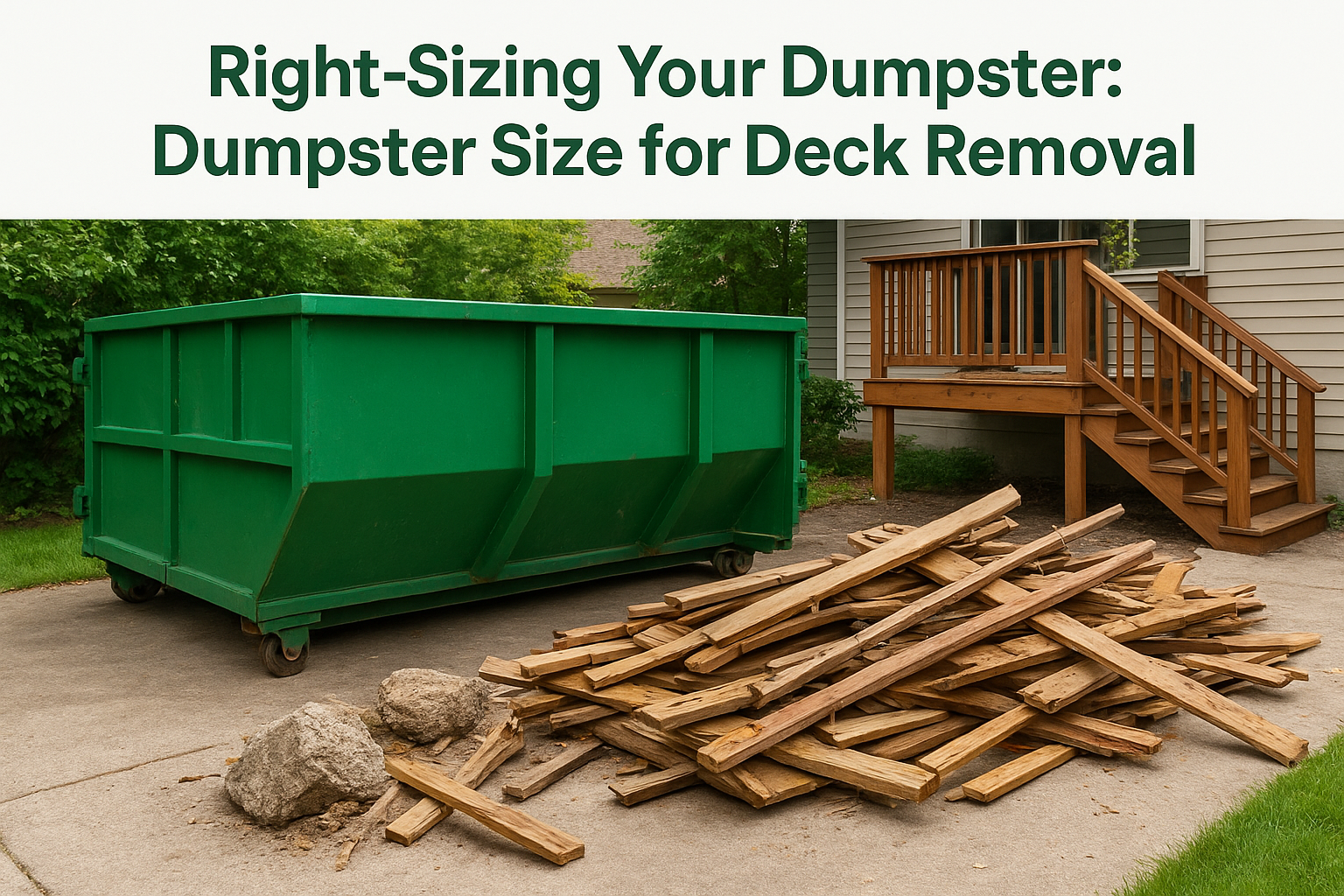
Tearing down a deck generates more debris than most people expect. What looked like a modest backyard structure quickly becomes a sprawling pile of boards, nails, joists, and hardware once it’s in pieces on the ground. Choosing the right dumpster size for deck removal matters because getting it wrong means either paying for space you don’t need or dealing with an overfilled container and a second haul.
The good news: figuring out what size you need isn’t guesswork. Deck debris volume is surprisingly predictable once you know a few basics, your deck’s square footage, its construction material, and whether it has railings or stairs. A few quick measurements before you book can save you real money and keep your project on schedule without interruptions.
At Dump Express, we’ve helped homeowners and contractors across Cape Cod and Plymouth handle deck demolitions of every size for over 20 years. This guide walks you through exactly how to estimate your debris volume, match it to the right dumpster, and avoid the most common sizing mistakes we see on deck teardown projects.
What affects dumpster size for deck removal
Three variables drive dumpster size for deck removal more than anything else: how large the deck is, what it’s built from, and how much additional structure you’re pulling out with it. Get a handle on these before you book and you’ll nail the right size on the first try.
Deck size and construction material
The square footage of your deck is the starting point for any volume estimate. Larger decks produce more debris, but the material matters just as much as the size. Pressure-treated lumber is denser and heavier than composite decking, which affects both volume and weight limits on your dumpster. A 200-square-foot composite deck and a 200-square-foot pressure-treated deck will fill a container differently.
Composite and hardwood decking compacts poorly, so the same square footage often takes up more dumpster space than standard pressure-treated lumber.
Additional structures attached to the deck
Railings, stairs, pergolas, and built-in benches all add debris that most people forget to factor in. Stairs alone can add 20 to 30 cubic feet of material depending on the rise and run. If you’re also removing concrete footings or post anchors, those add significant weight that can push you into a larger container even when the volume looks manageable.
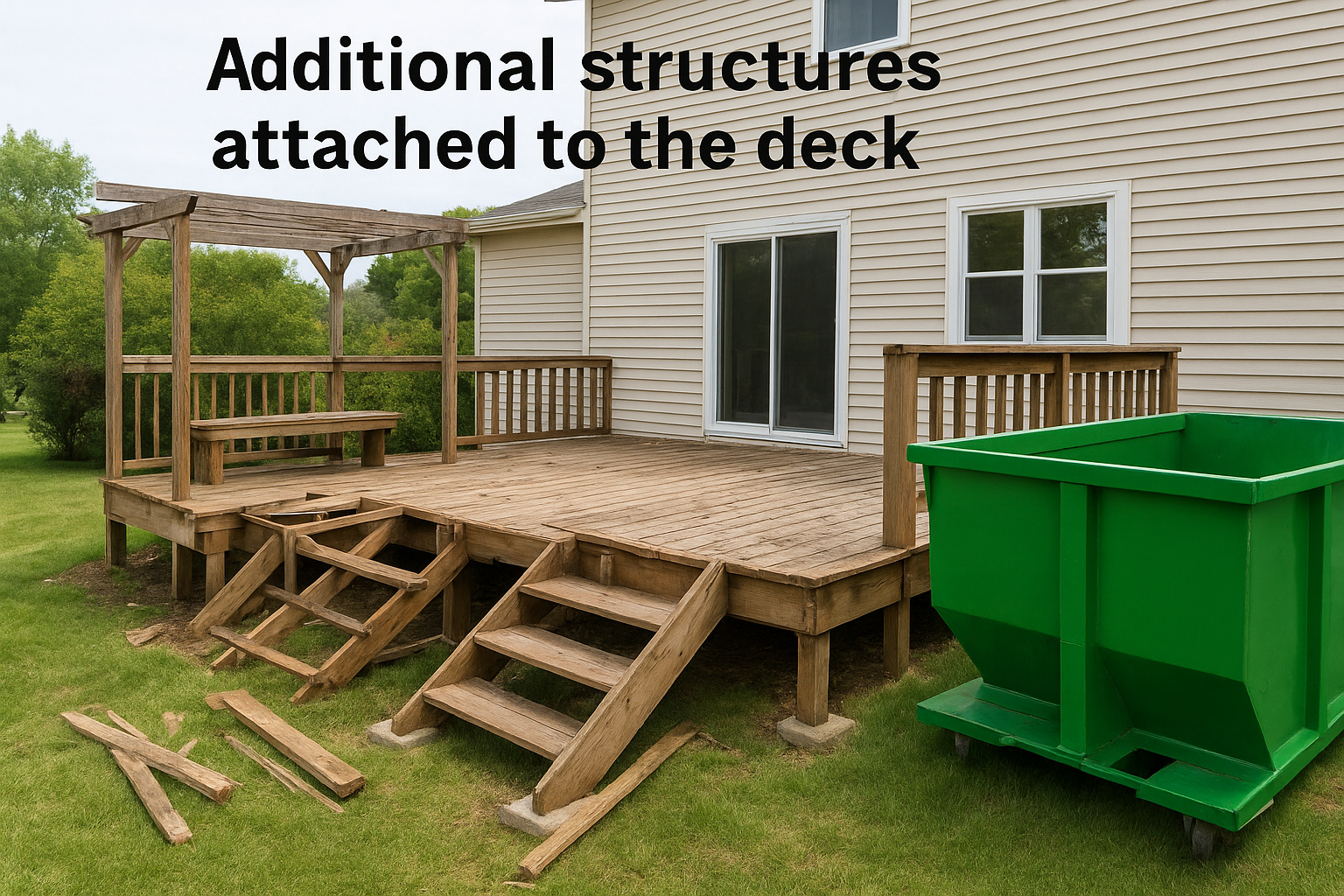
Common extras that increase your dumpster needs:
- Deck railings (wood or metal)
- Attached stairs with stringers
- Pergolas or overhead shade structures
- Built-in benches or planters
- Concrete footings or post anchors
How you plan to break down the deck
The demolition method changes how much space your debris actually takes up. Boards cut into shorter sections stack tighter and load more efficiently than full-length planks tossed in at odd angles. If you’re loading whole joists and ledger boards without cutting them down first, budget for 15 to 20 percent more container space than your raw volume estimate suggests.
Adding a few minutes of cutting during demo can save you from upgrading to a larger dumpster, which typically costs more than the time you spend with the saw.
Step 1. Measure your deck and define the scope
Before you can choose the right dumpster size for deck removal, you need two numbers: the total square footage of your deck and a clear list of everything you’re tearing out. Taking five minutes to measure and scope the job before you call prevents the most common sizing mistake we see.
How to measure your deck
Measure the length and width of your deck in feet, then multiply to get square footage. For irregular shapes, break the deck into rectangles, calculate each section separately, and add them together. Write down the final total so you have a firm number to work from when estimating debris volume in the next step.
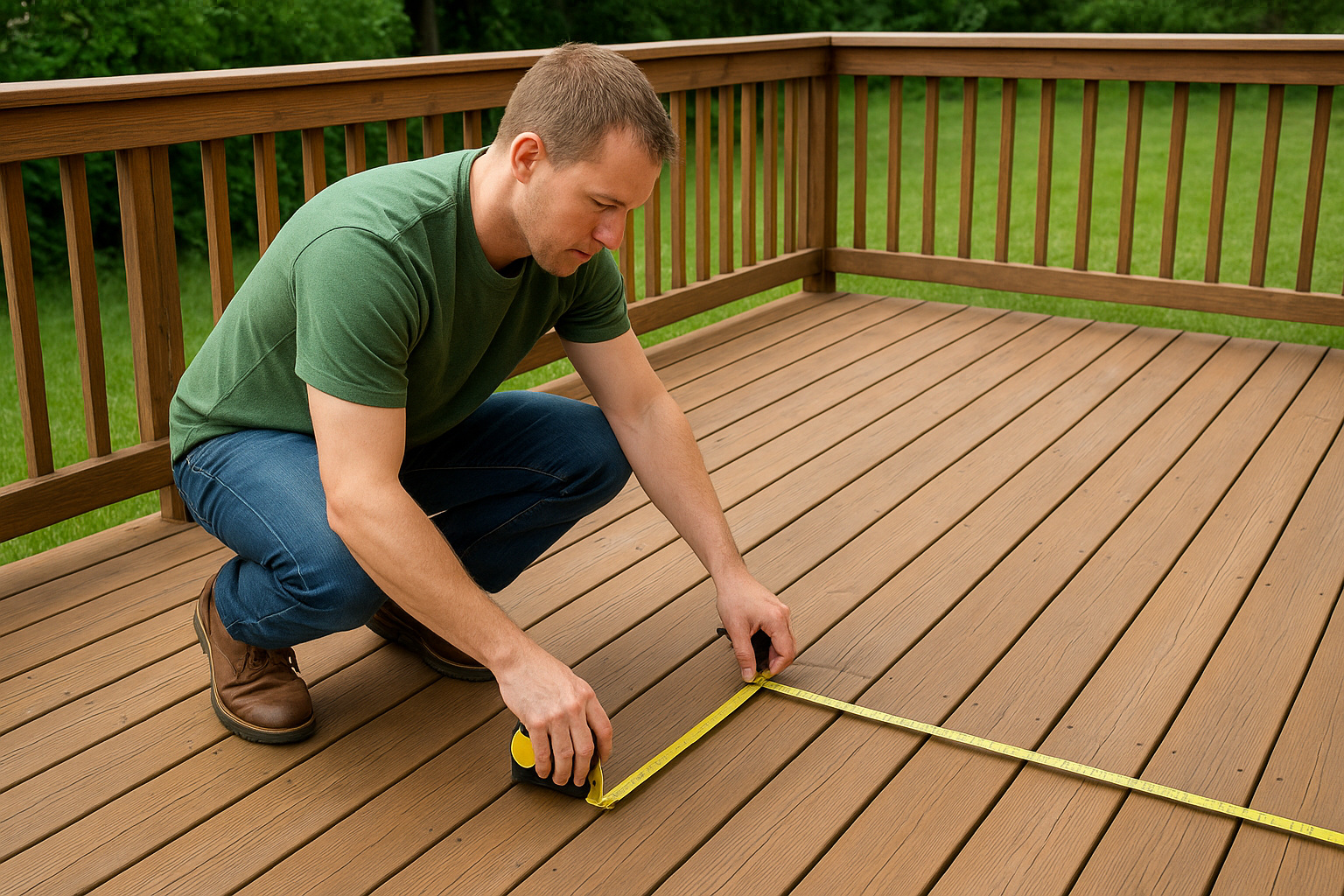
If your deck has multiple levels, measure each level separately and add the totals together before you estimate debris volume.
What else to include in your scope
Walk the full perimeter and list every structure attached to the deck. Note railings, stairs, pergolas, and any built-in features like benches or planters. Also check whether you’re pulling concrete footings, since those add significant weight that affects your container choice. A written scope list keeps you from forgetting something on demo day and ending up with more debris than your dumpster can hold.
Step 2. Estimate debris volume in cubic yards
Once you have your deck’s square footage, you can translate that number into a cubic yard estimate using a simple rule of thumb. This is the core calculation for dumpster size for deck removal and takes less than two minutes to run.
Apply the square footage formula
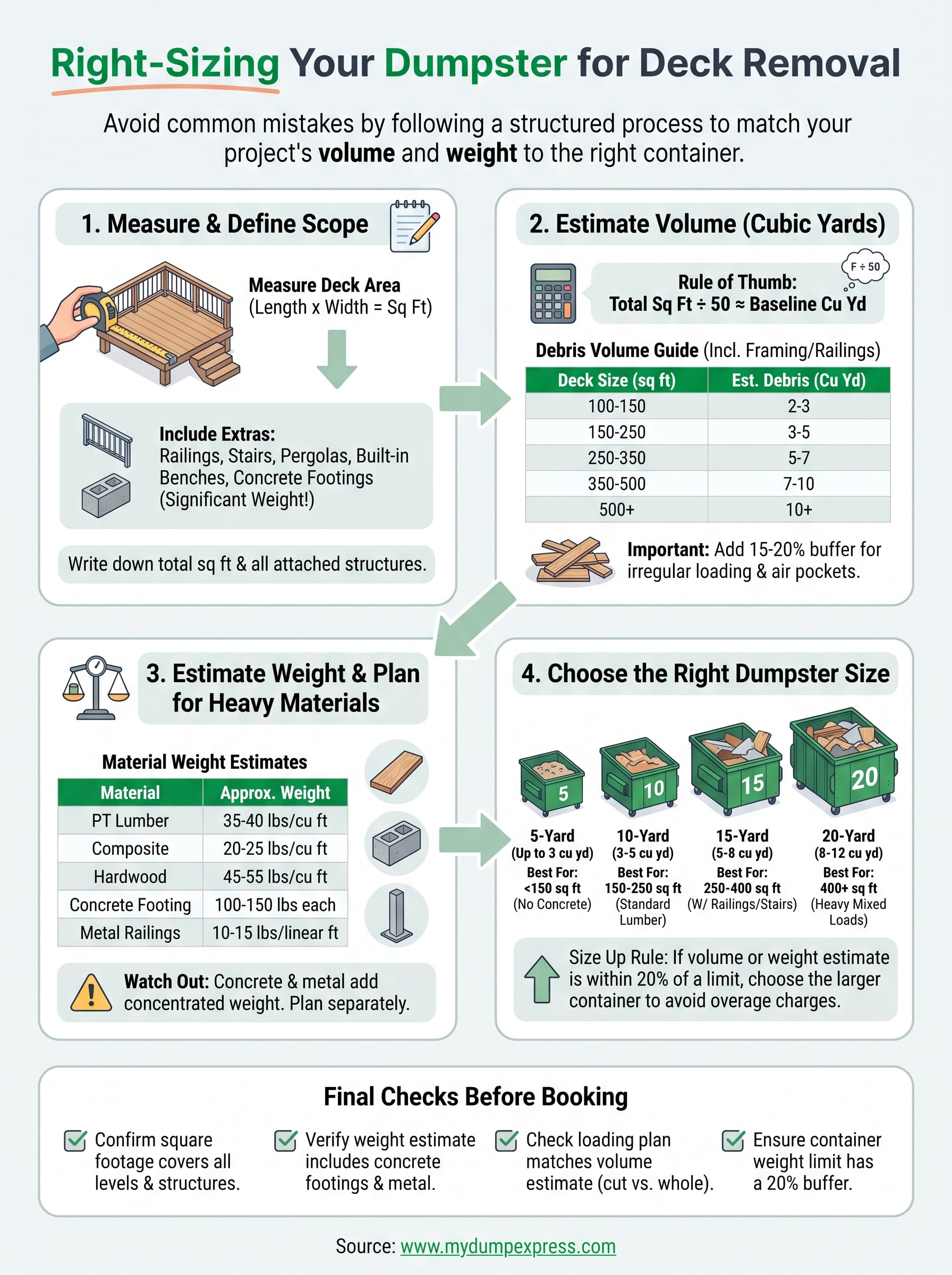
Divide your deck’s total square footage by 50 to get a baseline cubic yard estimate for a standard pressure-treated deck with railings and substructure included. A 300-square-foot deck produces roughly 6 cubic yards of debris when you include framing, posts, and railings. Use the table below as a quick reference:
| Deck Size (sq ft) | Estimated Debris Volume |
|---|---|
| 100-150 | 2-3 cubic yards |
| 150-250 | 3-5 cubic yards |
| 250-350 | 5-7 cubic yards |
| 350-500 | 7-10 cubic yards |
| 500+ | 10+ cubic yards |
Add extra volume for irregular loading
Loose boards and awkward lumber pieces never stack as neatly as you expect, which means real-world volume runs higher than the formula alone suggests. Add 15 to 20 percent to your calculated estimate to account for air pockets and uneven loading before you book.
Rounding up on your volume estimate costs far less than scheduling a second pickup haul on demo day.
Step 3. Estimate weight and plan for heavy materials
Volume gets you close, but weight is the other variable that determines whether your dumpster choice actually works. Most residential dumpsters carry a weight limit between 1 and 3 tons, and exceeding it triggers overage charges that can significantly raise your final bill on a deck teardown with heavy lumber or concrete.
Know your material weights
Pressure-treated lumber runs roughly 35 to 40 pounds per cubic foot, which adds up quickly once you account for joists, posts, and blocking on a mid-size deck. Use the table below to estimate your debris weight before you finalize your dumpster size for deck removal and lock in a container.
| Material | Approximate Weight |
|---|---|
| Pressure-treated lumber | 35-40 lbs per cubic foot |
| Composite decking | 20-25 lbs per cubic foot |
| Hardwood decking | 45-55 lbs per cubic foot |
| Concrete footing (standard) | 100-150 lbs each |
| Metal railings | 10-15 lbs per linear foot |
Plan for concrete and metal separately
Concrete footings and metal railing posts add concentrated weight that your volume estimate alone won’t capture. If you’re pulling more than four footings, add an extra 500 to 600 pounds to your weight total before you book.
If your total weight estimate approaches the container’s limit, step up one dumpster size rather than risk an overage charge on pickup day.
Step 4. Choose the right 5, 10, 15, or 20 yard dumpster
With your volume and weight estimates in hand, matching them to a specific container is straightforward. Use both numbers together, not just one, because a high-weight load in a small-volume container can hit the weight limit before the box looks anywhere near full.
Match your estimates to a container
Your cubic yard estimate and material weight point directly to one of four container sizes. Use the table below to find the right dumpster size for deck removal based on your project:
| Container | Capacity | Best For |
|---|---|---|
| 5-yard | Up to 3 cu yd | Small decks under 150 sq ft, no concrete |
| 10-yard | 3-5 cu yd | Decks 150-250 sq ft, standard lumber |
| 15-yard | 5-8 cu yd | Decks 250-400 sq ft with railings and stairs |
| 20-yard | 8-12 cu yd | Large decks 400+ sq ft or heavy mixed loads |
When to step up a size
If your weight estimate lands within 20 percent of a container’s limit, book the next size up. Overage charges on heavy lumber loads typically cost more than the difference between container sizes, so the upgrade pays for itself before pickup day arrives.
When in doubt between two sizes, choosing the larger container almost always costs less than scheduling a second haul.
Final checks before you book
Before you confirm your order, run through this quick checklist to make sure your volume estimate and weight total both align with the container size you’ve chosen. A two-minute review now prevents a second haul or an overage charge on pickup day.
- Confirm your square footage measurement covers every deck level and attached structure
- Verify your weight estimate accounts for concrete footings and metal railings, not just lumber
- Check whether your loading plan (cutting boards down vs. tossing full-length planks) matches the volume you estimated
- Make sure your container’s weight limit sits at least 20 percent above your total estimate
- Round up to the next container size if your estimates land anywhere near a limit
Choosing the right dumpster size for deck removal comes down to honest measurement and a complete scope list before you book. If you’re still unsure which container fits your project, get a quote from Dump Express and get same-day or next-day delivery across Cape Cod and Plymouth.