

That old patio slab, crumbling driveway, or leftover foundation debris isn’t going anywhere on its own, and it’s heavier and pricier to deal with than most homeowners expect. Figuring out how to get rid of old concrete means weighing a few real options: rent a dumpster, hire a junk removal crew, or haul it yourself to a recycling center or landfill. Each choice comes with its own cost, effort, and timeline, and picking wrong usually means paying twice.
The short answer is that a roll-off dumpster almost always wins for anything beyond a small pile, since concrete is priced by weight and dumpster rentals give you a flat rate to work with. But your best option depends on how much concrete you’re dealing with, whether you can break it down yourself, and how close you are to a disposal facility that accepts it.
In this guide, we’ll walk through every method for clearing out old concrete, from DIY hauling to full-service removal, with real cost comparisons for each. We’ll also cover how to size a dumpster correctly for concrete’s weight limits, since that’s where most people either overpay or get hit with surcharges.
Before you start: assess your concrete project
Before you call anyone or reserve a dumpster, walk the site and figure out what you’re actually dealing with. Concrete debris varies wildly in weight, composition, and how it needs to be handled, and skipping this step is how people end up with a dumpster that’s too small or a surcharge they didn’t see coming. Take ten minutes to look at the slab, note any embedded materials, and think about how trucks will reach the pile.
Identify what’s in the debris
Plain poured concrete is the easiest case, but most old slabs, driveways, and foundations aren’t pure concrete. Look for rebar or wire mesh poking through broken edges, since reinforced concrete needs to be cut or pried apart before it’s hauled, and some facilities charge more to process it. Also check whether you’re dealing with concrete at all versus asphalt, since the two are recycled differently and some yards won’t mix them in the same load. If the slab has paint, sealant, or is bonded to soil and gravel, that adds weight and can affect what a recycling facility will accept.
Get the debris identified correctly first, because concrete mixed with rebar, asphalt, or contaminated fill changes both the price and the disposal method you’ll need.
Check site access and local rules
Next, think about how a truck or dumpster will actually get to the debris. A driveway that’s already cracked can’t always support a loaded roll-off dumpster, and narrow lanes or low tree branches common in older Cape Cod neighborhoods can block delivery altogether. Call your local disposal facility or your rental provider and ask about weight limits before you commit, since concrete is dense enough that a full load can exceed what a standard dumpster is rated for. Some towns also require permits for placing a dumpster on a street or right-of-way, so it’s worth a quick call to your town’s public works department if the container won’t fit on your own property.
Run through this quick checklist before moving to sizing:
- Is the concrete reinforced with rebar or mesh?
- Is it mixed with asphalt, brick, or soil?
- Can a truck reach within 20-30 feet of the pile?
- Does your driveway or yard surface support heavy equipment?
- Does your town require a permit for a dumpster on the street?
Getting these answers upfront saves you from a delivery that gets turned away or a bin that arrives too small for the job.
Step 1. Estimate the amount and type of concrete debris
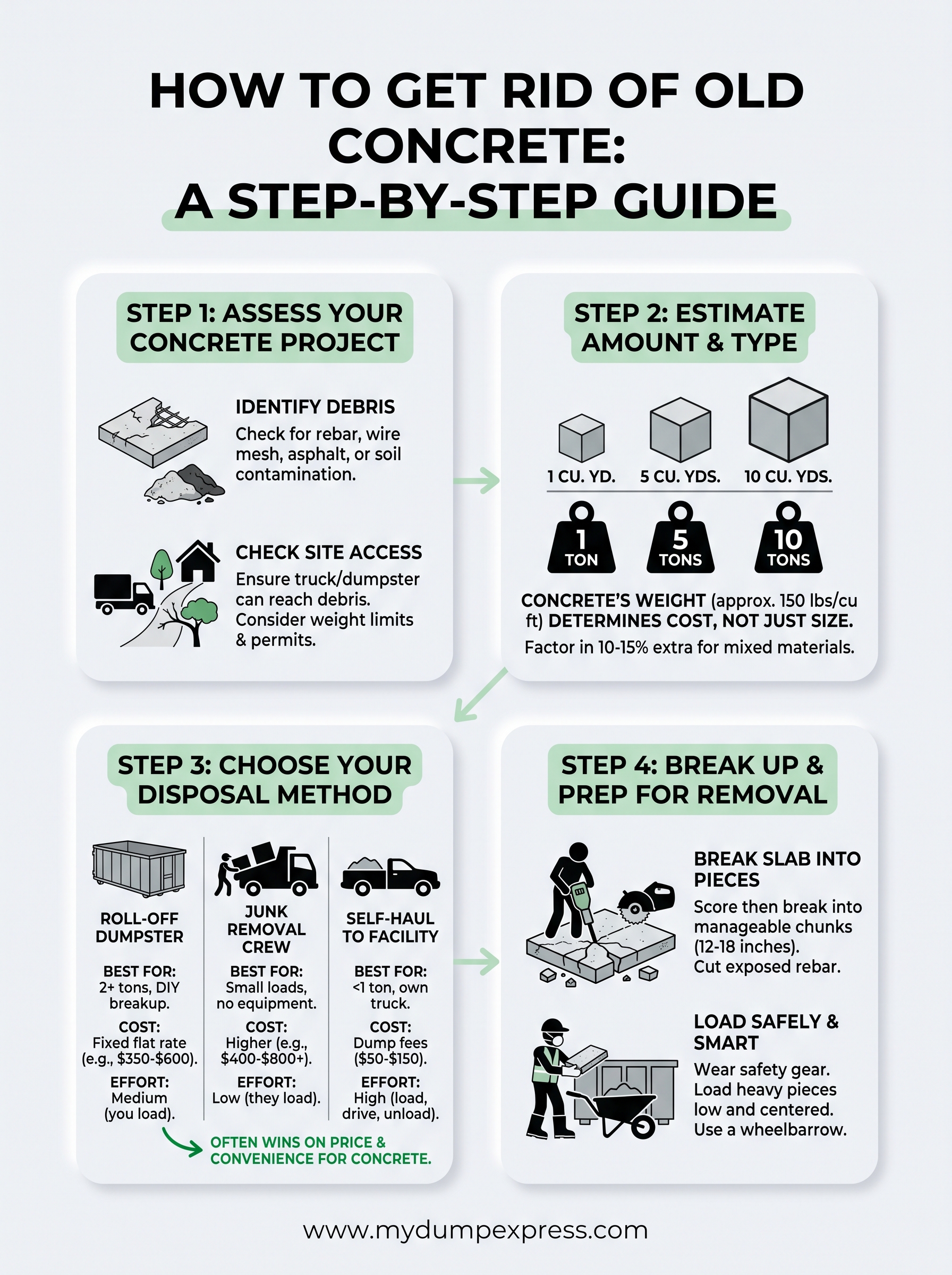
Concrete is heavy, roughly 150 pounds per cubic foot, which means a modest driveway tear-out can weigh several tons before you’ve hauled a single piece. Getting an accurate estimate matters because most dumpster rentals and disposal facilities charge by weight, not volume, so guessing low almost always costs you more in overage fees than guessing high would have cost in rental price.
Measure and calculate the volume
Start by measuring the length, width, and thickness of the slab in feet, then multiply those three numbers to get cubic feet. Divide that number by 27 to convert to cubic yards, which is how most dumpster capacities and disposal fees are listed. A 10-by-10-foot patio at 4 inches thick works out to about 12 cubic feet, or less than half a cubic yard, but the same footprint at 8 inches thick nearly doubles that weight.
Concrete’s weight, not its size, is what determines your disposal cost, so calculate tonnage before you calculate cubic yards.
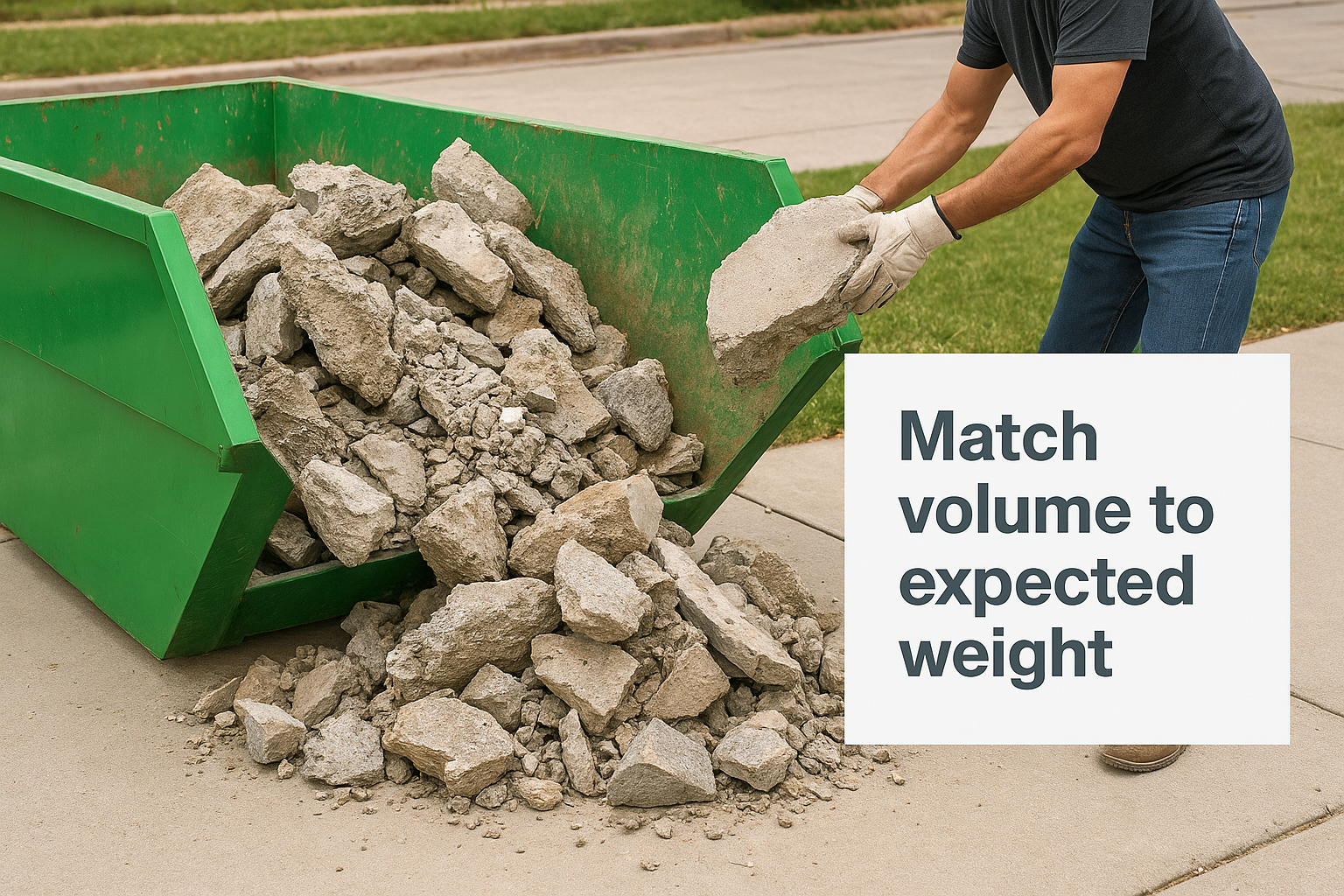
Match volume to expected weight
Use this rough guide to convert your measurements into the weight range a hauler or facility will actually bill you for:
| Concrete Volume | Approximate Weight |
|---|---|
| 1 cubic yard | 2,000-2,700 lbs |
| 5 cubic yards | 10,000-13,500 lbs |
| 10 cubic yards | 20,000-27,000 lbs |
If your project mixes concrete with brick, asphalt, or soil, add 10-15% to your estimate, since those materials rarely break down or compact the same way. This step alone determines whether Step 2’s disposal method choices actually fit your job.
Step 2. Choose your disposal method
Once you know the weight and composition of your debris, you can match it to the right disposal path. Most homeowners and contractors choose between three options: a roll-off dumpster rental, a full-service junk removal crew, or hauling the material yourself to a recycling yard or landfill. Each option handles concrete’s weight differently, and that’s what separates a fair price from an expensive surprise.
Compare your options
Weigh cost against effort before you decide. The table below breaks down what each method typically involves for a mid-size concrete job:
| Method | Best For | Typical Cost Range | Effort Required |
|---|---|---|---|
| Roll-off dumpster | 2+ tons, DIY breakup | $350-$600 flat rate | Medium (you load it) |
| Junk removal crew | Small loads, no equipment | $400-$800+ | Low (they load it) |
| Self-haul to facility | Under 1 ton, own truck/trailer | $50-$150 in dump fees | High (you load, drive, unload) |
Weigh cost against convenience
Dumpster rentals win for most concrete projects because the price is fixed upfront, and you’re not paying labor rates for someone else to lift material you could load yourself over a few days. Junk removal makes sense if you’re short on time or physically can’t break up and lift the debris, but crews typically charge more per ton than a straight dumpster rental once concrete’s weight is factored in. Self-hauling only pencils out for small piles, since most pickup trucks max out around half a ton of concrete before you risk damaging the suspension.
For anything heavier than a truck bed can safely carry, a dumpster rental beats hauling trip after trip to a landfill.
Step 3. Break up and prep the concrete for removal
Once you know your weight and disposal method, the next job is turning a slab into pieces small enough to lift and load. Concrete doesn’t need to be pulverized, but manageable chunks, roughly 12 to 18 inches across, load faster and pack tighter in a dumpster than giant slabs with jagged edges.
Break the slab into pieces
Start by scoring the surface with a circular saw fitted with a diamond blade, then work a sledgehammer or jackhammer along the scored lines to snap the concrete into sections. Rebar-reinforced slabs need an extra step: cut through exposed rebar with a reciprocating saw or bolt cutters before you try to lift the pieces, since bent metal snagging on a dumpster wall can slow down loading or damage the container.
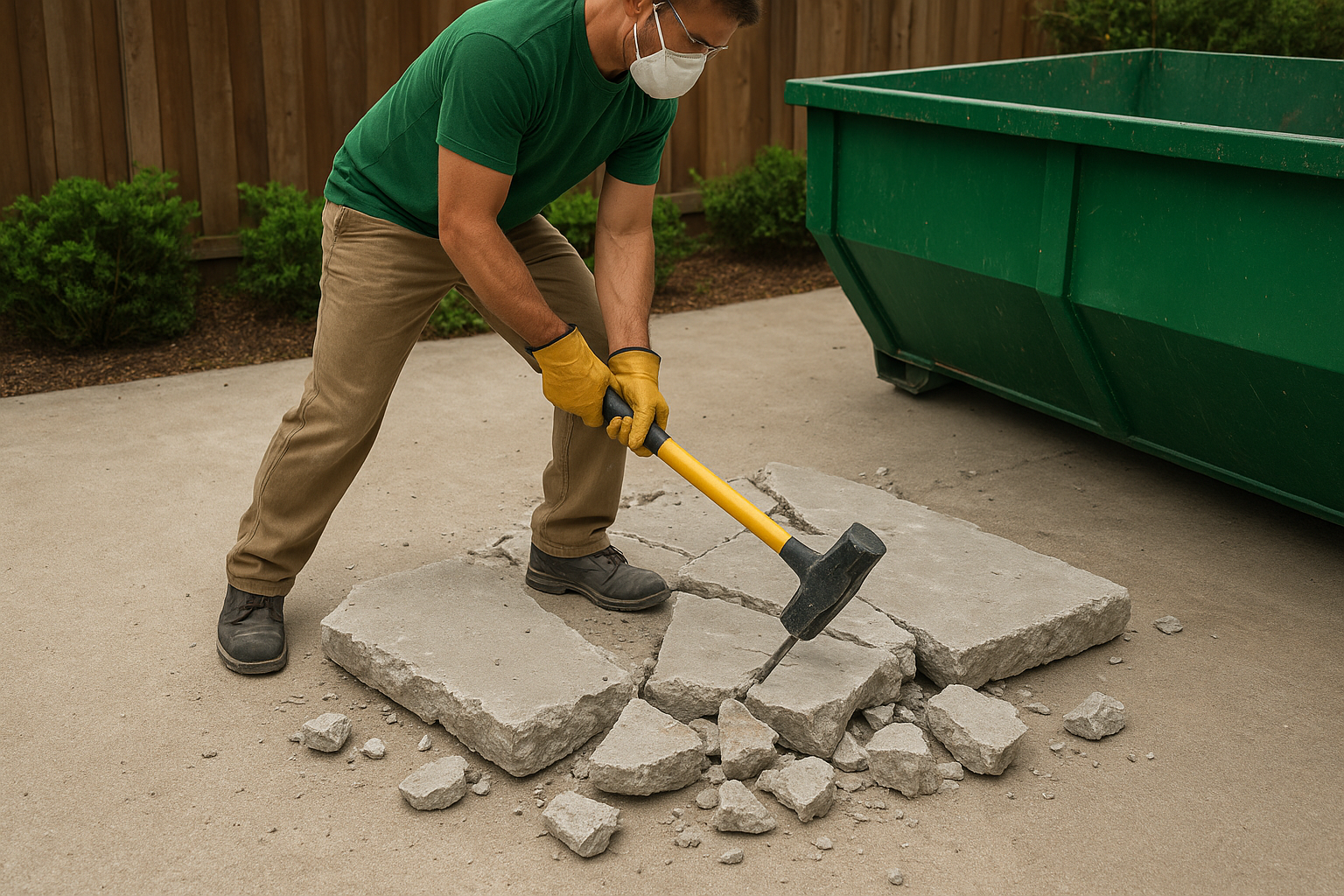
Score first, then break, because random hammering wastes energy and leaves you with pieces too big to lift safely.
Protect yourself and load safely
Concrete debris is sharp, dusty, and heavier than it looks, so treat it like a job site even in your own backyard. The CDC recommends wearing a dust mask when cutting or breaking concrete, since dry-cutting releases silica dust that’s harmful to breathe over time.
Before loading, run through this quick prep checklist:
- Wear gloves, steel-toe boots, eye protection, and a dust mask
- Break pieces down to roughly 12-18 inches
- Cut or bend back exposed rebar
- Load heaviest pieces first, low and centered in the dumpster
- Keep a wheelbarrow or dolly nearby for longer carries
Getting this stage right keeps your dumpster balanced and your load within its rated weight limit.
Step 4. Schedule pickup or drop-off and compare costs
Once your concrete is broken down and staged, the last step is locking in a delivery window or drop-off appointment that matches your timeline. Concrete disposal facilities often keep limited hours and close on weekends, so scheduling around business days matters more here than with regular household trash.
Book your delivery or drop-off window
Most dumpster providers can deliver within 24 to 48 hours, and some, like Dump Express, offer same-day delivery across Cape Cod and Plymouth when the schedule allows. Confirm two things when you book: the exact rental period, since concrete jobs often run longer than expected once you start breaking up buried sections, and the pickup date, since disposal facilities that accept concrete typically only operate on weekdays. If you’re self-hauling, call ahead to confirm the facility’s hours and weight scale availability, since some yards close their scales earlier than their gates.
Compare final costs before you commit
Before you sign off on any option, get the full price in writing, not just the base rate. Ask about:
- Weight limits included in the base price and the per-ton overage rate
- Delivery and pickup fees separate from the rental period
- Rental period length and daily extension charges
- Any permit fees if the container sits on a street or right-of-way
A quote that doesn’t list weight limits and overage rates isn’t a real quote, it’s a guess you’ll pay for later.
Comparing these line items side by side is usually where a dumpster rental pulls ahead of junk removal or repeated self-haul trips, since the total cost is set before the truck ever shows up.
Getting your concrete cleared for good
Old concrete doesn’t have to sit in your yard while you weigh options for weeks. Once you’ve measured the debris, matched it to the right disposal method, broken it into manageable pieces, and locked in a schedule, the job moves fast. For most driveways, patios, and foundation tear-outs, a roll-off dumpster still beats junk removal crews and repeat landfill runs on both price and predictability, especially once you factor in concrete’s weight.
What separates a smooth project from a frustrating one usually comes down to local knowledge, knowing which yards accept concrete, what your town requires for permits, and how much a load actually weighs before the truck shows up. That’s exactly where a Cape Cod-based crew earns its keep over a call-center operation guessing at your address.
If you’re ready to move that pile off your property without surprise fees, get a transparent dumpster rental quote from Dump Express and get a delivery date on the calendar today.