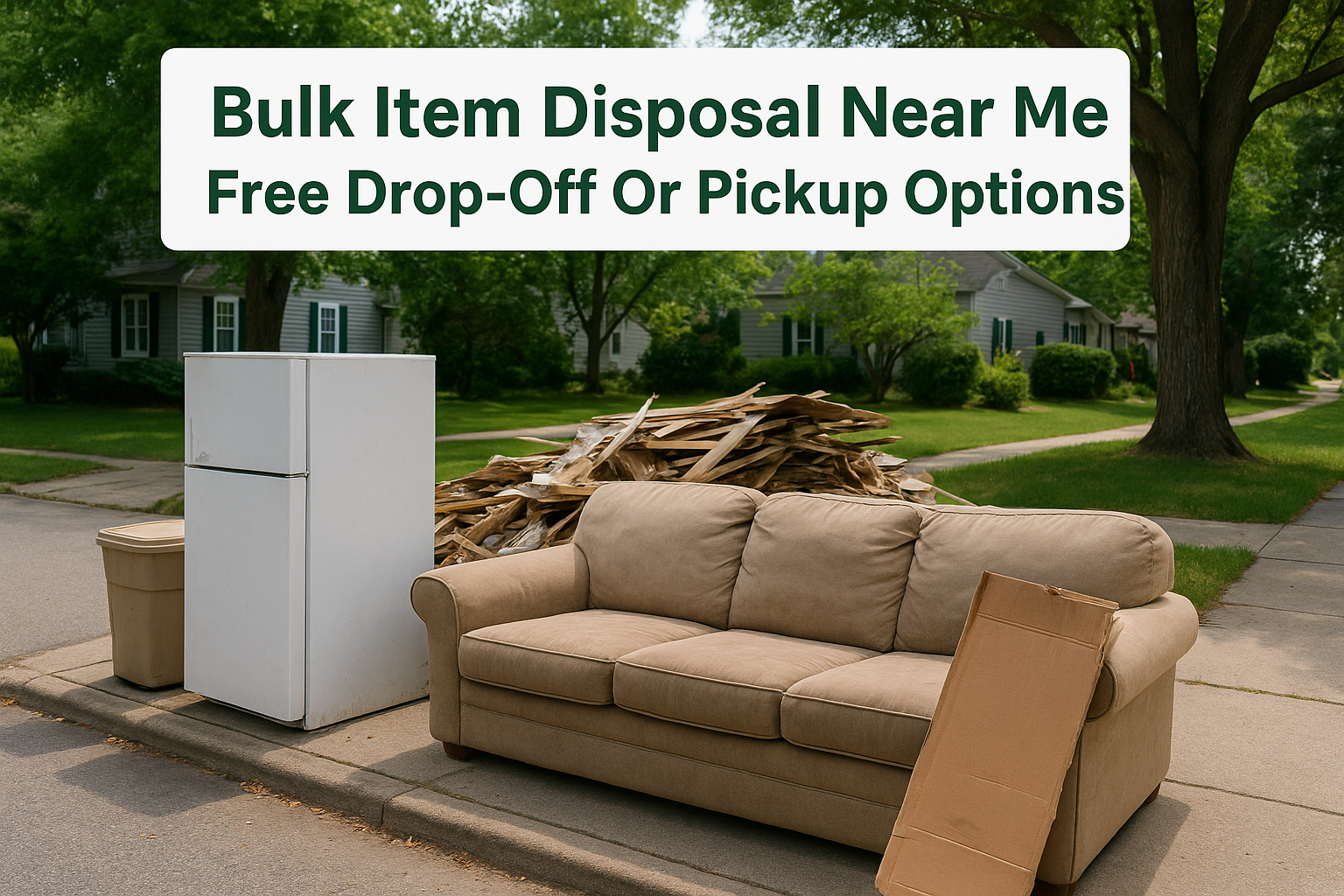
That old couch, the busted water heater, the pile of construction debris in your garage, none of it fits in your regular trash bin. When you search for bulk item disposal near me, you’re really asking one question: what’s the fastest, cheapest way to get this stuff gone? The answer depends on where you live and what you’re tossing.
Most areas offer a mix of free municipal drop-off sites, scheduled curbside pickup programs, and private hauling services. Some options cost nothing. Others save you time and heavy lifting. At Dump Express, we handle bulk waste removal across Cape Cod and Plymouth every day, so we know exactly which routes work, and which ones waste your weekend.
This guide breaks down your main disposal options step by step: free drop-off locations, city pickup programs, private junk removal, and dumpster rentals. By the end, you’ll know which method fits your project, your budget, and your timeline.
What counts as a bulky item and what to avoid
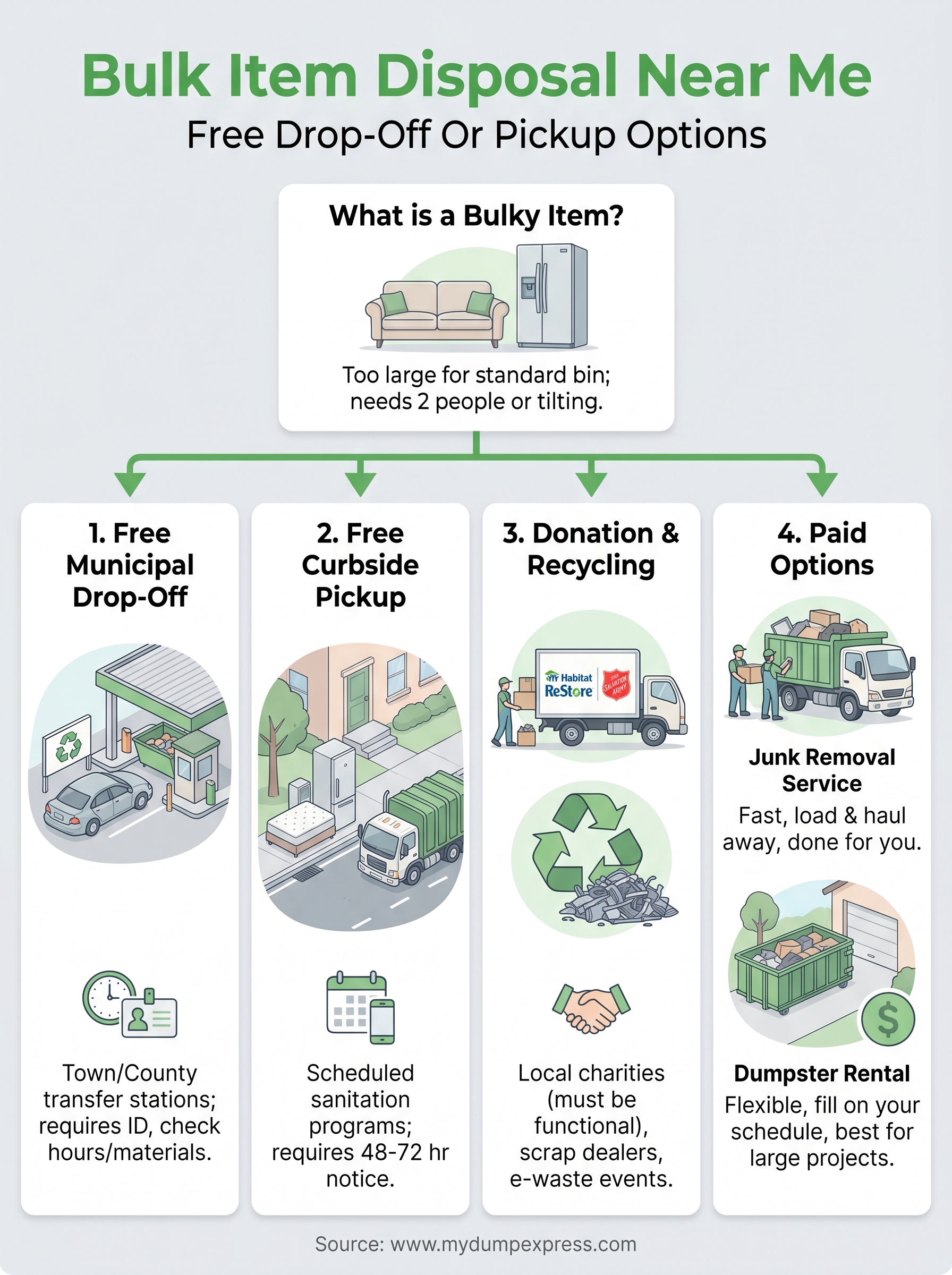
Before you start calling around or searching for bulk item disposal near me, you need to know whether what you’re hauling actually qualifies as bulk waste. Most municipalities define a bulky item as anything too large for your standard curbside bin. That usually means items that require two people to lift or won’t fit through a standard door without tilting.
What qualifies as a bulk item
Most disposal programs accept a specific range of oversized household items that won’t break down or fit in normal trash collection. If you’re unsure whether something qualifies, check your local public works or sanitation department website. Common examples include:
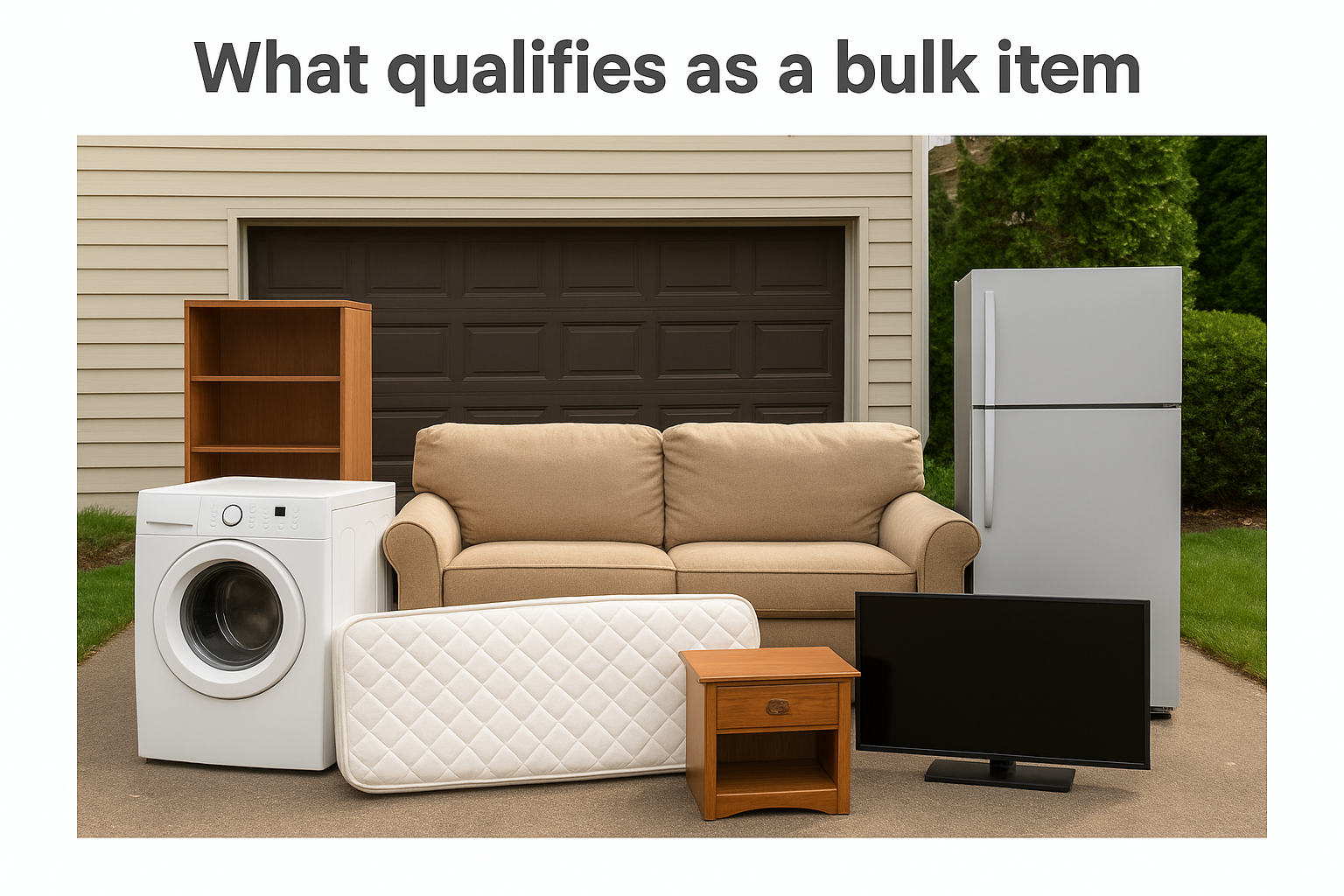
- Furniture: sofas, armchairs, mattresses, box springs, dressers, bookshelves
- Appliances: washers, dryers, refrigerators, stoves, dishwashers, water heaters
- Yard waste in large volumes: tree stumps, bundled brush, large quantities of sod
- Construction debris: drywall scraps, flooring, lumber, tiles (varies by program)
- Electronics: televisions, monitors, printers (often need separate e-waste handling)
Items that complicate disposal
Certain materials trigger extra fees, outright rejection, or legal restrictions regardless of size. Knowing these upfront saves you a wasted trip or a fine. The biggest problem categories are hazardous materials and regulated waste streams.
If an item contains refrigerant, lead, mercury, or asbestos, standard bulk disposal programs will not take it without special handling.
Specific items to plan separately include paint cans, motor oil, propane tanks, batteries, and anything labeled as a biohazard. Many counties run dedicated hazardous waste collection events a few times per year, and those are your best free option for these materials. Check your county’s environmental services page for the next scheduled date.
Step 1. Check free city and county drop-off options
Most towns and counties run municipal transfer stations or convenience centers where residents drop off bulk items for free. These facilities typically accept oversized furniture, appliances, yard debris, and certain construction materials. When you search for bulk item disposal near me, a local drop-off site is your first stop because it costs nothing beyond your time and a short drive.
How to find your local drop-off site
Start with your town’s public works website or your county’s solid waste management page. Search "[your town name] bulk waste drop-off" or "[county name] transfer station hours." Most sites list accepted materials, operating hours, and resident ID requirements upfront.
Bring a valid ID or utility bill to confirm your address since many facilities turn away non-residents or charge a higher fee without one.
Call ahead if you’re hauling appliances. Many facilities have dedicated drop zones for metals or electronics and require that refrigerant-containing units be pre-tagged before arrival. Confirming these details before loading your truck saves a wasted trip.
- Check the accepted materials list before loading
- Note hours: many sites close by noon on Saturdays
- Confirm whether appliances with refrigerant need prior handling
Step 2. Look for free curbside bulk pickup programs
Many towns offer scheduled curbside bulk pickup as part of their standard sanitation services, so you don’t have to haul anything yourself. This is often the most convenient free option when you search for bulk item disposal near me, especially if you’re clearing out heavy furniture or appliances.
How curbside pickup programs work
Most programs run on a set schedule, either once a month or a few times per year per address. You place qualifying items at the curb by a specific time, and the sanitation crew picks them up during their regular route. Some towns cap the number of items per visit or exclude electronics and hazardous materials entirely.
Check your town’s sanitation site to confirm your address qualifies and to see the current pickup calendar before you drag anything outside.
How to schedule your pickup
Contact your town’s public works or sanitation department directly and request a pickup date. Most programs require at least 48 to 72 hours’ notice before your scheduled collection. When you call, have your address and a brief item list ready so they can confirm eligibility on the spot.
- Confirm accepted items before placing them at the curb
- Set items out no earlier than the evening before pickup day
- Keep hazardous materials separate from your bulk items
Step 3. Try donation, reuse, and recycling first
Before you spend time scheduling bulk item disposal near me through a municipal program, check whether your items can be donated or recycled. If something still works, you can often get it picked up for free by a local charity or nonprofit, which saves you the hauling effort entirely.
Where to donate working items
Furniture, appliances, and household goods in decent condition are worth a phone call to your local Habitat for Humanity ReStore or Salvation Army. Both organizations pick up large items directly from your home at no charge. Habitat ReStore locations are especially useful for building materials and appliances that transfer stations often refuse.
Confirm the item is clean and functional before scheduling a donation pickup since charities will decline damaged or heavily soiled goods.
- Habitat for Humanity ReStore: accepts furniture, appliances, and building materials
- Salvation Army: picks up furniture and household goods
- Local Facebook Marketplace or Buy Nothing groups: free item postings often move fast
Recycling options for specific materials
Certain bulk items have dedicated recycling channels that keep them out of landfills and often cost nothing. Scrap metal dealers will take old appliances and water heaters at no charge, and some pay you by the pound for steel and copper. Electronics recycling is handled through manufacturer take-back programs or county e-waste events listed on your local government’s website.
Step 4. Compare paid options like dumpsters and haulers
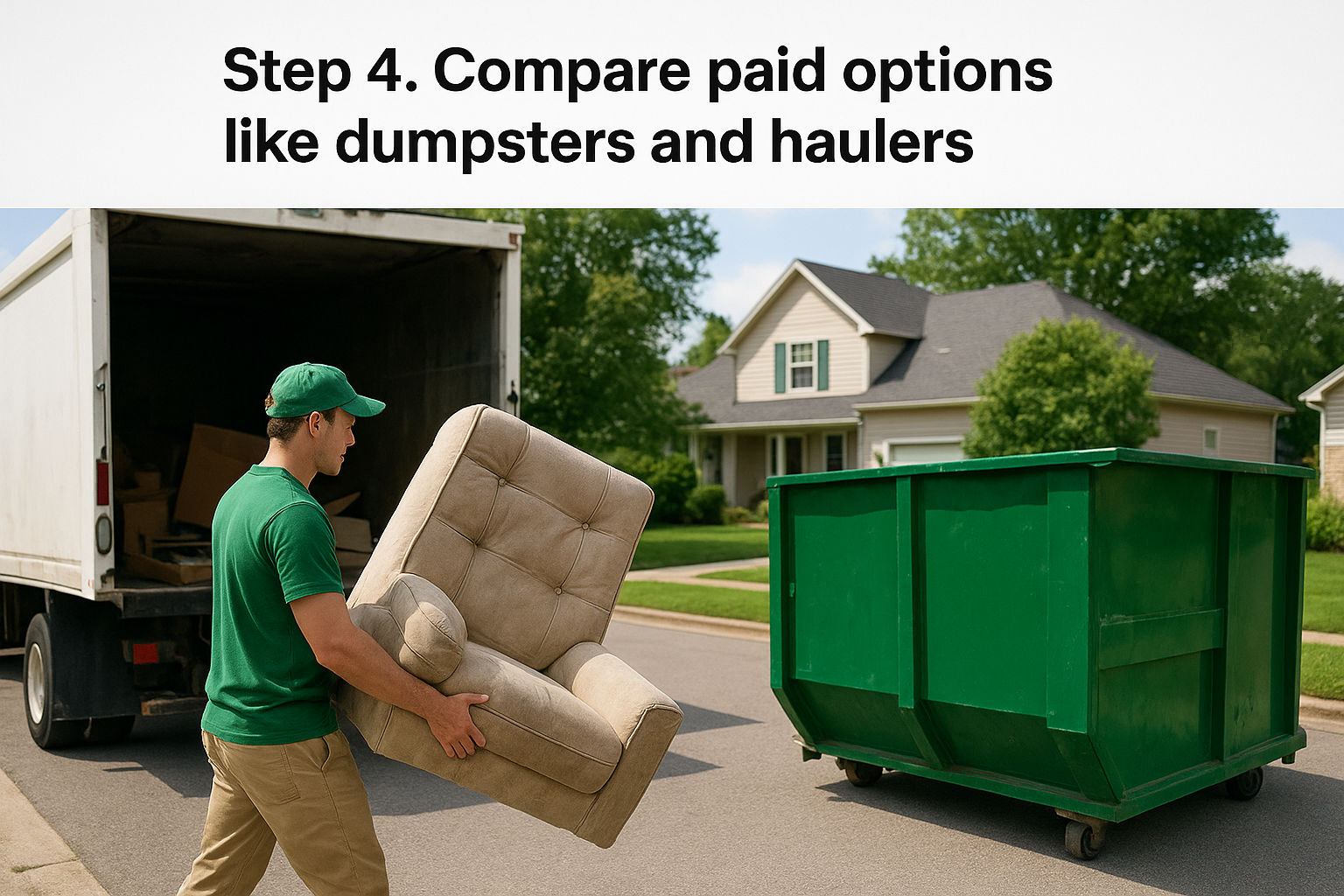
When free programs don’t fit your timeline or project scale, paid options give you more control. Two main choices cover most bulk item disposal near me situations: hiring a junk removal company or renting a dumpster.
Junk removal services
Junk removal companies send a crew to your location, load everything themselves, and haul it away the same day. You pay per load or by volume. This works well for one-time cleanouts where you want zero physical effort, but costs more per cubic yard than a dumpster rental when your project generates a lot of material.
Dumpster rentals
Renting a dumpster gives you full control over your own pace and timeline. A driver drops the container at your property, you fill it over several days, and it gets picked up on your schedule. This option costs less per load for large renovation projects or multi-room cleanouts compared to a junk removal crew.
A dumpster rental costs less per cubic yard than a junk removal crew when you have more than a truckload of material to move.
- Junk removal: best for quick, single-day cleanouts where you need the heavy lifting done for you
- Dumpster rental: best for ongoing projects where you want to load on your own schedule
Next steps
You now have a clear map for handling bulk item disposal near me without wasting time or money. Start with free municipal drop-off sites and curbside pickup programs since those cost nothing beyond your effort. If your items are in decent shape, try donation pickup through Habitat for Humanity ReStore or local buy-nothing groups before scheduling any hauling service.
When your project generates more material than a single truck run, a dumpster rental gives you the most flexibility and the lowest cost per load. You load it on your own schedule, and the driver handles the rest. For large cleanouts, renovations, or construction debris, that control matters.
If you’re on Cape Cod or in the Plymouth area and need a reliable dumpster delivered fast, get a quote from Dump Express today. Transparent pricing, same-day delivery in many towns, and a local team that knows the area make the process straightforward from start to finish.