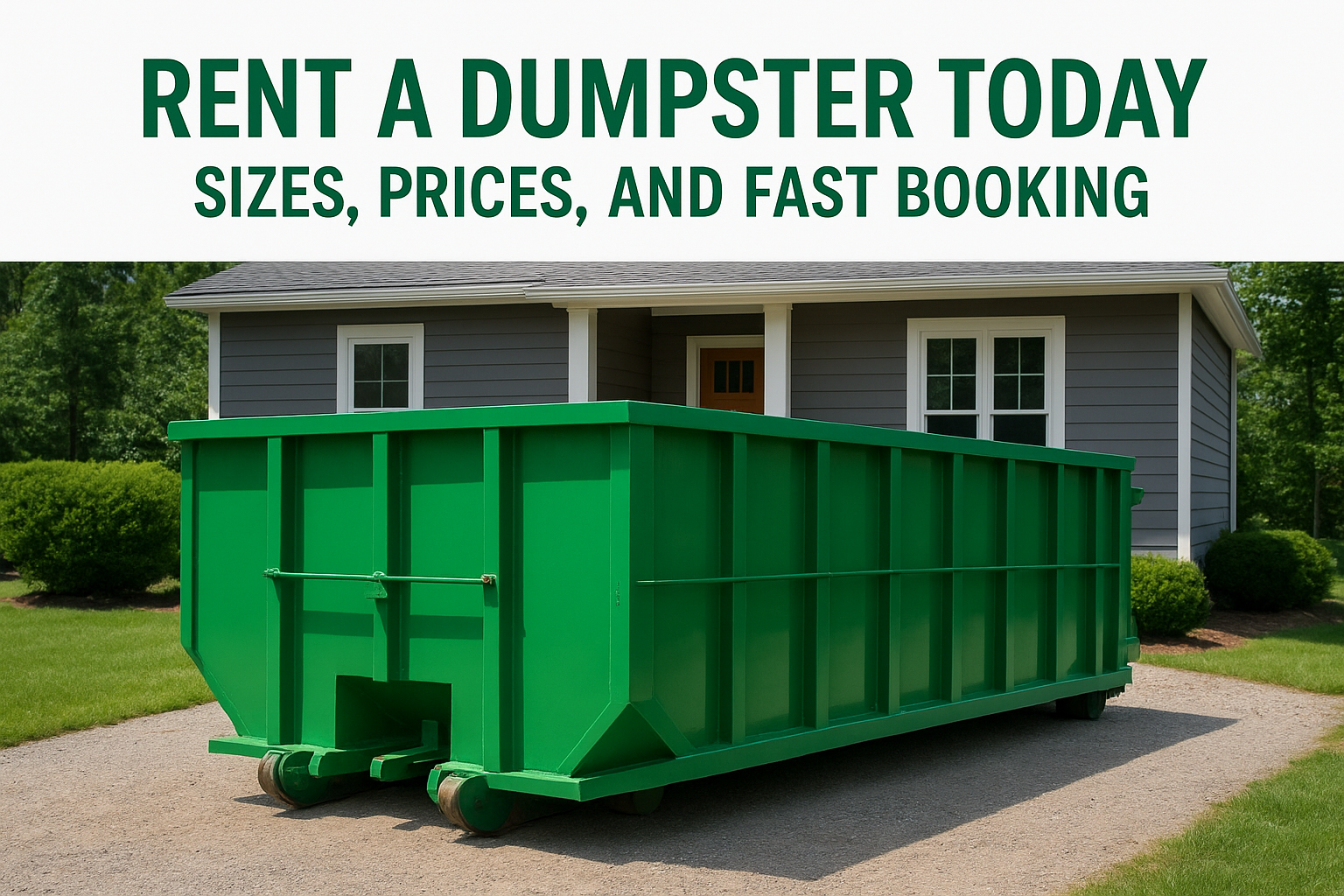
You’ve got a project lined up, a cleanout, a renovation, maybe a full demolition, and you need to rent a dumpster today. Not next week. Not "whenever we can fit you in." Today. The problem is, most rental companies make this harder than it should be: vague pricing, confusing size options, and delivery windows that don’t match your schedule.
This guide cuts through all of that. We’ll walk you through dumpster sizes and what they actually hold, pricing factors that affect your total cost, and how to book a delivery fast, sometimes same-day. Every recommendation here comes from what we see daily at Dump Express, where we’ve spent over 20 years delivering dumpsters across Cape Cod and Plymouth, Massachusetts.
By the end, you’ll know exactly which container fits your project, what you’ll pay, and how to get it on your property as quickly as possible.
What to know before you book today
When you want to rent a dumpster today, a few key details will determine whether the process goes smoothly or turns into a back-and-forth with the rental company. Before you pick up the phone or fill out a booking form, it helps to have a clear picture of what decisions you need to make upfront. Getting these right on the first call saves time, prevents extra charges, and gets your container on-site faster.
Four decisions that drive your booking
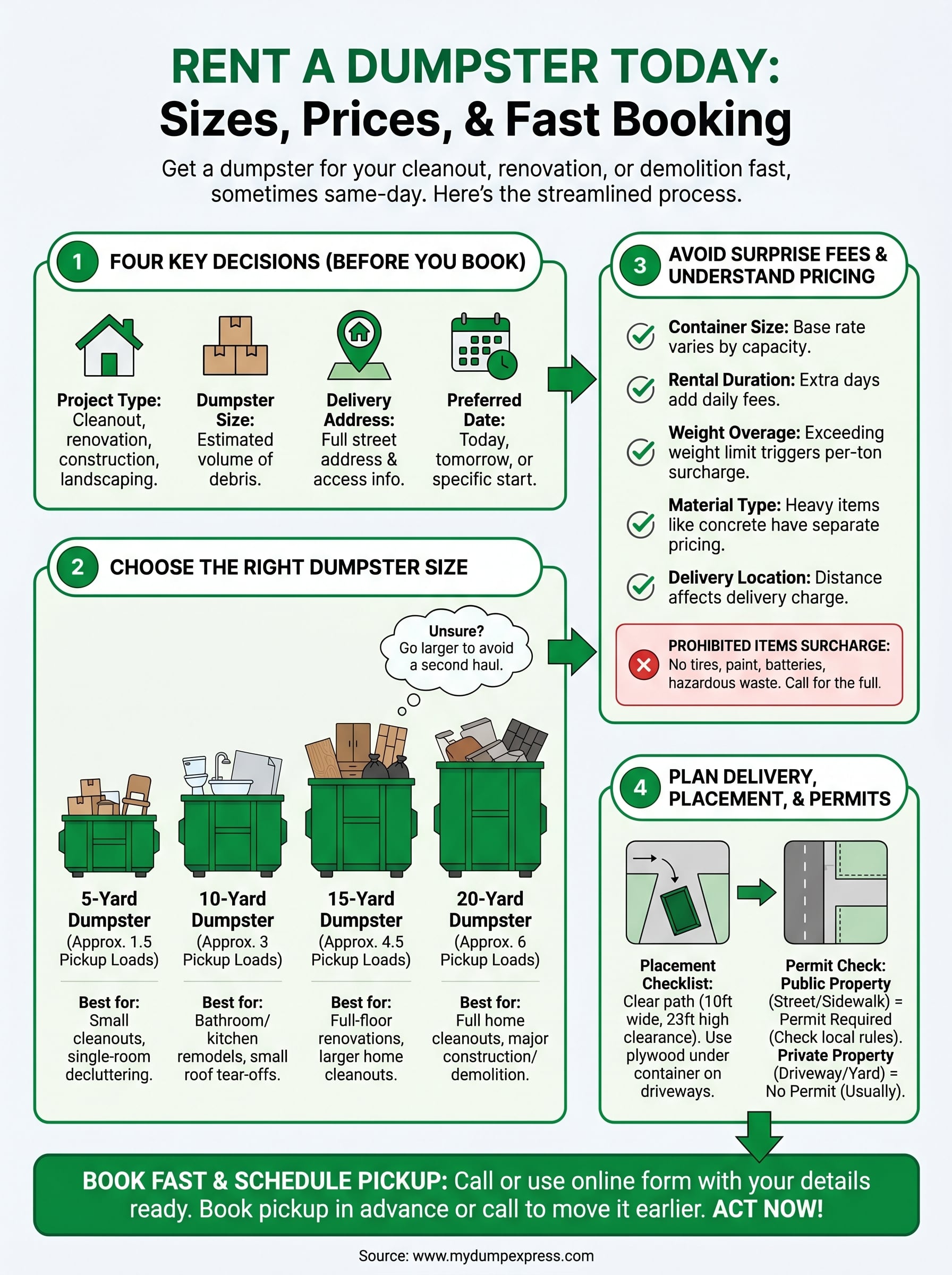
The four things a rental company needs from you are your project type, your desired dumpster size, your delivery address, and your preferred delivery date. You don’t need to know every detail of your renovation or cleanout before you call, but having these four points ready will cut the booking process to just a few minutes. If you’re unsure about size, most companies will ask a few questions about your project and recommend the right container based on what you’re removing and how much debris you expect to generate.
Getting the size right the first time is the single most effective way to avoid paying for a second haul.
Here’s a quick reference so you can pull this information together before you book:
| Decision | What to figure out |
|---|---|
| Project type | Cleanout, renovation, construction, landscaping, etc. |
| Dumpster size | Estimated volume of debris (covered in Step 1) |
| Delivery address | Full street address and any access restrictions |
| Preferred date | Today, tomorrow, or a specific start date |
What you can and cannot put in a dumpster
Most household and construction debris is accepted without any issue: furniture, drywall, lumber, flooring, shingles, concrete, dirt, and general household junk. Where people run into problems is with prohibited or restricted materials. Items like tires, propane tanks, paint cans, motor oil, asbestos-containing materials, and electronics are not accepted in standard roll-off containers because disposal facilities have strict regulations around hazardous waste.
Putting restricted items in a rented container typically results in a surcharge or an outright rejected load, both of which mean extra cost and a delay to your project. Before you load anything you’re uncertain about, call your rental company and ask. A quick question before you start loading is far less painful than a surprise charge on your final invoice.
How rental periods and pickups work
Rental periods vary by company, but most roll-off rentals include a fixed number of days before extension fees apply. Standard windows often run between three and seven days, which covers most home cleanouts and short renovation phases. When you book, ask specifically how extensions are billed so you can plan your project timeline without any unwelcome surprises.
Your pickup date matters just as much as your delivery date. Pickups typically happen on business days when transfer stations and disposal facilities are open, so you need to account for that when mapping out your schedule. If you wrap up loading early, most rental companies will move your pickup to an earlier date without issue, which gets the container off your property faster.
Step 1. Choose the right dumpster size
Picking the wrong size is the most common mistake people make when they rent a dumpster today. Go too small and you’ll need a second haul, which doubles your cost. Go too big and you’re paying for container space you never use. Most projects fall clearly into one of four container sizes, and matching your debris type to the right one takes less than two minutes.
The four sizes and what they hold
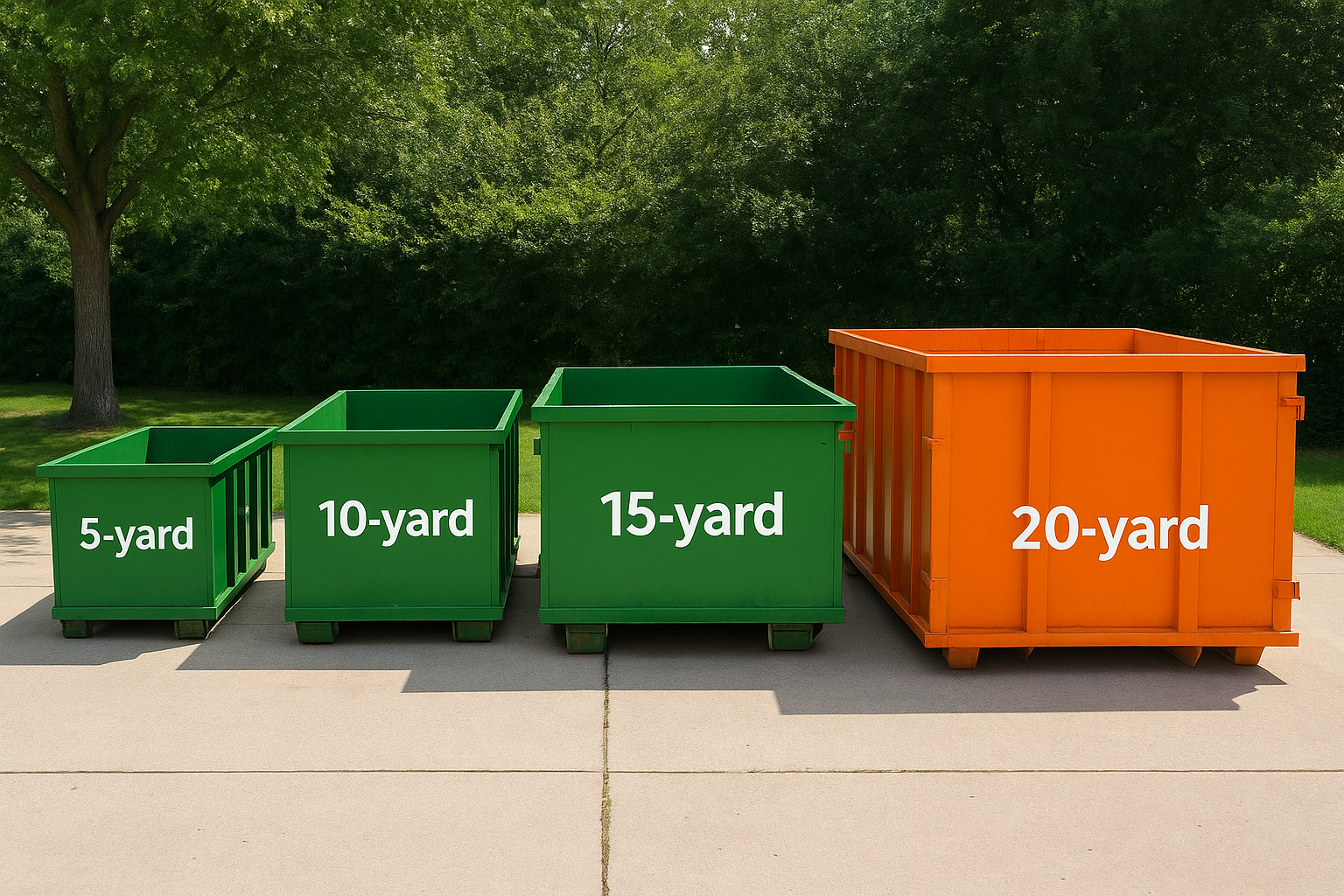
At Dump Express, the lineup runs from 5 yards up to 20 yards. Here’s how each one maps to real projects:
| Size | Approximate capacity | Best for |
|---|---|---|
| 5-yard | 1.5 pickup truck loads | Small cleanouts, single-room declutters, garage purges |
| 10-yard | 3 pickup truck loads | Bathroom or kitchen remodels, small roof tear-offs, mid-size cleanouts |
| 15-yard | 4.5 pickup truck loads | Full-floor renovations, larger home cleanouts, multi-room projects |
| 20-yard | 6 pickup truck loads | Full home cleanouts, roofing jobs, construction and demolition debris |
If you’re unsure between two sizes, go with the larger one. The cost difference is smaller than a second delivery fee.
How to match size to your project
Start by listing the main categories of debris you’ll generate: furniture, drywall, roofing shingles, flooring, yard waste, or general junk. Volume is what matters here, not weight alone. A living room full of furniture might fill a 10-yard container entirely, while the same visual volume in concrete or tile will be far heavier and may require a separate disposal arrangement.
For most residential cleanouts covering two to three rooms, a 10-yard or 15-yard container handles the job without overflow. Full home cleanouts or active renovation sites almost always require a 20-yard. If your project involves heavy materials like concrete, brick, or dirt, ask your rental company specifically about weight limits, since those containers have per-ton thresholds that differ from standard debris loads.
When in doubt, call before you book. A two-minute conversation about what you’re removing is all it takes to land on the right size with confidence.
Step 2. Check price and avoid surprise fees
Knowing the base rental rate is only part of the picture when you want to rent a dumpster today. Several variables affect what you actually pay, and understanding them upfront prevents the frustration of seeing unexpected charges on your final invoice that you didn’t budget for.
What drives your total cost
Dumpster rental pricing typically combines a flat rental fee, disposal costs based on weight, and a delivery charge. The base rate varies by container size and your delivery location, since companies factor in distance and local disposal facility fees when setting town-specific prices. At Dump Express, pricing is listed by town so you can see exactly what a rental costs in your area before you commit to anything.
Here are the main cost factors to review before you confirm:
- Container size: Larger containers carry higher base rates
- Rental duration: Extra days beyond the included window typically add a daily fee
- Weight overage: Loading past the weight limit triggers a per-ton surcharge
- Material type: Heavy materials like concrete or dirt often have separate pricing tiers
- Delivery location: Distance from the company’s yard affects the delivery charge
Get the per-ton overage rate in writing before you book. Knowing that number helps you decide whether to rent one larger container upfront or stay conservative with what you load.
Fees that catch people off guard
Prohibited item surcharges are the most common unexpected cost. If a driver or disposal facility finds tires, paint, batteries, or other restricted materials in your container, you’ll face an additional removal fee on top of your rental total. The fix is straightforward: ask your rental company for the prohibited items list before you start loading, not after.
Weight overages are the second most common surprise. People consistently underestimate how quickly heavy material adds up. A single layer of concrete chunks or roofing shingles across the bottom of a 15-yard container can add hundreds of dollars in overage fees if you’ve already packed the rest full with lighter debris. When your project involves dense material, ask for a weight estimate or discuss whether a separate smaller container for heavy debris makes more financial sense.
Step 3. Plan delivery, placement, and permits
When you rent a dumpster today, the container doesn’t just appear on your property without some forethought. Delivery logistics are straightforward when you think them through ahead of time, but skipping this step leads to delays, placement problems, and potential fines if local permit rules apply to your situation. Taking ten minutes to plan before your delivery date saves a lot of back-and-forth on the day the truck shows up.
Choosing where to place the container
The driver needs a clear, accessible path to drop the container where you want it. Before your delivery date, walk the route from the street to your intended placement spot and check for anything that blocks access: low-hanging branches, overhead utility lines, parked vehicles, or a gate that won’t open wide enough. A standard roll-off truck needs approximately 10 feet of clearance in width and 23 feet of vertical clearance to operate safely.
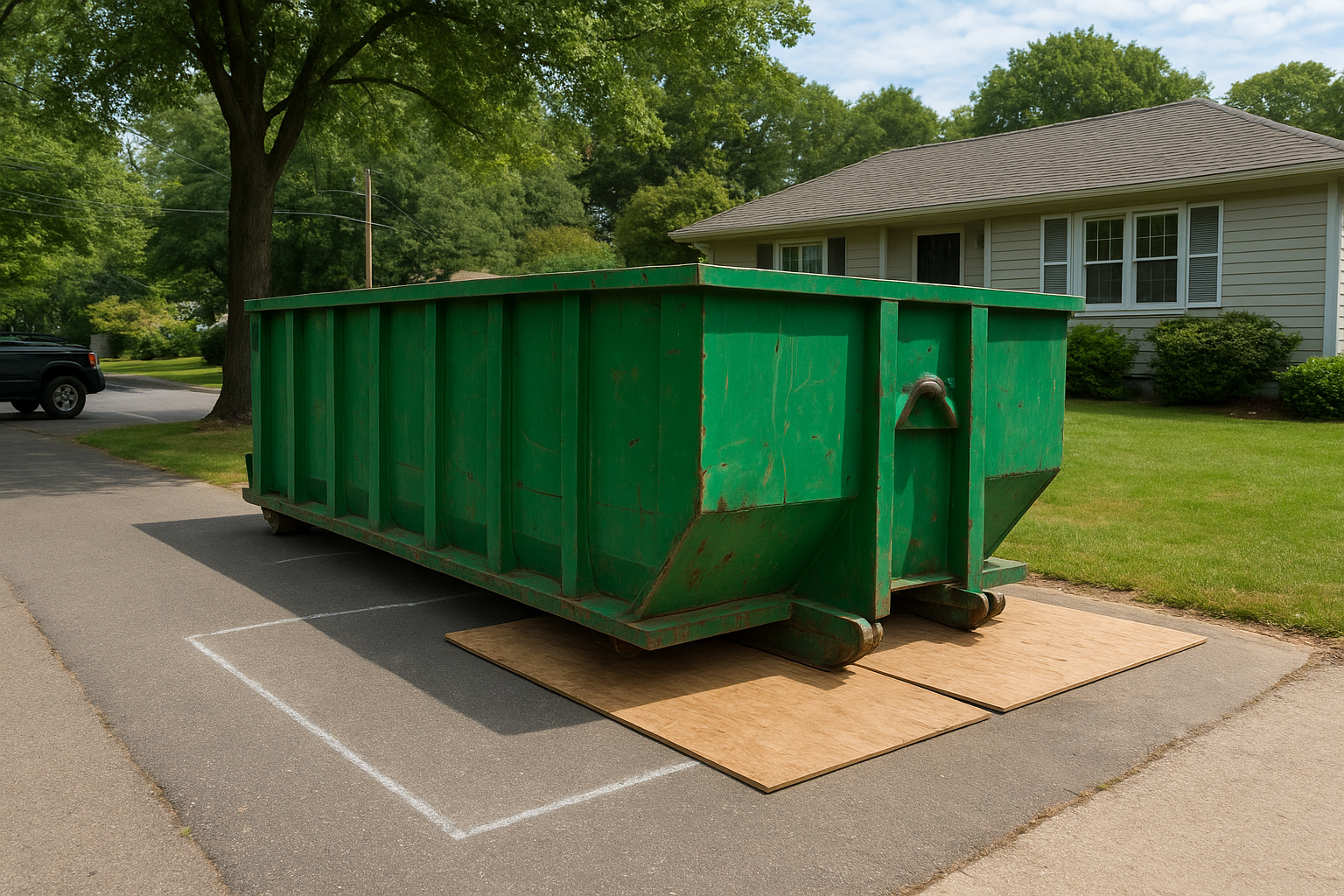
For surface protection, place plywood boards under the container’s contact points if you’re setting it on a driveway or soft surface. This distributes the weight and prevents cracking or gouging in asphalt and concrete. A 4×8 sheet of 3/4-inch plywood under each end of the container handles this without much effort or cost.
Marking your placement spot with chalk or cones before the driver arrives removes any guesswork and gets the container exactly where you need it.
When you need a permit
Placing a dumpster on public property, such as a street, sidewalk, or town-owned right-of-way, typically requires a permit from your local municipality. If the container sits entirely on your private driveway or yard, you usually don’t need one. Rules vary by town, so check with your local public works or highway department before your delivery date if you’re unsure whether your placement location qualifies as public property.
Your rental company can often tell you which towns require permits and what the typical approval timeline looks like. In many Cape Cod towns, the permit process is a straightforward phone or online request that takes one to two business days to clear, so factor that window into your scheduling if street placement is your only option.
Step 4. Book fast and schedule pickup
Once you know your size, price, and placement details, booking takes only a few minutes. Most rental companies offer phone booking and online forms, and if you’re trying to rent a dumpster today with same-day or next-day delivery, calling directly is typically the fastest path. A live conversation lets the company confirm availability at your address and lock in your delivery window on the spot.
What to have ready when you call or book online
Walking into a booking conversation with the right information cuts the process down to five minutes or less. You already worked through your project type, container size, and delivery address in the earlier steps, so pull those together before you dial or submit a form. Having your preferred delivery date and a backup date ready also helps when same-day windows are limited.
Use this quick pre-booking checklist to confirm you have everything:
- Full delivery address, including any access notes (gate codes, tight turns, low clearance)
- Preferred dumpster size and a second choice if availability is tight
- Target delivery date and a backup date
- Estimated project duration so the company can note your approximate pickup window
- Payment method ready to confirm the reservation
Calling before noon on your target delivery day gives you the best shot at securing same-day availability.
How to schedule your pickup
Pickup scheduling works best when you build it into your project plan from the start, not as an afterthought once you finish loading. When you book, ask the company to note your estimated completion date so they can slot your pickup in advance. This prevents you from sitting with a full container on your property while you wait for an available truck to become free.
Most companies allow you to call ahead and move your pickup earlier if you wrap up loading faster than expected. That flexibility is worth asking about at booking time. If your project runs longer than planned, request an extension before your rental period expires rather than after, since same-day extension requests are harder to accommodate than ones made a day or two in advance.
Next steps
You now have everything you need to rent a dumpster today without second-guessing your choices. You know which container size fits your project, what drives your total cost, how to prepare your property for delivery, and how to lock in your pickup before the job wraps up. The only thing left is to act on it.
Pull together your four booking details: project type, container size, delivery address, and preferred date. If your project involves heavy materials like concrete or shingles, mention that upfront so you can get accurate pricing and avoid overage charges. If you have access restrictions at your property, note those when you book so the driver arrives prepared.
Dump Express serves Cape Cod and Plymouth with same-day delivery options and transparent, town-specific pricing. Check availability and get your container scheduled at Dump Express before your delivery window fills up.