
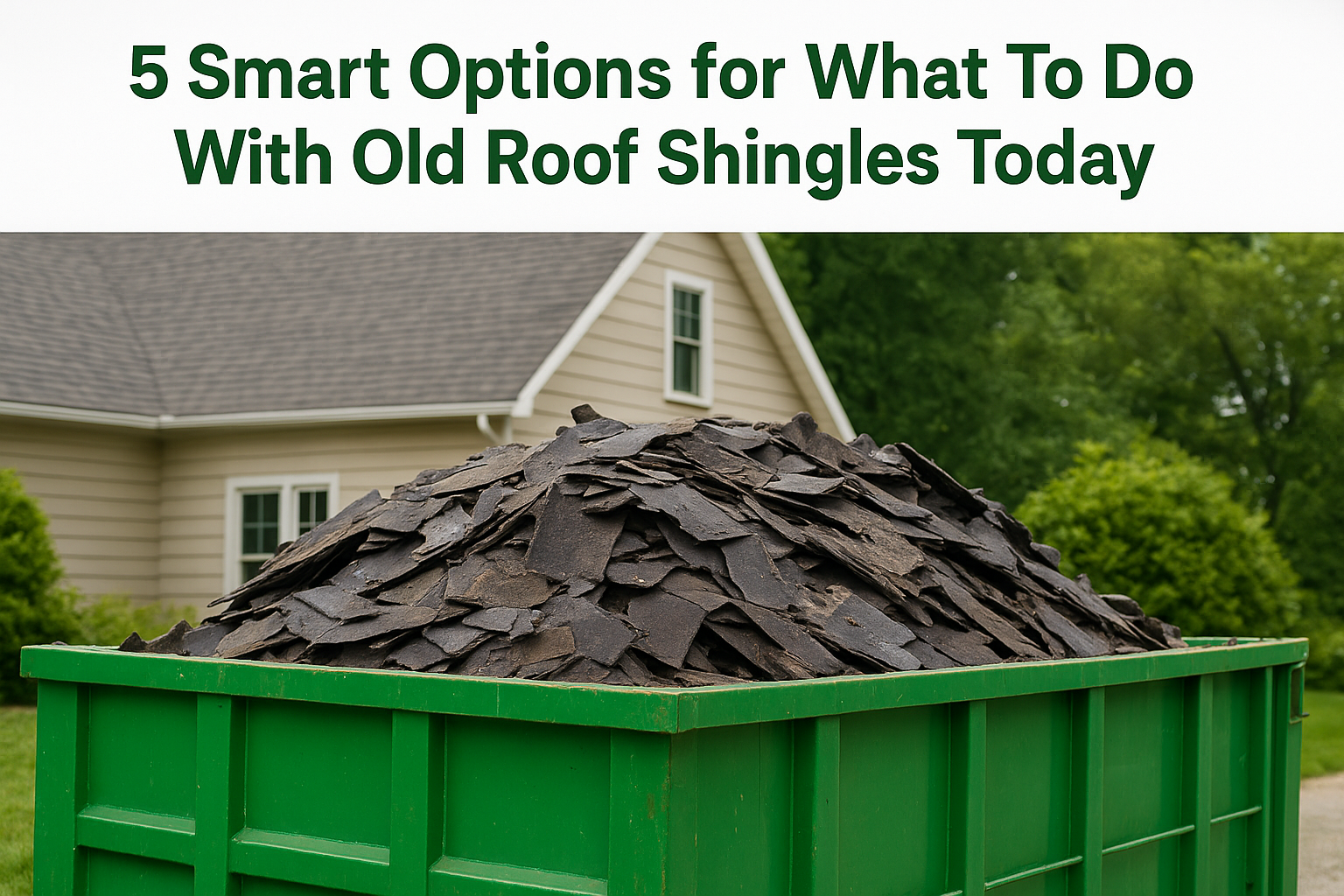
A roof replacement on Cape Cod generates anywhere from 1,500 to 3,000 pounds of old shingles, and all of that material has to go somewhere. If you’ve just finished a re-roofing project or you’re planning one, figuring out what to do with old roof shingles is one of those tasks that catches people off guard. Most homeowners don’t realize they have more options than just tossing everything into a pile and hoping for the best.
Some shingles can be recycled. Others can be repurposed. And when disposal is the right call, renting a dumpster makes the cleanup straightforward instead of chaotic. At Dump Express, we handle shingle disposal projects across Cape Cod and Plymouth every week, so we’ve seen firsthand what works and what doesn’t.
Here are five practical options for dealing with your old roof shingles, whether you’re looking to recycle, reuse, or simply get rid of them the right way.
1. Rent a dumpster for old roof shingles
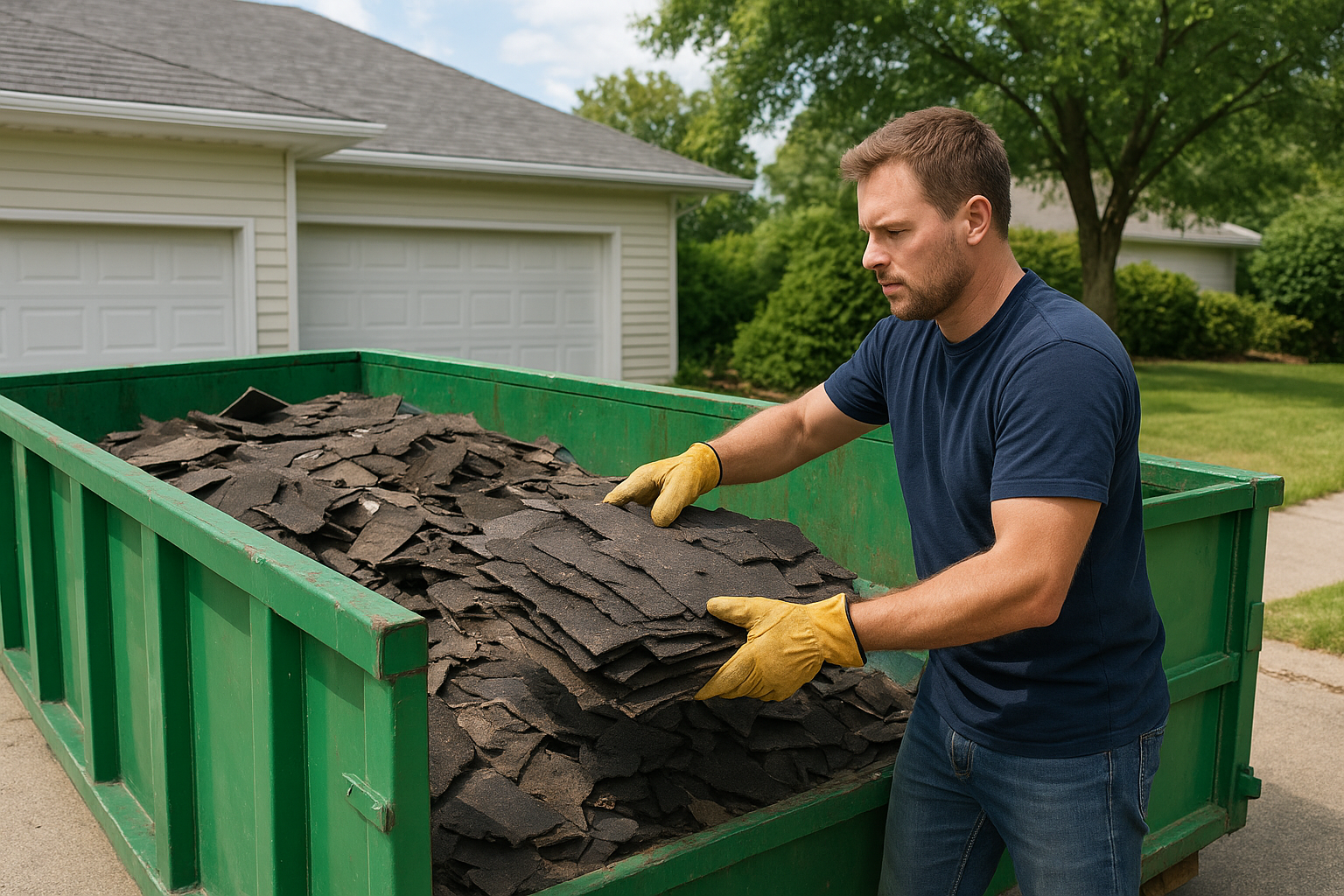
Renting a dumpster is the most practical answer to what to do with old roof shingles when you’re working on a full roof tear-off. It keeps the job site clean, cuts down on hauling trips, and lets you load debris at your own pace without rushing to a transfer station between loads.
When this option makes sense
This works best when you’re handling a large volume of shingles on your own, without a contractor managing cleanup. It also fits well when you want predictable scheduling and a dedicated place to load material as it comes off the roof, rather than stacking it in the driveway or yard.
How it works from delivery to pickup
You pick your dumpster size, schedule a delivery date, and the container arrives at your property. You load it as you strip the roof, and when you’re finished, you call for pickup. Dump Express serves Cape Cod and Plymouth area towns with same-day and next-day delivery options, so you’re not waiting around before work starts.
What you can load and what to keep out
Asphalt shingles go in without issue in most cases, but prohibited materials like paint, solvents, or hazardous waste cannot be mixed in. Some providers also restrict wood shingles or cedar shake, so confirm what’s accepted before you start loading to avoid a rejected haul.
Always ask for a full list of accepted materials before your delivery date to avoid surprise surcharges at pickup.
What it costs and what can increase the price
Pricing depends on dumpster size and your town’s disposal fees. A 10-yard container typically handles a standard residential tear-off. Costs climb quickly if you exceed the weight allowance, since shingles are dense and a full load adds up fast. Ask about weight caps before you book.
2. Recycle shingles at a shingle recycling facility
Recycling is one of the better answers to what to do with old roof shingles if you want to keep asphalt material out of the landfill. Many facilities grind shingles into recycled asphalt pavement (RAP), which gets used in road construction and paving projects across the region.
When recycling is allowed and when it is not
Asphalt shingles are widely accepted at recycling facilities, but wood, slate, or metal shingles typically are not. Shingles containing asbestos, common in homes built before 1980, require specialized handling and cannot go through standard recycling programs.
If your home was built before 1980, test your shingles for asbestos before assuming recycling is an option.
How the recycling process works
Facilities grind the shingles down and separate fiberglass mat, asphalt binder, and mineral granules. The resulting material gets incorporated into new paving products, diverting significant weight from landfills.
How to find a nearby drop-off site
Search for shingle recycling locations through your state’s environmental agency or contact your local waste management office for a current list of accepted drop-off points near you.
What it costs and what to ask before you go
Drop-off fees vary by facility and load size. Ask about accepted shingle types, weight limits, and whether you need to remove nails or separate materials before arrival to avoid rejection at the gate.
3. Ask your roofer to handle shingle recycling
If your contractor is already pulling shingles off the roof, having them handle recycling directly is often the smoothest answer to what to do with old roof shingles. Many roofing companies already have established relationships with local recycling facilities, which makes this a low-effort option for homeowners who don’t want to manage disposal themselves.
When this option makes sense
This works best when you’ve hired a contractor for a full tear-off and want cleanup handled as part of the same job. It removes the need to rent separate equipment or coordinate drop-off trips on your own schedule.
What to ask before the job starts
Confirm whether the contractor actually recycles shingles or simply hauls them to a landfill before you sign anything. Ask these questions upfront:
- Which recycling facility do they use?
- Do they separate non-recyclable debris like underlayment or flashing?
- Is the disposal fee included in the quote?
How contractors sort and haul tear-off shingles
Most roofers load shingles directly into their own dump trailer or roll-off container as they strip each roof section. They pull out flashing, nails, and other non-recyclable material before dropping the load at the facility.
What it costs and what to get in writing
Contractors typically bundle disposal fees into the project quote, but the breakdown varies widely. Ask for a written line item covering disposal so you know exactly what cleanup costs before work starts.
Always get recycling commitments in writing before the job begins to avoid billing disputes later.
4. Repurpose leftover shingles for small projects
If you have leftover or lightly worn shingles from a repair job, repurposing them is a practical answer to what to do with old roof shingles. This option costs you nothing extra and works best when the shingles are still structurally sound.
What counts as safe reusable shingles
Good candidates are flat, uncracked asphalt shingles with most of their granule surface still intact. Skip anything showing signs of curling, blistering, or mold, since those conditions make the material unreliable for any secondary use.
- Granules mostly intact with no bare patches
- No visible cracks, splits, or warping
- No mold, staining, or moisture damage
Practical ways to reuse shingles around your property
Old shingles work well as weed barriers under garden mulch when laid flat in overlapping rows. You can also place them under firewood stacks to block ground moisture and keep wood dry.
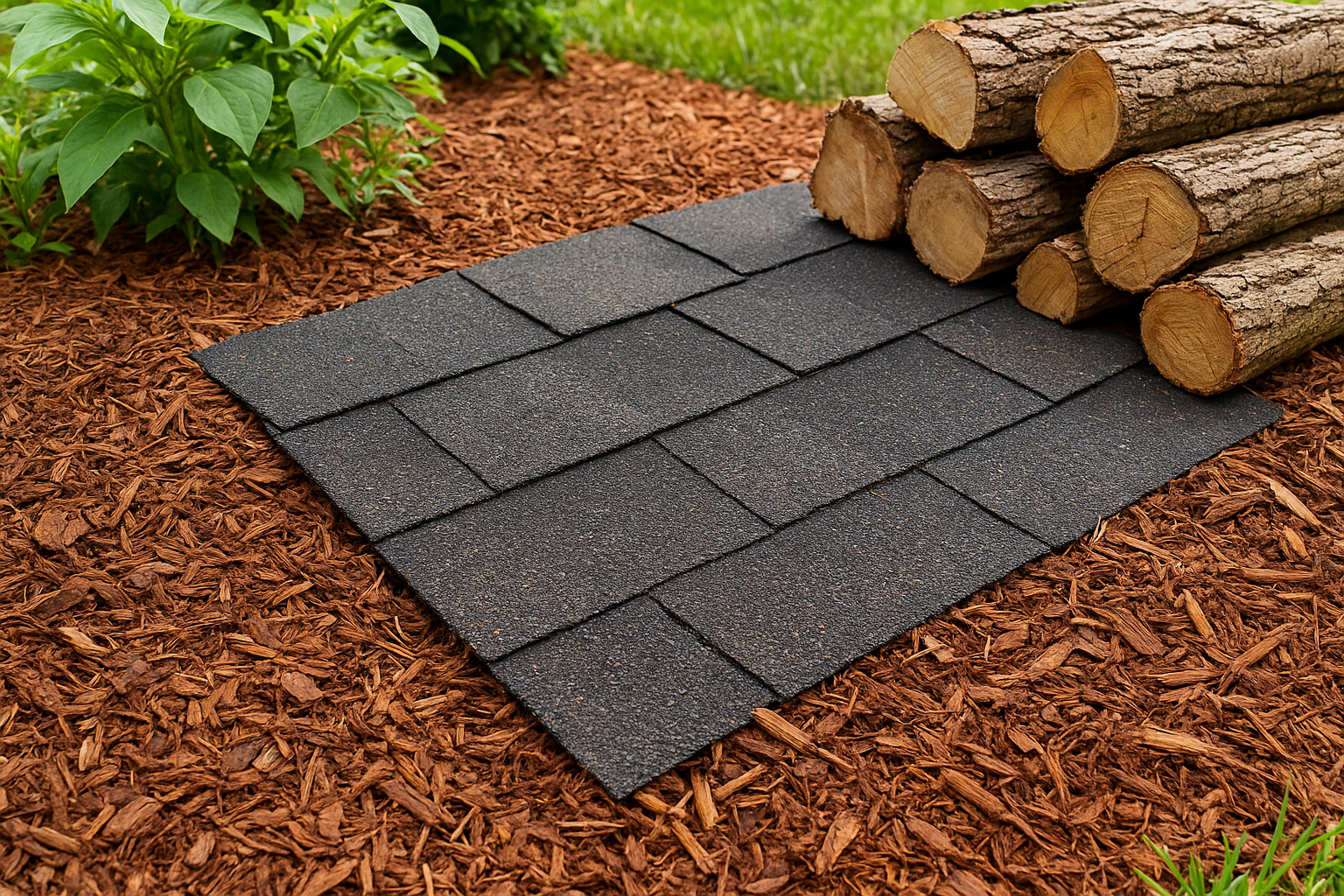
Overlap shingles like you would on a roof when using them as a garden weed barrier for full coverage.
Safety notes for cutting, handling, and storage
Always wear gloves and eye protection when trimming shingles with a utility knife. Store unused pieces flat and dry to prevent warping. Shingles from homes built before 1980 may contain asbestos, so test before cutting or handling.
What it costs and what to avoid doing
Repurposing costs nothing beyond your time, but avoid placing old shingles on any load-bearing or structural surface where code-approved materials are required by local building standards.
5. Use a transfer station or landfill as a last resort
When recycling facilities won’t accept your material and a dumpster rental doesn’t fit the job, a local transfer station or landfill is a valid final answer to what to do with old roof shingles. Use this option only when no other route is available, since landfill space is limited and most facilities charge by weight.
When disposal becomes the only option
Damaged, contaminated, or mixed-material shingles often disqualify from recycling programs. If you have a small leftover quantity that doesn’t justify renting a dumpster, hauling directly to a transfer station is your most practical move.
Local rules that can block drop-offs
Many Cape Cod towns require a permit or only accept material from residents with proof of address. Call your local facility before loading your truck to confirm accepted materials and hours of operation.
Check your town’s waste management page for current drop-off rules before making the trip.
How to transport and unload safely
Load shingles into secured bags or containers to prevent debris from spilling during transit. Wear gloves and eye protection when unloading to protect yourself from sharp edges and granule dust.
What it costs and how to avoid surprise fees
Fees are charged by weight at most facilities. Ask for the per-ton rate upfront so you can estimate your total cost before you arrive.
Next steps
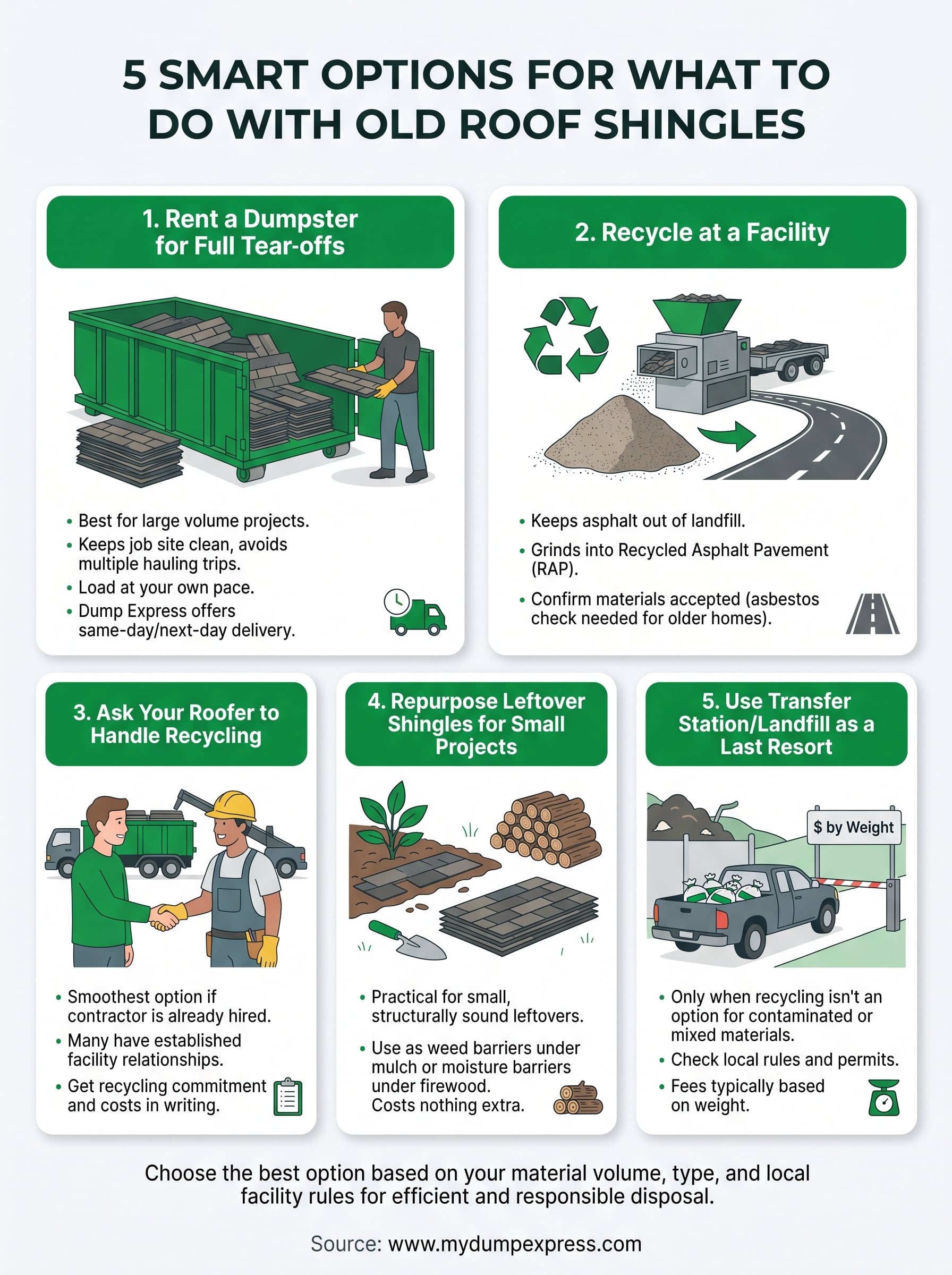
Now you have a clear picture of what to do with old roof shingles, whether you’re stripping an entire roof or clearing out a small stockpile. The right option depends on your volume of material, shingle type, and local facility rules, so start by confirming what your town accepts before you commit to any one route.
For most full tear-off projects on Cape Cod and Plymouth, renting a dumpster is the fastest and most straightforward path. You load on your own schedule, skip the hauling trips, and keep the job site clean from start to finish. If you’re ready to get a container delivered to your property, book a dumpster rental with Dump Express and get same-day or next-day delivery across 40+ towns in the area. A quick call also gets you sizing advice and upfront pricing before you commit.