
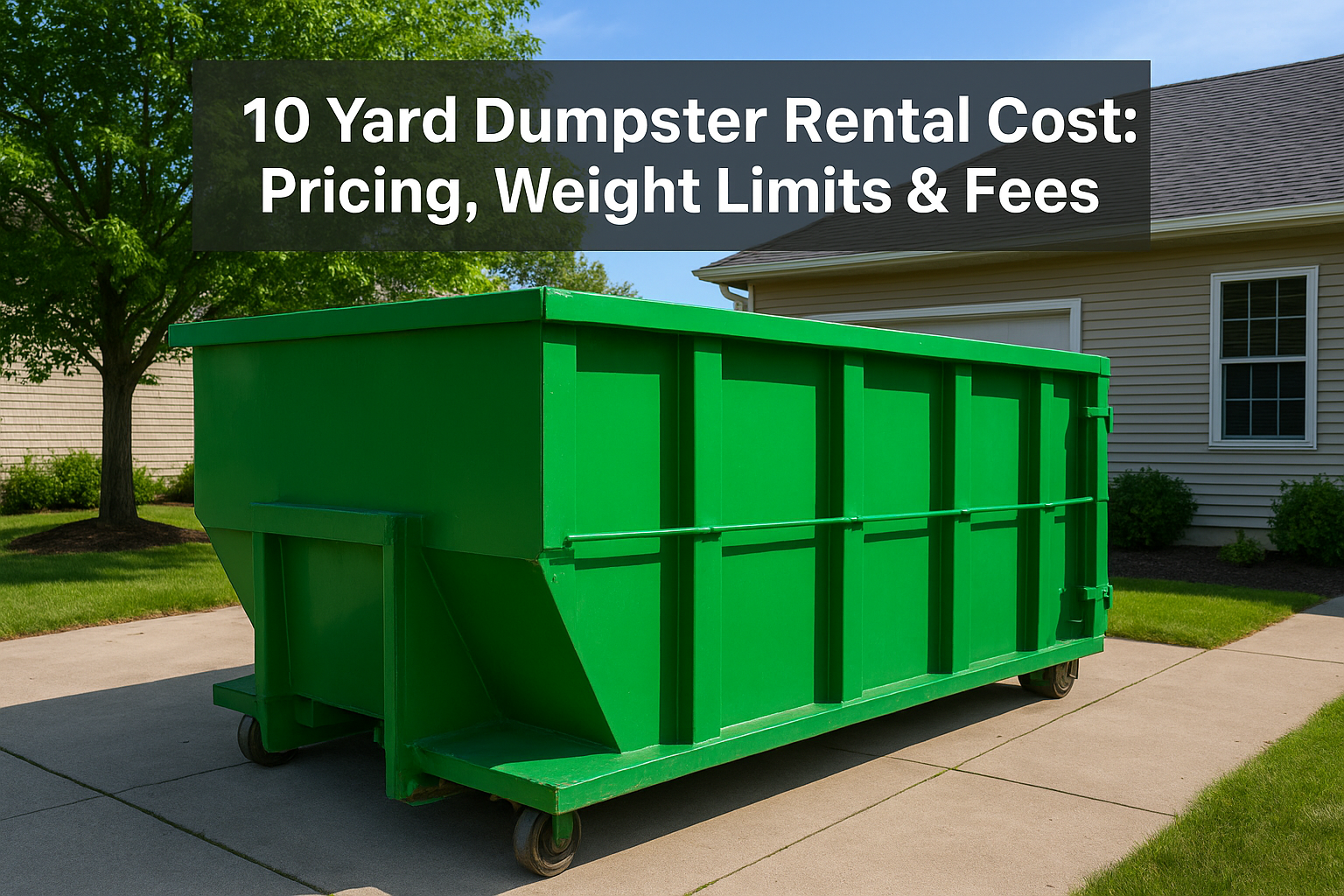
A 10-yard dumpster is one of the most popular sizes for residential projects, garage cleanouts, bathroom remodels, small deck removals, but figuring out the 10 yard dumpster rental cost before you book can be frustrating. Prices vary based on where you live, what you’re throwing away, and how long you keep the container, so a single number rarely tells the full story.
At Dump Express, we rent 10-yard dumpsters across Cape Cod and Plymouth every day. We see firsthand how pricing confusion leads to overspending, or worse, choosing a provider who tacks on fees after the fact. That’s why we believe transparent, upfront pricing matters more than a cheap quote.
This article breaks down what a 10-yard dumpster rental actually costs, what drives the price up or down, and how weight limits, overage fees, and rental periods factor into your total. By the end, you’ll have the numbers you need to budget your project accurately and compare providers with confidence.
Why 10-yard dumpster pricing varies so much
The 10 yard dumpster rental cost is not a fixed number, and that surprises a lot of people. Two customers booking the same size container, in different towns or with different waste types, can end up paying very different amounts. Understanding the factors behind those differences helps you make a smarter decision before you book anything.
Your location sets the baseline
Where you live is the single biggest driver of your rental price. Disposal facilities (transfer stations and landfills) charge different tipping fees depending on your region, and those fees pass directly to you through the rental cost. In some parts of Massachusetts, tipping fees run higher than the national average, which pushes base rental rates up.
Beyond disposal fees, local fuel costs and drive time from the provider’s yard to your address add to the equation. A dumpster dropped at a job site 30 minutes from the nearest facility costs more to service than one placed two miles away. When you see wide price ranges online for dumpster rentals in your area, geographic distance is usually a major reason.
Providers who know your specific town well can price more accurately than national platforms that estimate based on zip code alone.
The type of debris you’re disposing of matters
Not all waste is created equal from a pricing standpoint. Heavy materials like concrete, dirt, and roofing shingles weigh far more per cubic yard than household junk or general debris. Most rental agreements include a base weight limit, typically measured in tons, and materials like those can push you past that limit quickly.
Rental providers also charge differently based on prohibited or restricted items. Electronics, appliances with refrigerants, mattresses, and certain construction materials often carry extra handling fees or need to be separated at the facility. If your load includes any of these, expect that to show up in your final bill unless your provider spells out flat pricing upfront.
Rental duration and scheduling affect the total
Most providers quote a rental period in the base price, often somewhere between three and seven days. If your project runs long and you need an extended rental, that extra time usually comes with a daily rate added on top of your base cost.
Timing also plays a role. Same-day or next-day delivery in tight windows can carry a premium depending on the provider’s availability and current demand. Booking in advance typically gives you more flexibility and can help you avoid rush surcharges if the provider offers them.
Provider type changes what you pay and how
There’s a real difference between booking through a local dumpster company and using a national broker or marketplace. Brokers connect you with third-party haulers, and they add a margin on top of the hauler’s rate. You may also end up dealing with a call center that has no direct knowledge of your area’s disposal rules, access restrictions, or town-specific requirements.
Local providers who operate their own trucks and maintain their own yard locations can price more transparently because they control the full process. At Dump Express, we operate multiple Cape Cod yard locations specifically to reduce turnaround times and keep our pricing competitive and honest without layering in middleman costs. That structure allows us to give you a real number upfront rather than an estimate that shifts once the truck shows up.
What a 10-yard dumpster holds and fits
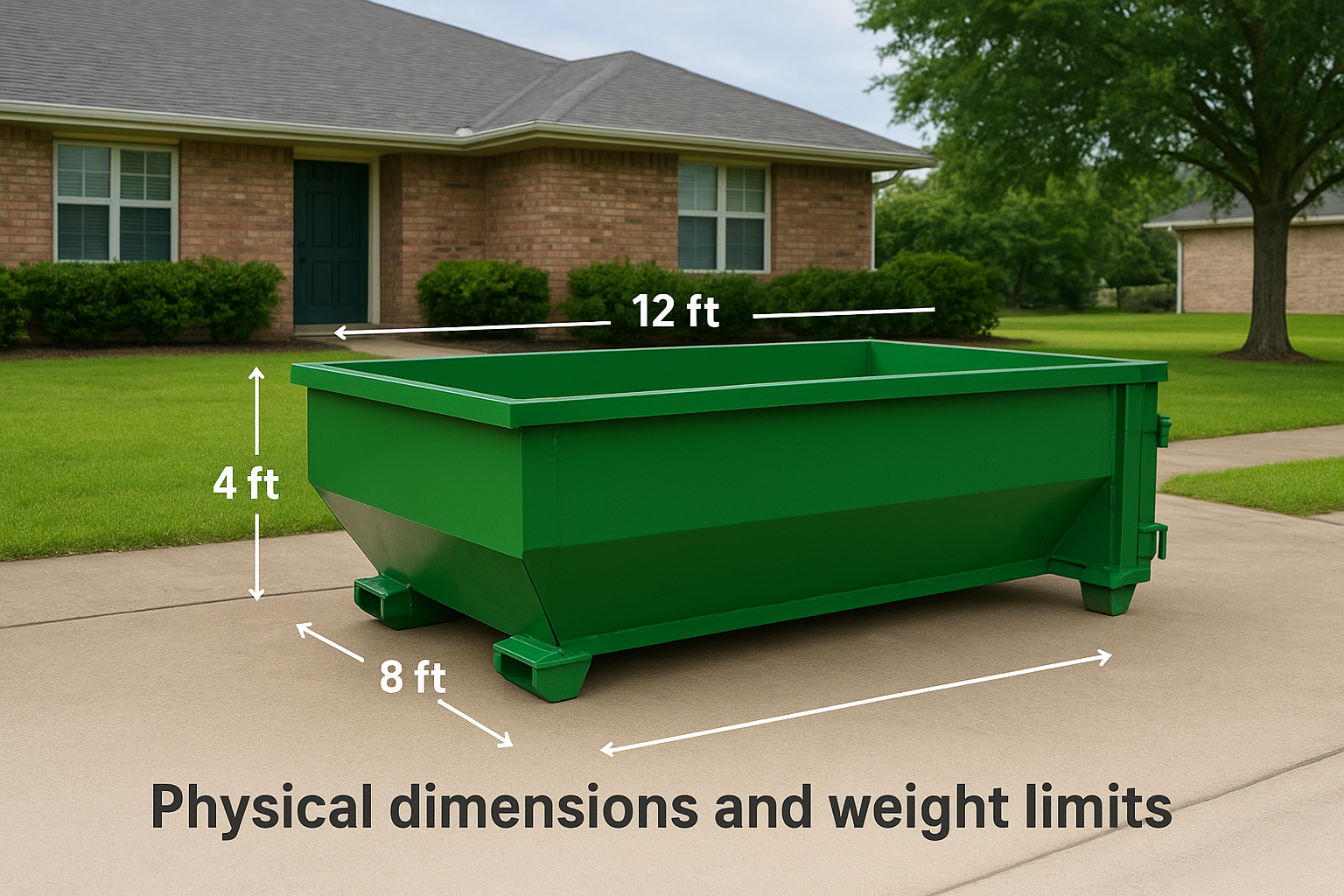
A 10-yard dumpster typically measures about 12 feet long, 8 feet wide, and 4 feet tall. Those dimensions translate to roughly 10 cubic yards of total volume, which is equivalent to about three full pickup truck loads of debris. The container sits low to the ground, so you can load it by hand without a ladder or ramp, making it a practical fit for standard residential driveways and tighter job site access points where a larger bin would be awkward.
Physical dimensions and weight limits
Understanding the weight limit is just as important as understanding the volume. Most 10-yard containers carry a base weight allowance between 1 and 2 tons, and that number is built into your rental agreement. The 10 yard dumpster rental cost you get quoted usually reflects that allowance, so going over it triggers a per-ton overage fee on top of your base price. Light debris like furniture, cardboard boxes, and clothing won’t push you anywhere near that ceiling. However, dense materials like tile, concrete, roofing shingles, or compacted soil can hit that limit faster than most people expect, even in a container this size.
Confirm your provider’s exact weight limit before you start loading heavy construction material, since overage fees are one of the most common unexpected costs in any rental.
Projects that fit a 10-yard dumpster well
A 10-yard container handles small to mid-size residential projects without requiring a larger, more expensive bin. Here’s what fits comfortably:
- Single-room remodel debris: drywall, flooring, cabinetry, and fixtures from one room
- Garage or attic cleanout: old furniture, boxes, appliances, and general household clutter
- Small deck removal: wood planks and framing from a deck up to roughly 12 by 12 feet
- Landscaping debris: brush, mulch, and sod (watch the weight limit closely with rock or soil)
- Moving cleanout: furniture, mattresses, and large items not making the move
Your project fits this container well if it covers one or two areas of your home and doesn’t involve predominantly heavy construction material. Clearing multiple rooms or tackling a larger renovation usually calls for stepping up to a 15-yard bin to avoid overfilling and the fees that come with it.
Typical 10-yard dumpster rental cost ranges
The 10 yard dumpster rental cost across the United States falls somewhere between $200 and $600 for a standard rental period, but that spread reflects real differences in location, debris type, and provider structure rather than arbitrary pricing. Most customers in average-cost markets land in the $280 to $420 range for a week-long rental of a 10-yard bin. Knowing where regional prices sit gives you a useful benchmark before you call anyone for a quote.
National price benchmarks
Prices shift noticeably depending on the region you’re in. Areas with higher disposal fees or longer haul distances to landfills consistently show higher base rental rates. Here’s how the typical breakdown looks across different market types:
| Market Type | Typical Base Price Range |
|---|---|
| Low-cost rural markets | $200 to $280 |
| Average suburban markets | $280 to $380 |
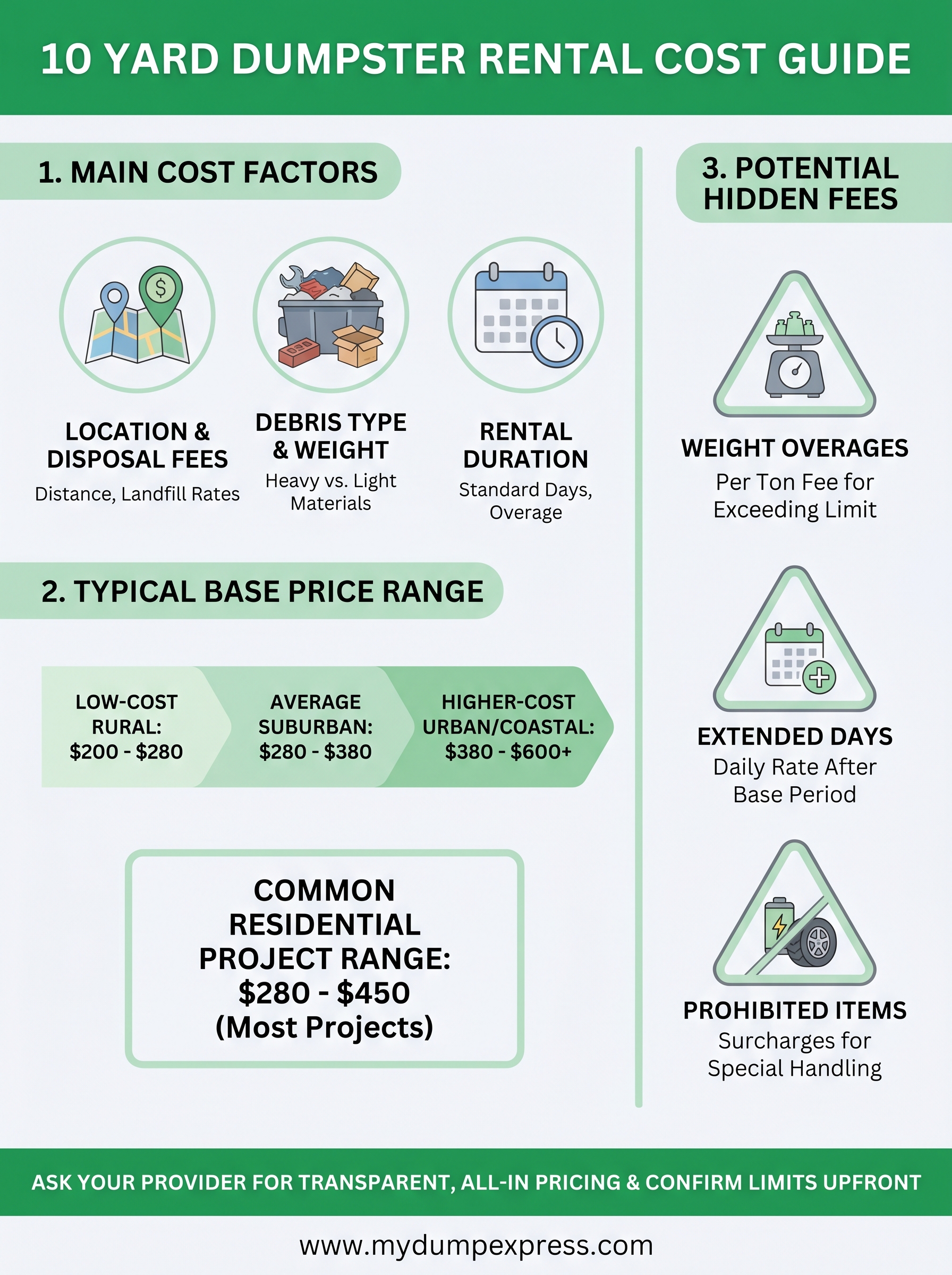
| Higher-cost urban or coastal markets | $380 to $600+ |
These figures assume a standard debris mix and a rental window of five to seven days. They do not include overage fees, extended rental charges, or any surcharges for restricted materials. Your final invoice can shift in either direction depending on those variables.
If a quote seems unusually low, check whether it includes disposal fees or lists them as a separate line item at the end of the rental.
What Cape Cod and Plymouth area rentals typically cost
Coastal Massachusetts falls firmly in the higher-cost market category, driven by elevated transfer station tipping fees and the geography of the Cape itself. At Dump Express, our 10-yard pricing varies by town because disposal costs and driving distance differ across the 40-plus communities we serve. You can see exact pricing for your specific town on our website rather than getting a ballpark estimate that doesn’t reflect your actual location.
Customers in towns like Barnstable, Falmouth, or Sandwich typically see base rates in the $350 to $450 range, depending on the project type and rental length. That figure covers delivery, pickup, and the included weight allowance. What it does not cover is overages, prohibited item handling, or extended rental days, which the next section breaks down in full detail.
Fees and limits that change the total
The base 10 yard dumpster rental cost you see quoted upfront rarely represents your final total unless you understand what sits outside that number. Three categories of fees account for most billing surprises: weight overages, extended rental days, and prohibited material surcharges. Knowing how each one works before you start loading keeps your project on budget and avoids frustrating charges on your final invoice.
Weight overage charges
Your rental agreement sets a maximum weight allowance, usually between 1 and 2 tons for a 10-yard container. When your load exceeds that limit, the provider charges a per-ton overage fee on top of your base price, typically ranging from $60 to $100 per ton depending on the region and the disposal facility’s rates.
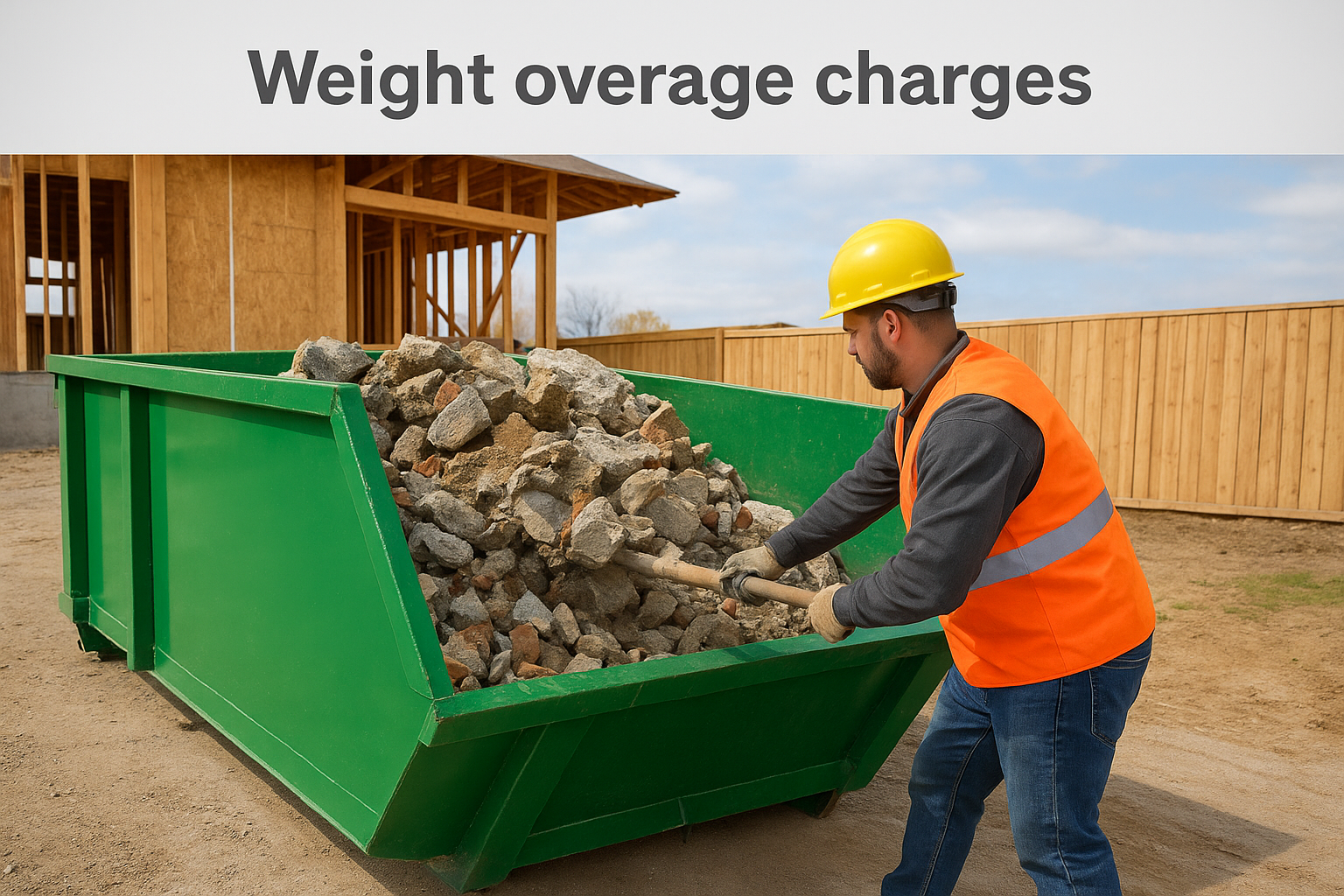
Mixed loads that include concrete, tile, or soil alongside lighter debris are the most common reason customers hit overage charges without expecting it.
Watch these materials closely when loading a 10-yard bin, since they add weight fast:
- Concrete and masonry: extremely dense, hits weight limits in small quantities
- Roofing shingles: standard asphalt shingles weigh roughly 250 to 400 pounds per square
- Soil and gravel: even a partial load of these materials can push you over the limit
- Brick and stone: similar density to concrete and best loaded in small amounts
Extended rental fees
Most providers build a rental window of five to seven days into your base price. If your project takes longer, you pay a daily rate for each additional day you keep the container, typically somewhere between $10 and $20 per day depending on the provider. Delays happen, but booking with a realistic project timeline keeps those daily charges from stacking up without notice. If you know your project will run longer, ask your provider upfront whether locking in a longer rental period from the start costs less than paying day-by-day after the base window closes.
Prohibited item surcharges
Certain materials require special handling or separate disposal streams, and that costs more. Items like mattresses, appliances containing refrigerants, electronics, and hazardous waste either carry a flat surcharge per item or cannot go in the bin at all. If restricted materials show up in your load once it reaches the disposal facility, additional fees will land on your bill after the fact. Ask your provider for a complete list of prohibited items before you start loading so you can arrange separate disposal for anything that does not belong in the container.
How to get an accurate quote and avoid surprises
Getting an accurate 10 yard dumpster rental cost comes down to giving your provider the right information before they give you a number. The more specific you are about your project type, debris mix, and timeline, the more accurate your quote will be. Vague requests get vague estimates, and vague estimates lead to billing surprises once the job is done.
Ask the right questions before you book
When you call or submit a quote request, lead with details rather than just the container size. Tell your provider what materials you’re disposing of and whether any of them are heavy (concrete, shingles, soil) or restricted (appliances, electronics, mattresses). That information directly affects whether your project stays within the base weight allowance or triggers overage charges.
Confirming the weight limit and overage rate upfront takes less than two minutes and can save you a significant amount on your final invoice.
Ask your provider these questions before you commit to any booking:
- What is the included weight limit, and what do you charge per ton if I go over?
- What is the rental period, and what is the daily rate for extra days?
- Are there any surcharges for specific materials in my load?
- Does your quote include delivery, pickup, and disposal, or are those separate line items?
Compare quotes the right way
Not all quotes are built the same way, so comparing them requires looking at what each price actually includes. A lower base price that excludes disposal fees will often cost more than a slightly higher all-in quote once you reach the final invoice. When you review multiple options, line up the weight allowances, rental periods, and included fees side by side rather than just comparing the headline number.
Local providers who display town-specific pricing on their website save you from this comparison problem because their quotes already account for the disposal costs and distance specific to your location. That kind of transparency tells you a lot about how a company operates before you ever speak to someone on the phone.
Quick recap
The 10 yard dumpster rental cost typically lands between $280 and $450 for most residential projects, but your final total depends on location, debris weight, rental duration, and provider type. Light loads like furniture and general household junk stay well within base weight limits. Heavy materials like concrete, shingles, and soil push you toward overage territory faster than most people expect.
Getting an accurate number before you book comes down to sharing the right details: what you’re throwing away and how long you need the bin, along with whether your load includes anything restricted or heavy. Transparent, all-in pricing saves you from billing surprises that a cheap headline quote often hides. Always compare weight allowances and rental periods, not just the base price.
If your project is on Cape Cod or in the Plymouth area, Dump Express offers town-specific pricing with no hidden fees and same-day delivery in many cases. Get a quote from Dump Express today and know your exact cost before the truck arrives.