
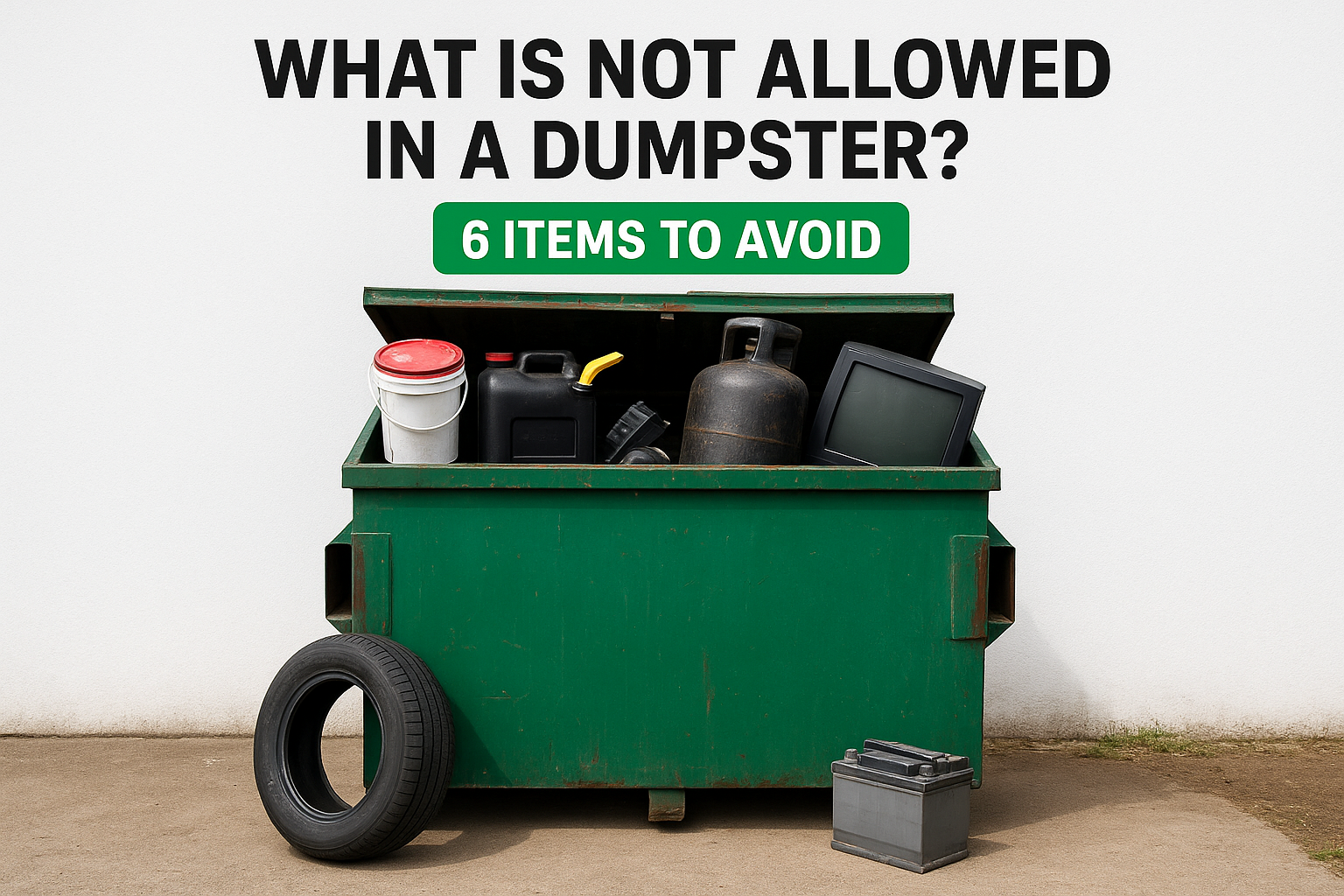
You rented a dumpster, loaded it up, and now there’s a surcharge on your bill, or worse, the hauler refused to take it. That’s what happens when you don’t know what is not allowed in a dumpster before you start tossing things in. Certain materials are restricted by law, banned at disposal facilities, or flat-out dangerous to transport, and the rules aren’t always obvious.
At Dump Express, we handle dumpster rentals across Cape Cod and Plymouth every single day. We’ve seen it all, from paint cans buried under drywall to mattresses stuffed next to concrete. These mistakes cost people money and cause delays, which is exactly why we put together this guide. We want you to avoid surprises before the dumpster leaves your driveway.
Below, we break down six categories of items that can’t go in a rental dumpster, why they’re prohibited, and what to do with them instead. Whether you’re clearing out a basement, gutting a bathroom, or wrapping up a job site, knowing these rules upfront will save you time, money, and headaches.
1. Confirm restrictions with Dump Express first
Before you toss a single item, check with your dumpster provider about what is not allowed in a dumpster on your specific rental. Restrictions vary by state, county, and disposal facility, which means the rules that applied to a rental you used two years ago or in another state may not apply now. Dump Express follows Massachusetts waste disposal regulations and the rules set by local transfer stations, and certain items that seem harmless can trigger surcharges or cause us to reject a load entirely.
Why it causes problems in dumpsters
Prohibited items create real problems for disposal facilities and haulers. When banned materials enter the waste stream, they can contaminate recyclable or compostable loads, forcing entire truckloads to be rejected. Hazardous materials like chemicals, fuels, and certain batteries can leak during transport, creating liability issues and potential fines under Massachusetts environmental law. These aren’t edge cases; they happen regularly when renters assume everything goes in one bin.
If a load arrives at the transfer station with prohibited items, the facility can reject it and send it back, which means you pay for a second haul.
Examples to watch for
The items most likely to cause problems aren’t always obvious. Household cleaners, paint cans with liquid still inside, propane tanks, lithium batteries, and fluorescent bulbs are common culprits. Renters also frequently try to dispose of tires, refrigerators, and air conditioners without realizing those items carry separate handling fees or are banned outright from standard roll-off dumpsters.
What to do instead in Cape Cod and Plymouth
Your best first step is to call Dump Express directly before you start your project. We walk you through what’s allowed based on your specific project type and location. The Cape Cod and Islands region has designated hazardous waste drop-off programs through local transfer stations, and we can point you toward the right resources for materials we can’t take.
How to avoid added fees and pickup delays
Sorting your debris before loading the dumpster is the single most effective way to avoid extra charges. Set aside anything you’re unsure about and contact us before it goes in. A quick call before your project starts takes five minutes and can save you from a surcharge or a delayed pickup when your schedule is already tight.
2. Wet paint, stains, and solvents
Liquid paint is one of the most common items people unknowingly toss into rental dumpsters. Wet or liquid paint, wood stains, and chemical solvents fall under hazardous waste regulations in Massachusetts and are restricted from standard roll-off containers.
Why it causes problems in dumpsters
Paint and solvents can leak during transport and contaminate other materials in the load. Transfer stations flag these items because they require separate hazardous waste handling, and a single container of wet paint can cause an entire truckload to be rejected at the facility.
Dried latex paint in an open, empty can is generally accepted. Liquid inside a sealed can is not, even in small amounts.
Examples to watch for
These restricted items come up frequently during renovation cleanouts and are easy to miss when you’re focused on larger debris:
- Half-full paint cans or stain containers
- Paint thinner, lacquer, and acetone
- Varnish and polyurethane finishes
- Chemical strippers and rust removers
What to do instead in Cape Cod and Plymouth
Cape Cod towns offer household hazardous waste drop-off days through local transfer stations where you can bring liquid paint and solvents at no cost. Check with your town’s DPW for scheduled collection dates before your project wraps up.
How to avoid added fees and pickup delays
Knowing what is not allowed in a dumpster before you start loading keeps your pickup on schedule. Let paint cans dry out completely or set them aside for a hazardous waste event rather than burying them under other debris.
3. Fuels, motor oil, and propane tanks
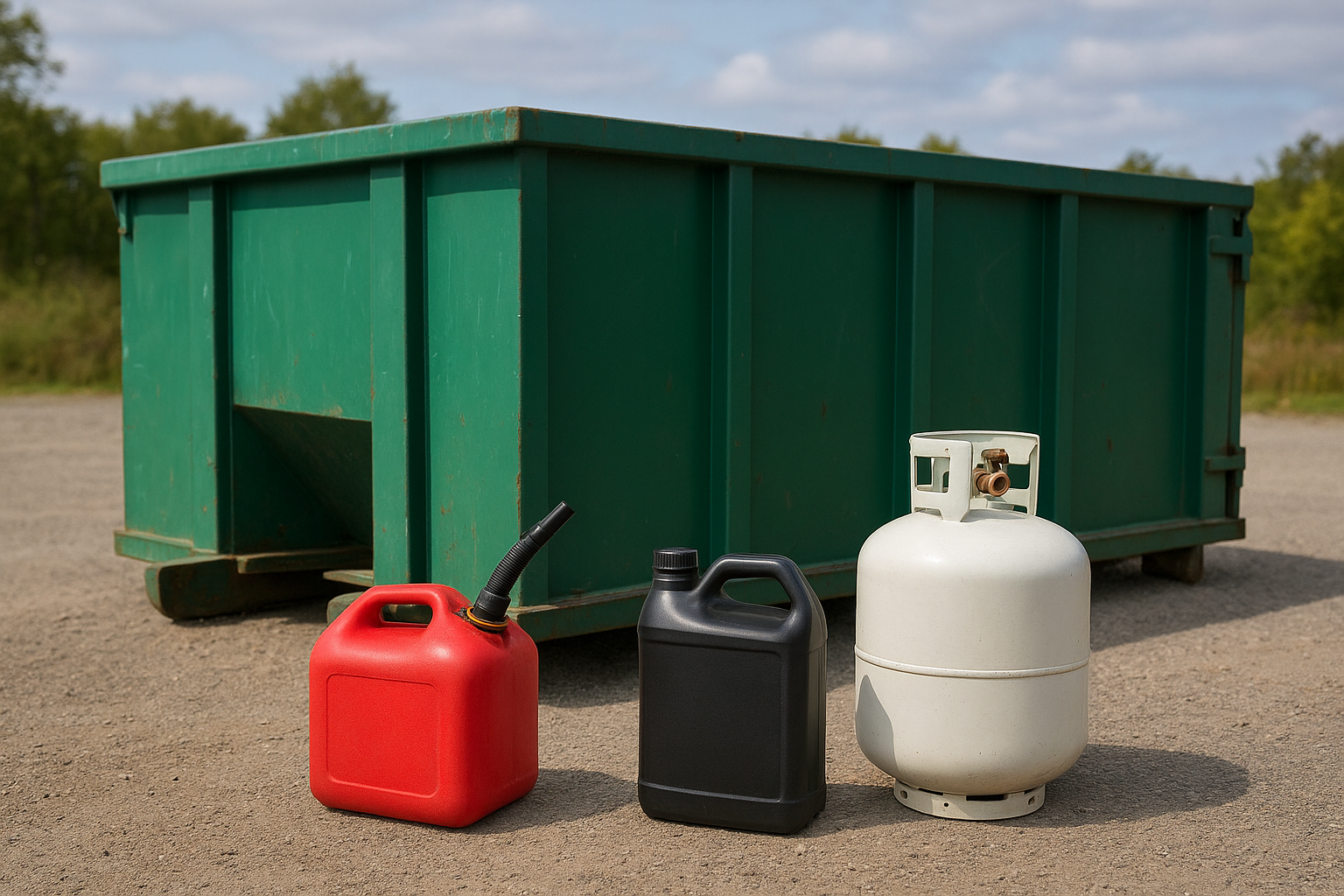
Flammable liquids and pressurized containers are among the most dangerous items people try to load into roll-off dumpsters. Gasoline, diesel, motor oil, and propane tanks are strictly prohibited from standard dumpster rentals, and the restrictions exist for practical safety reasons that affect everyone involved.
Why it causes problems in dumpsters
Flammable and combustible materials create a serious fire and explosion risk during transport and at disposal facilities. Propane tanks can ignite under pressure, and even a small amount of residual fuel or oil can contaminate an entire load and trigger a rejection at the transfer station. Massachusetts environmental regulations classify these materials as hazardous waste, which means improper disposal carries real legal consequences.
A propane tank with any remaining pressure is enough to get a full dumpster load rejected at the facility.
Examples to watch for
These items turn up regularly on job sites and during garage or shed cleanouts:
- Gasoline and diesel in cans or portable tanks
- Motor oil and transmission fluid
- Propane tanks of any size, including small camping cylinders
- Kerosene and heating oil containers with residual liquid
- Two-stroke engine fuel mixes
What to do instead in Cape Cod and Plymouth
Local transfer stations across Cape Cod accept motor oil and certain fuels at designated drop-off points. Many auto parts stores also take used motor oil for recycling at no charge. For propane tanks, contact your local gas supplier about exchange or disposal programs.
How to avoid added fees and pickup delays
Pull flammable liquids and pressurized containers out of your load before anything goes in the dumpster. Understanding what is not allowed in a dumpster before your project starts prevents the delays and extra costs that follow a rejected load.
4. Batteries and electronics
Batteries and electronics come up constantly during home cleanouts and office clear-outs, and renters toss them into dumpsters without a second thought. Both are restricted from standard roll-off containers under Massachusetts law, and mixing them in with general debris can trigger a rejected load and add unexpected fees to your project.
Why it causes problems in dumpsters
Lithium-ion batteries can puncture and ignite when compressed under heavy debris, creating a real fire risk inside a transport truck or at the transfer station. Lead-acid batteries, televisions, and computers contain mercury, cadmium, and lead, all of which are regulated as hazardous waste under Massachusetts environmental regulations.
A single damaged lithium battery buried under construction debris is enough to start a fire during transport.
Examples to watch for
These items turn up regularly during home and office cleanouts:
- Laptops, tablets, and desktop computers
- Smartphones and rechargeable power banks
- Lithium-ion and lead-acid batteries
- Televisions, monitors, and printers
- Power tools with built-in battery packs
What to do instead in Cape Cod and Plymouth
Cape Cod transfer stations accept electronics through Massachusetts’ state-mandated e-waste program at no charge to residents. Many national retail chains also run take-back programs for batteries and small devices, so you have a convenient option beyond the transfer station.
How to avoid added fees and pickup delays
Set batteries and electronics aside before you load anything else into the dumpster. Knowing what is not allowed in a dumpster before your project begins prevents a rejected load, a second haul fee, and a schedule delay you didn’t budget for.
5. Appliances, tires, and other special-fee items
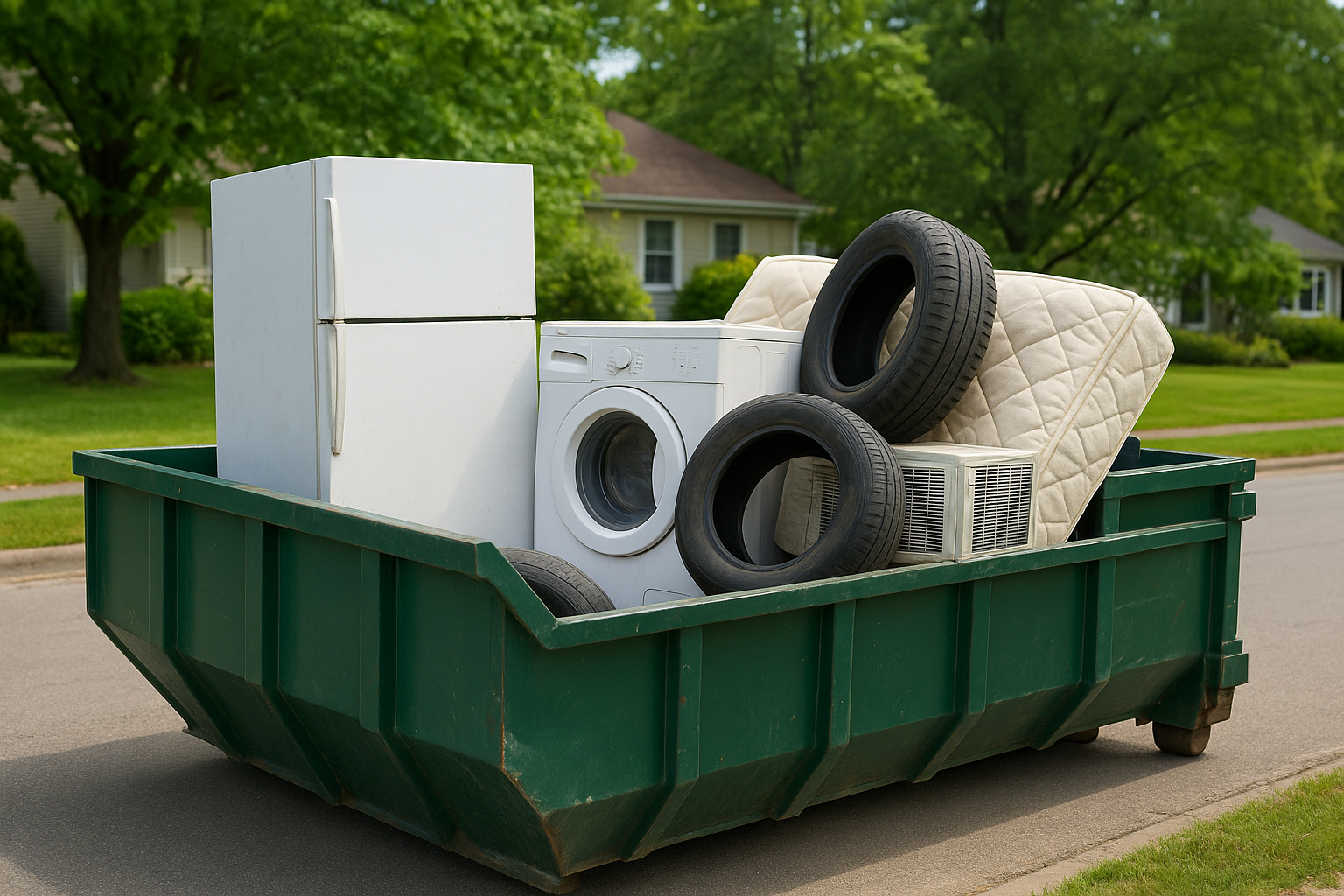
Appliances and tires are not outright banned from every dumpster rental, but they carry separate handling fees and specific restrictions that catch renters off guard. Knowing about these items before you start loading prevents billing surprises when your dumpster gets picked up.
Why it causes problems in dumpsters
Refrigerators, air conditioners, and dehumidifiers contain refrigerants that require certified removal before disposal. Tires cannot enter most landfills under Massachusetts regulations, so disposal facilities charge separately for each one. Mattresses and large appliances also require separate processing, which means the standard dumpster fee does not automatically cover them, and loading them without flagging it first often leads to charges added after the fact.
Loading a refrigerator or air conditioner without noting it ahead of time typically results in a surcharge applied after pickup, not before.
Examples to watch for
These items come up constantly during home cleanouts and basement clear-outs:
- Refrigerators, freezers, and air conditioners
- Washers, dryers, and dishwashers
- Tires of any size
- Mattresses and box springs
- Water heaters and dehumidifiers
What to do instead in Cape Cod and Plymouth
Call Dump Express before your project starts if you know you have appliances or tires to dispose of. We walk you through exactly which items carry a surcharge and confirm the current fee upfront so your total stays predictable from day one.
How to avoid added fees and pickup delays
Understanding what is not allowed in a dumpster without extra fees starts with one simple step: disclose these items before your rental begins. Telling your hauler in advance locks in accurate pricing and keeps your pickup running on schedule without any last-minute surprises.
6. Asbestos and hazardous renovation debris
Asbestos is one of the most serious restricted materials you can encounter during a renovation, and it’s something renters occasionally discover mid-project in older Cape Cod homes. Asbestos-containing materials and other hazardous renovation debris are strictly prohibited from standard roll-off dumpsters under both Massachusetts state law and federal EPA regulations.
Why it causes problems in dumpsters
When you disturb asbestos-containing materials by breaking or cutting them apart, asbestos fibers become airborne and create a serious health risk for drivers, facility workers, and anyone near the load. Transfer stations will reject any dumpster that arrives with asbestos-contaminated debris, which means a second haul fee on top of your original rental cost.
Homes built before 1980 on Cape Cod commonly contain asbestos in pipe insulation, floor tiles, and textured ceiling materials.
Examples to watch for
Watch for these materials before you load anything during a demolition or renovation:
- Asbestos pipe insulation, ceiling tiles, and floor tiles
- Lead paint debris from pre-1978 construction
- Treated or chemically preserved lumber
- Contaminated soil tied to older property improvements
What to do instead in Cape Cod and Plymouth
Licensed asbestos abatement contractors must handle removal and disposal under Massachusetts law. Your local health department in Barnstable or Plymouth County can refer you to certified contractors and regulated disposal sites that handle these materials properly.
How to avoid added fees and pickup delays
Knowing what is not allowed in a dumpster before demolition begins protects your timeline and your budget. Test for asbestos before breaking into walls, floors, or ceilings in any structure built before 1980.
Quick recap and next step
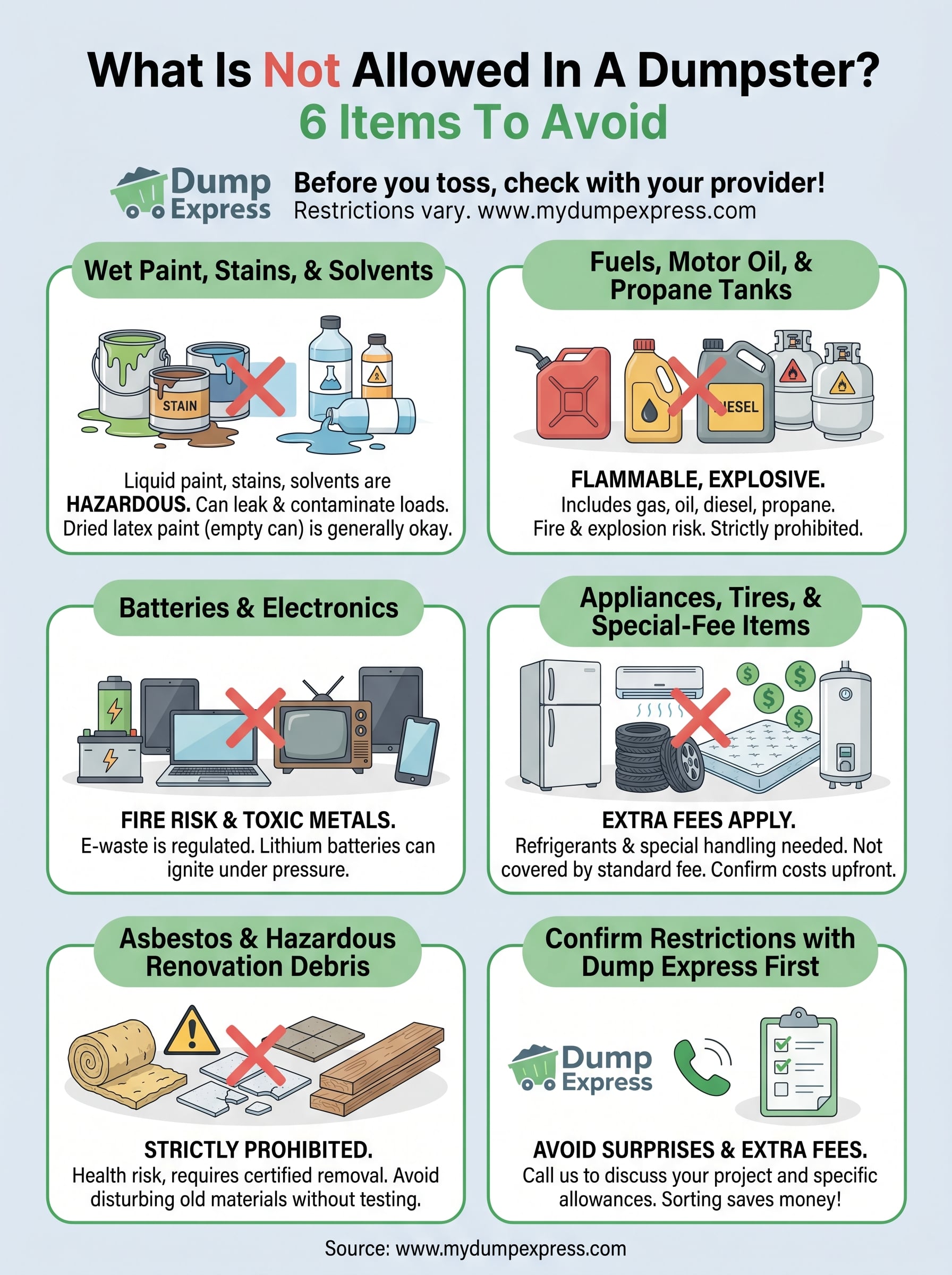
Six categories cover most of what is not allowed in a dumpster: wet paint and solvents, flammable fuels and propane tanks, batteries and electronics, appliances and tires with handling fees, and asbestos or hazardous renovation debris. Each one carries a real consequence if you skip the check, whether that’s a rejected load, a surcharge added after pickup, or a delayed project you didn’t budget for. Sorting your debris before loading costs nothing and keeps your pickup running on schedule.
Your next step is straightforward. Book your dumpster rental with Dump Express and we’ll walk you through exactly what your specific project allows before the container ever hits your driveway. Our team serves Cape Cod and Plymouth seven days a week, and we’ve spent over 20 years helping local homeowners and contractors avoid exactly the kind of surprises this guide covers. A quick call or online booking gets your rental confirmed fast, with no hidden fees waiting at the end.