Before you book a dumpster, you need to know if it’ll actually fit where you want it, and whether it can handle what you’re throwing in it. That starts with understanding the 10 yard dumpster dimensions: the exact measurements in feet, how much weight and volume it holds, and what kinds of projects it’s best suited for. Getting this right upfront means no wasted money on a container that’s too big or a second haul because you went too small.
At Dump Express, we deliver 10 yard dumpsters across Cape Cod and Plymouth every day. After 20+ years of helping homeowners and contractors match the right container to the right job, we know this size inside and out, literally. This article breaks down the exact dimensions, capacity, and best uses for a 10 yard dumpster so you can decide if it’s the right fit for your project and your property.
10 yard dumpster dimensions in feet
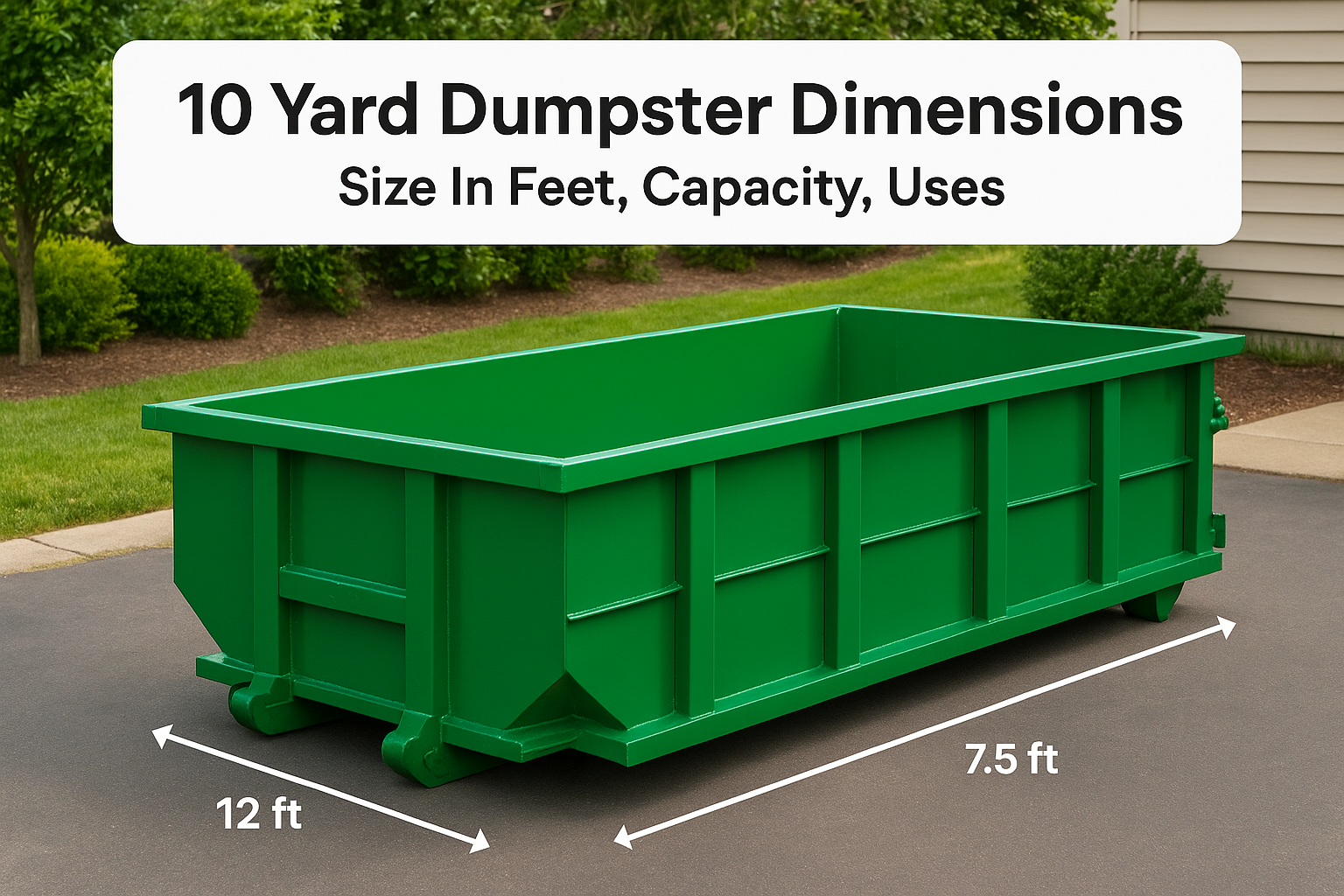
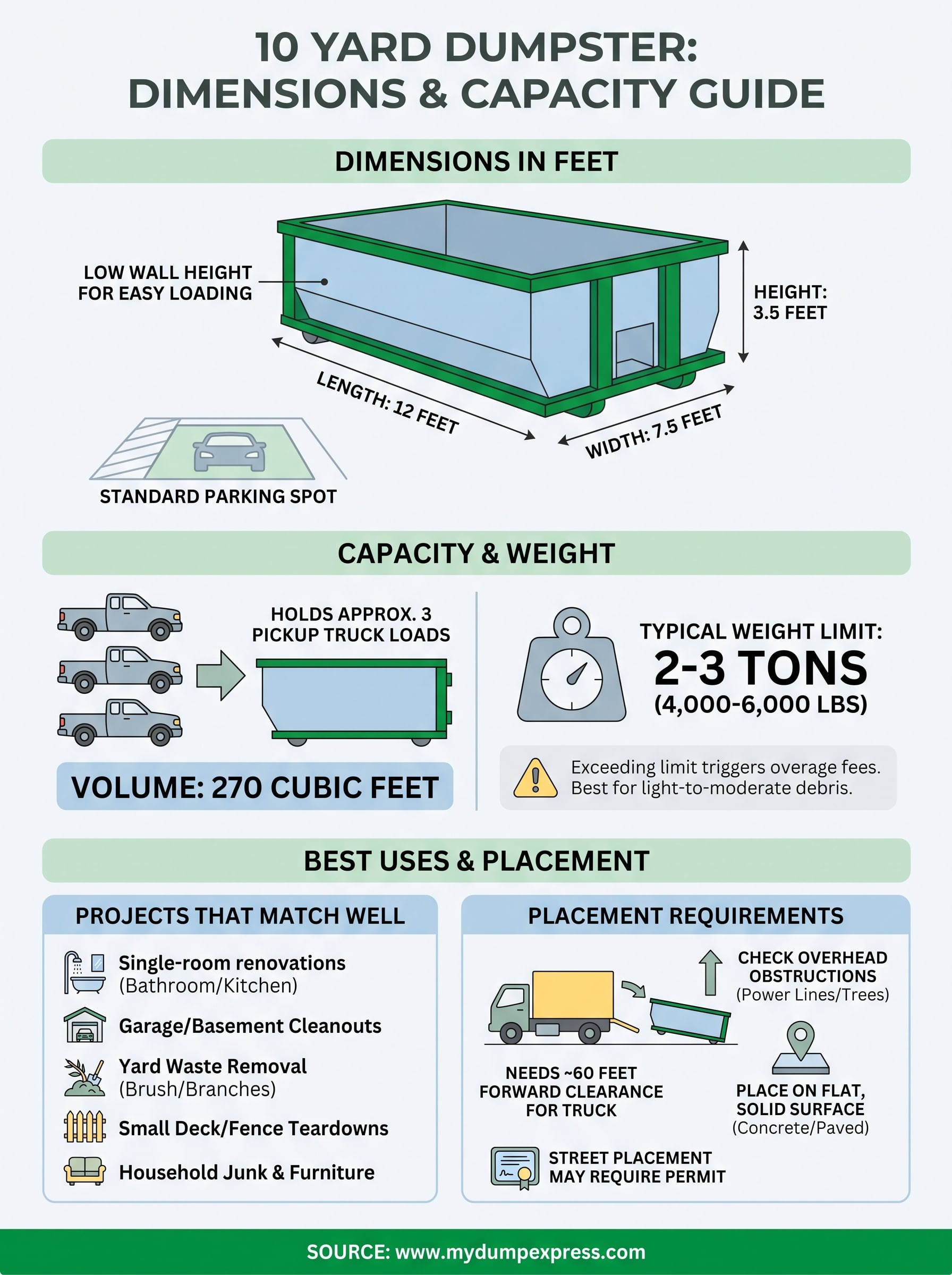
A 10 yard dumpster typically measures 12 feet long, 7.5 feet wide, and 3.5 feet high on the outside. Those numbers can shift slightly depending on the manufacturer and the specific unit your rental company delivers, but this is the standard range you’ll encounter. Knowing the actual footprint matters because it determines whether the container fits in your driveway, along your curb, or on a job site without blocking access. Always confirm the exact 10 yard dumpster dimensions with your provider before scheduling delivery.
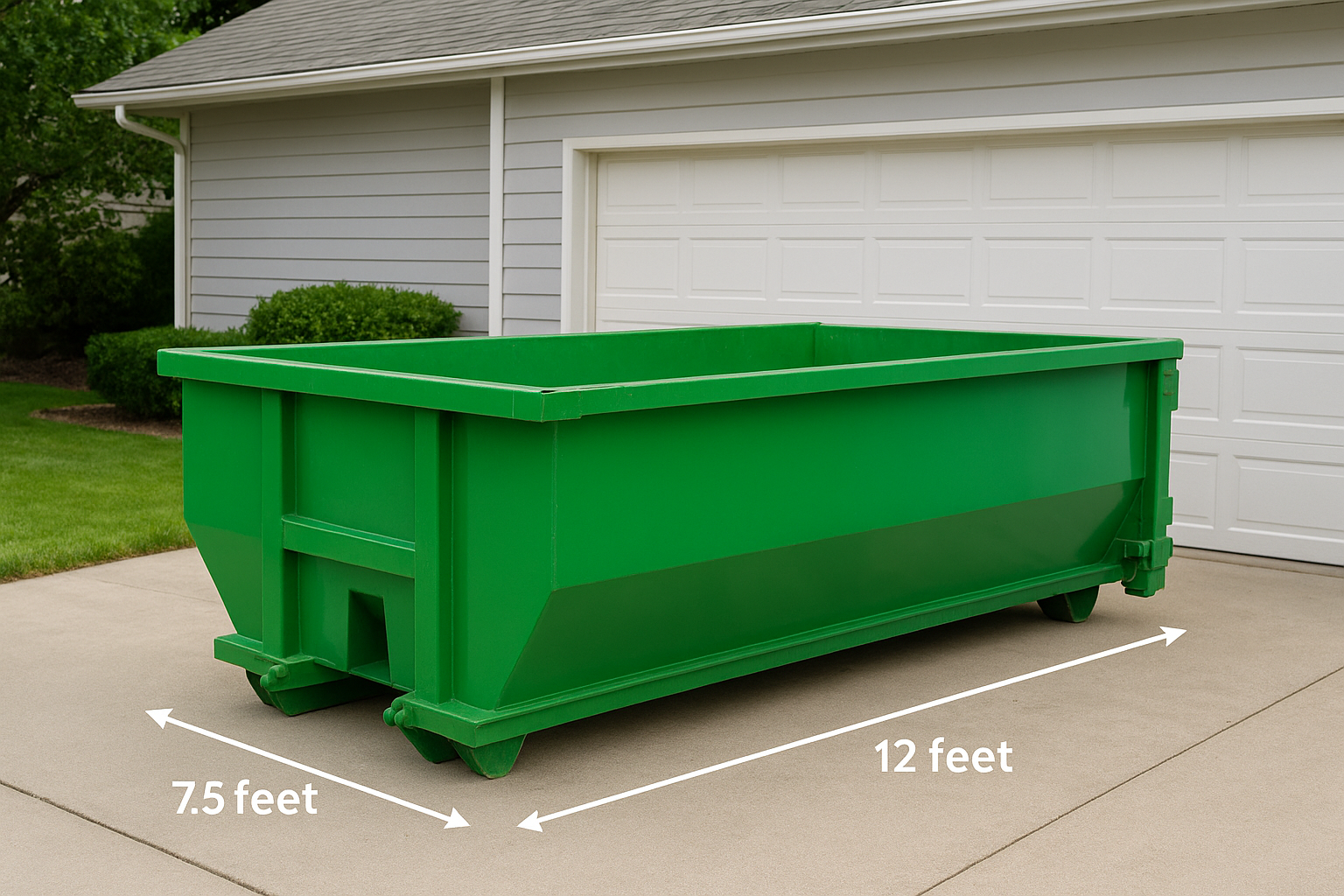
Verifying the exterior measurements before booking prevents last-minute surprises on delivery day, especially on tighter properties with limited space.
Standard exterior measurements
Your driveway can typically accommodate a 10 yard dumpster without blocking the full width, which is one reason this size is so popular for residential jobs. At roughly 12 feet long and 7.5 feet wide, it takes up about the same ground space as a standard parking spot. The table below gives you a quick reference for the typical exterior measurements.
| Dimension | Measurement |
|---|---|
| Length | 12 feet |
| Width | 7.5 feet |
| Height | 3.5 feet |
What the low wall height means for loading
The 3.5-foot wall height is one of the most practical aspects of a 10 yard container. You don’t need to lift debris up and over a tall side wall the way you would with a larger unit. Most people can toss bags, broken-down boxes, and loose debris in without straining, which speeds up the loading process significantly.
If your project involves bulky or awkward pieces like furniture, old flooring, or lumber, the lower walls reduce the physical effort required. You can load the container steadily throughout your project rather than needing extra help just to clear the wall height, which matters when you’re working a weekend cleanout with limited assistance on hand.
How much a 10 yard dumpster holds
The "10 yards" in the name refers to cubic yards of volume, not linear feet. One cubic yard equals 27 cubic feet, so a 10 yard dumpster holds 270 cubic feet of material in total. That’s roughly the equivalent of three standard pickup truck loads, which gives you a practical sense of scale when you’re estimating how much debris your project will generate.
Volume capacity tells you how much fits inside, but weight limits determine what you can actually load into it.
Weight limits to keep in mind
Weight limits vary by rental company, but a 10 yard dumpster typically supports 2 to 3 tons (4,000 to 6,000 pounds) of material. The 10 yard dumpster dimensions give you that 270 cubic feet of usable space, but heavier materials like concrete, dirt, or roofing shingles can push you past the weight cap long before the container looks full. Your rental company sets a weight limit because exceeding it triggers overage fees, and those charges add up quickly.
Check the weight allowance with your provider before booking if you plan to haul dense materials. Lighter debris like furniture, drywall, and general household junk rarely causes issues, but mixed loads that include heavy construction materials need a closer look so you don’t get an unexpected charge at pickup.
What fits in a 10 yard dumpster
The 10 yard dumpster dimensions make it a natural match for single-room cleanouts, small renovation debris, and yard waste removal. You can load most household materials without issue, including furniture, appliances, drywall, carpet, and general junk, as long as you stay within the weight limit. What this size handles poorly is dense material like concrete or brick, where the weight cap becomes a problem before the volume does.
This container size handles light-to-medium debris exceptionally well, but it’s not built for heavy demolition loads.
Common materials that work well
Most residential cleanout and light renovation projects generate exactly the kind of debris a 10 yard container handles best. If your load consists of bulky but not especially heavy items, you’ll fill it to capacity without triggering overage fees.
Here are the types of materials that fit well in a 10 yard dumpster:
- Household furniture and mattresses
- Bagged household junk and clutter
- Carpet and flooring materials
- Drywall and light framing lumber
- Yard waste like branches and brush
- Boxes and packing materials
- Old appliances such as washers, dryers, and dishwashers
- Bathroom fixtures like vanities and toilets
When to choose a 10 yard dumpster
The 10 yard dumpster dimensions make it the right call for small-to-medium projects where you need more capacity than a few trash cans but don’t have a full renovation’s worth of debris. It works best when your load is light-to-moderate in both volume and weight, and when your delivery space is limited.
This size hits the sweet spot for single-room jobs and small outdoor cleanups where a larger container would go half-empty.
Projects that match this size well
A 10 yard dumpster fits cleanly into most residential driveways, which makes it the go-to choice when access is tight. If your project stays within one or two rooms, this container almost always handles it without going over capacity.
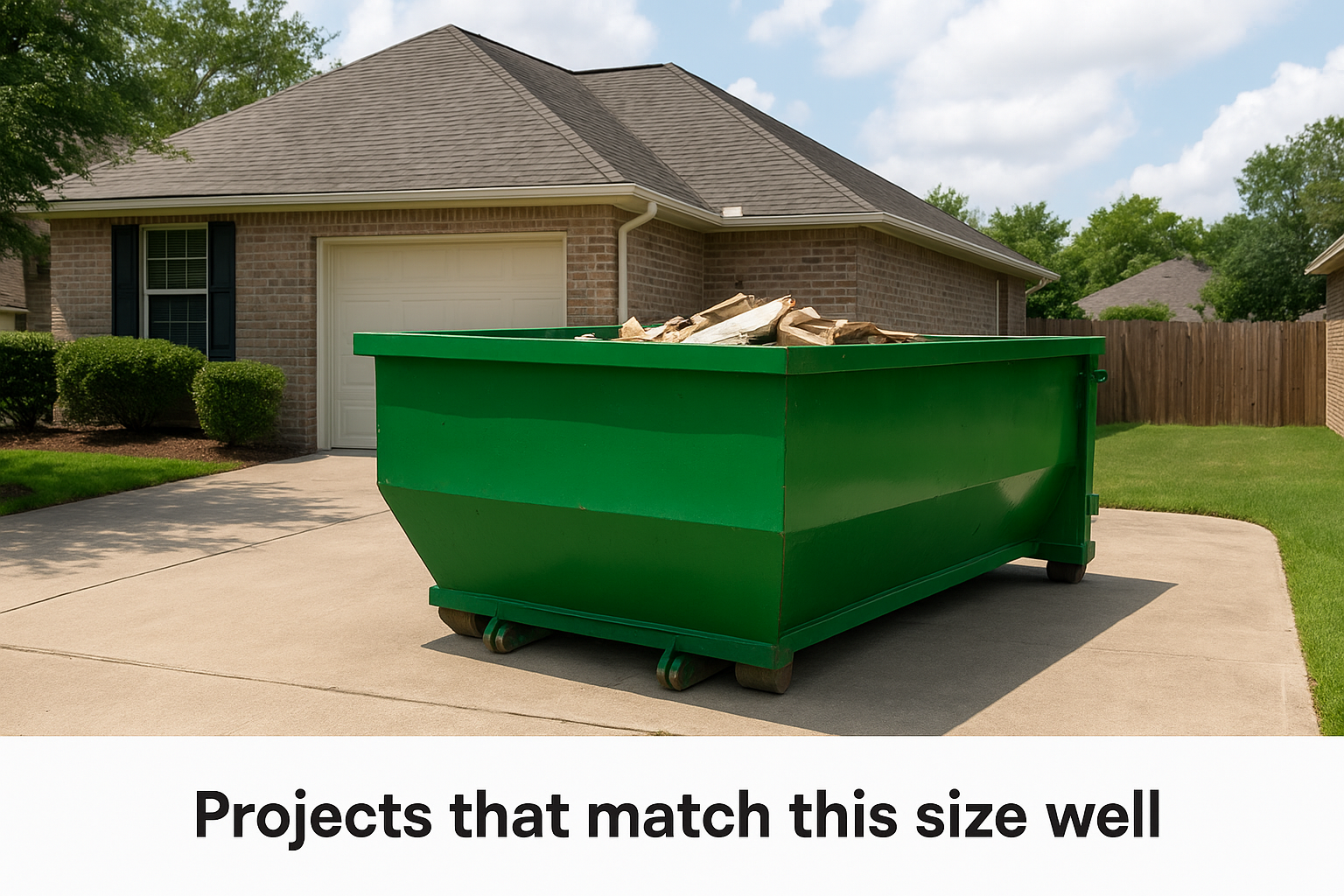
- Single-room renovations like a bathroom gut or kitchen update
- Garage or basement cleanouts with mixed household junk
- Yard cleanup projects involving brush, branches, and landscaping debris
- Small deck or fence teardowns with light framing lumber
- Estate or moving cleanouts in a single area of the home
When to consider a different size
You should move up to a 15 yard container if your project covers multiple rooms or involves heavier materials like roofing shingles. Conversely, a 5 yard unit fits better for very small cleanouts where a 10 yard would be excessive.
Planning delivery and placement
Before your dumpster arrives, pick a delivery spot that works for both the container and the truck. The 10 yard dumpster dimensions give you a compact footprint, but the delivery truck needs at least 60 feet of forward clearance to set it down safely.
Confirming your placement spot with your rental company before delivery day prevents delays and avoids on-site repositioning.
Clearance and overhead obstructions
Check for overhead obstructions like tree branches, power lines, and garage frames before committing to a spot. The delivery truck uses a lift system, so anything directly overhead can block the drop entirely. Aim for 12 to 14 feet of clearance overhead as a reliable starting benchmark.
Walk your planned placement area ahead of time and flag anything that could interfere. If you’re unsure about a specific obstruction, your rental company can assess it before delivery day rather than discovering the issue when the truck shows up.
Surface and access requirements
Place the container on a flat, solid surface like a concrete driveway or paved area. Soft ground or loose gravel can cause the unit to sink or shift as it fills with debris.
If street placement is your only option, contact your local town hall first. Many Cape Cod towns require a permit for dumpsters on public roads, and arranging that ahead of time keeps your project moving on schedule.
Next steps
Now you know what a 10 yard dumpster can handle: roughly 270 cubic feet of debris, a footprint similar to a standard parking spot, and a low 3.5-foot wall that makes loading straightforward. If your project involves a single-room renovation, a garage cleanout, or a yard cleanup, this size covers most of what you need without paying for excess capacity you won’t use.
Run through the key questions before you book: Does your delivery spot have 60 feet of forward clearance for the truck? Do you have overhead obstructions to flag? Does your load consist mainly of light-to-moderate debris, or do you expect heavy materials that could push past the weight limit? Matching the 10 yard dumpster dimensions to your actual project conditions is what keeps the job on budget and on schedule.
When you’re ready to move forward, rent a dumpster on Cape Cod and our team will confirm availability, pricing, and delivery details for your area.