
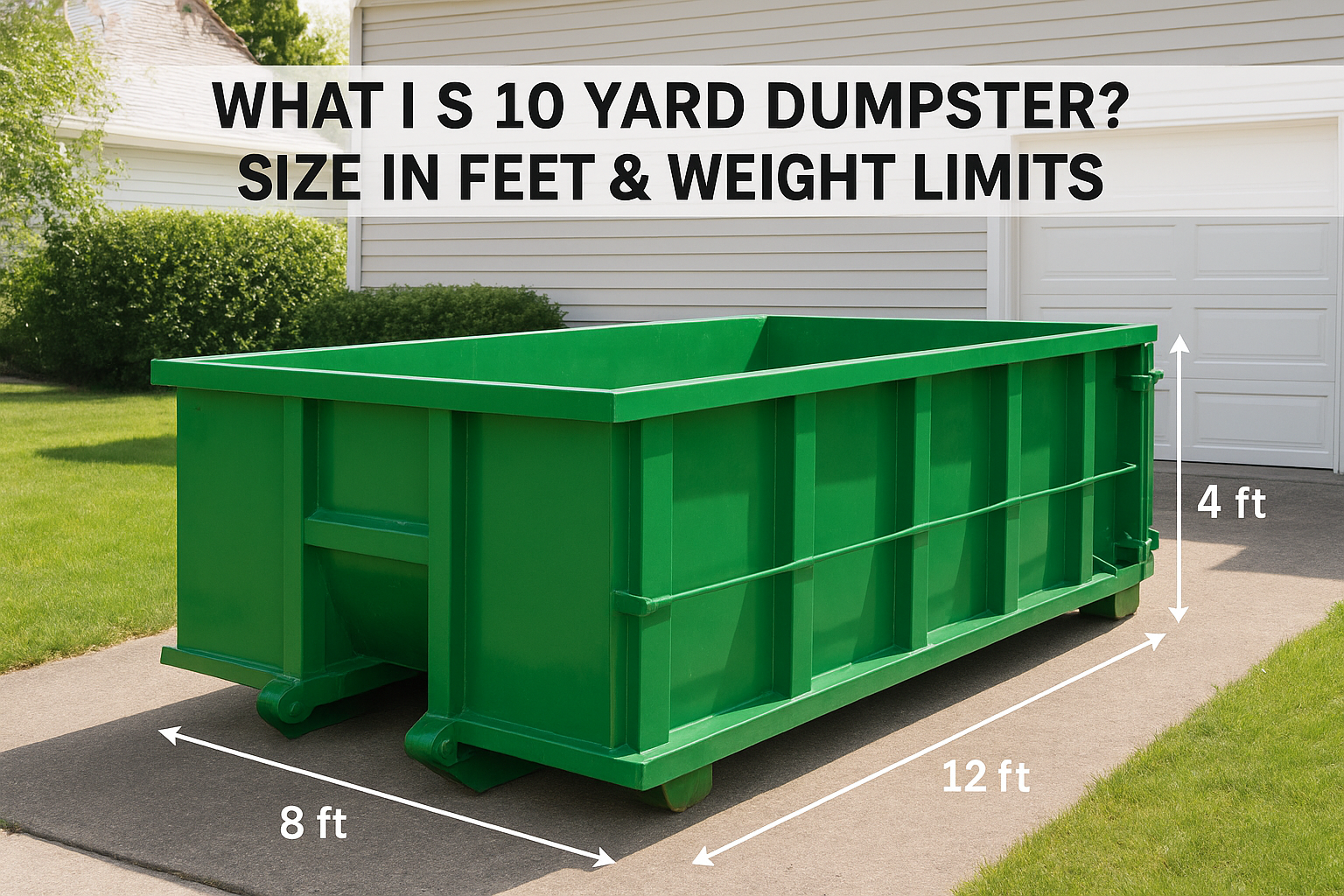
A 10 yard dumpster is one of the most commonly rented container sizes for residential projects, but what does "10 yards" actually mean in practical terms? If you’re picturing something abstract, you’re not alone. Most people renting a dumpster for the first time have no frame of reference for how big these containers really are or how much stuff they can hold.
At Dump Express, we deliver 10 yard dumpsters across Cape Cod and Plymouth every day. After 20+ years of matching customers to the right size, we’ve learned that understanding the actual dimensions, weight limits, and best uses for this container saves people from two common mistakes: renting too small and running out of space, or renting too large and paying for capacity they don’t need.
This article breaks down exactly what a 10 yard dumpster is, its size in feet, how much weight it holds, what projects it works best for, and how to tell if it’s the right fit for yours.
10 yard dumpster dimensions and capacity
A 10 yard dumpster holds 10 cubic yards of material, which is a measurement of volume, not weight. Think of it this way: one cubic yard equals a cube that is 3 feet wide, 3 feet tall, and 3 feet deep. Stack 10 of those cubes together and you have your container’s total holding capacity.
Physical dimensions in feet
The physical footprint of a 10 yard dumpster typically runs about 12 feet long, 8 feet wide, and 3.5 to 4 feet tall. That low wall height is one of the most practical features of this size. You can toss bags, boxes, and debris over the side without much effort, and you don’t need to lift heavy items high off the ground.
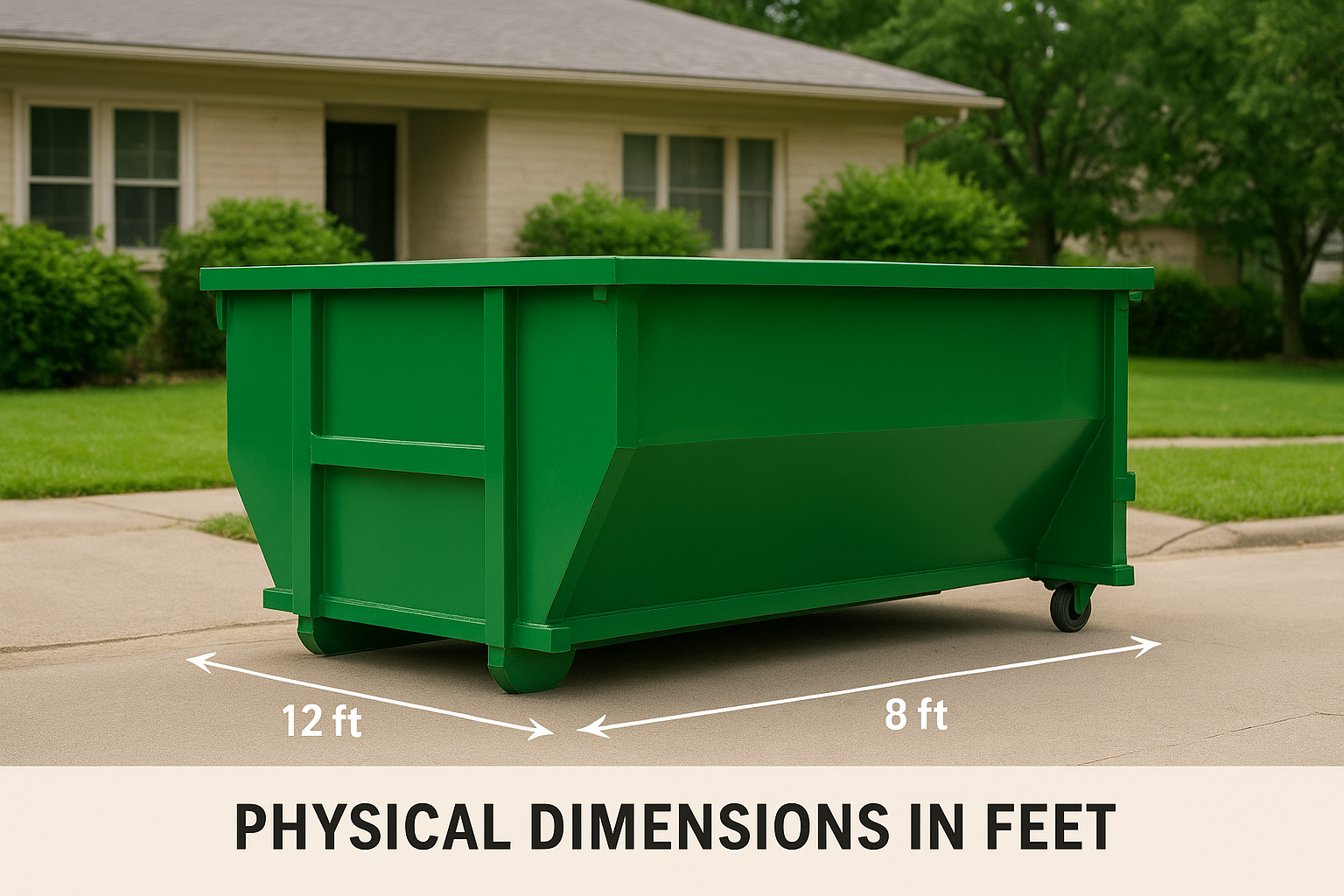
The shorter wall height of a 10 yard dumpster makes it one of the most user-friendly sizes for residential projects where you’re loading by hand.
Because the container sits low to the ground, it also fits more easily in driveways and tight spaces compared to larger units. If your driveway is short or your access point is narrow, this size gives you more flexibility than a 15 or 20 yard container would.
How much can it actually hold?
Ten cubic yards translates to roughly 3 pickup truck loads of material. Picture clearing out a one-car garage or stripping flooring from two or three rooms, and you have a good sense of what this container fits. For most single-room cleanouts or small renovation jobs, the 10 yard capacity lands right in the sweet spot.
For targeted projects with a defined scope, you’ll find it holds more than it looks like it should from the outside. It won’t cover a whole-house cleanout, but for the right job, it’s a practical and cost-effective choice.
Weight limits and common materials
Volume and weight are two separate things, and a 10 yard dumpster has limits on both. Most 10 yard containers come with a weight allowance of 1 to 2 tons, depending on the rental company and location. Loading a container past its weight limit triggers overage fees, so knowing what materials you plan to toss matters before you start filling it.
Staying within your weight limit upfront is far cheaper than paying overage charges after the fact.
How weight adds up faster than you expect
Heavy materials like concrete, dirt, brick, and tile can push a 10 yard dumpster to its weight cap long before the container looks full. A single layer of broken concrete across the bottom can eat up most of your allowance. If your project involves demolition debris or dense materials, talk to your rental company before booking so they can confirm the right size and set appropriate weight expectations.
Common materials that fit well
For lighter loads, a 10 yard dumpster handles a wide range of everyday project waste without issue. Common items people load include household junk, furniture, carpet, drywall, wood framing, and general renovation debris. These materials fill the container by volume before they hit the weight ceiling, which means you get the most use out of every cubic yard.
What a 10 yard dumpster works best for
A 10 yard dumpster fits a specific range of projects, and knowing where it performs well helps you avoid renting the wrong size. If your job is contained to one or two rooms or involves clearing out a single space, this container gives you enough room without excess.
Home cleanouts and decluttering
This size handles garage cleanouts, basement decluttering, and shed removals without trouble. You’re working with roughly three pickup truck loads of space, which covers the accumulated junk and furniture most homeowners need to move out during a purge or downsizing project.
A 10 yard dumpster is the go-to choice for single-space cleanouts where you know the scope of work upfront.
Small renovation projects
For bathroom remodels, flooring removal, or a kitchen update, this container fits the debris load well. Pulling up old tile, drywall, and cabinetry from one room produces the kind of mixed waste that fills this size without pushing past its weight limit.
Your project scope matters here. If your renovation spans multiple rooms or involves structural demolition, you’ll likely need a larger size. But for a focused single-room job, a 10 yard dumpster keeps your rental cost practical and proportional to the actual work.
10 yard vs other dumpster sizes
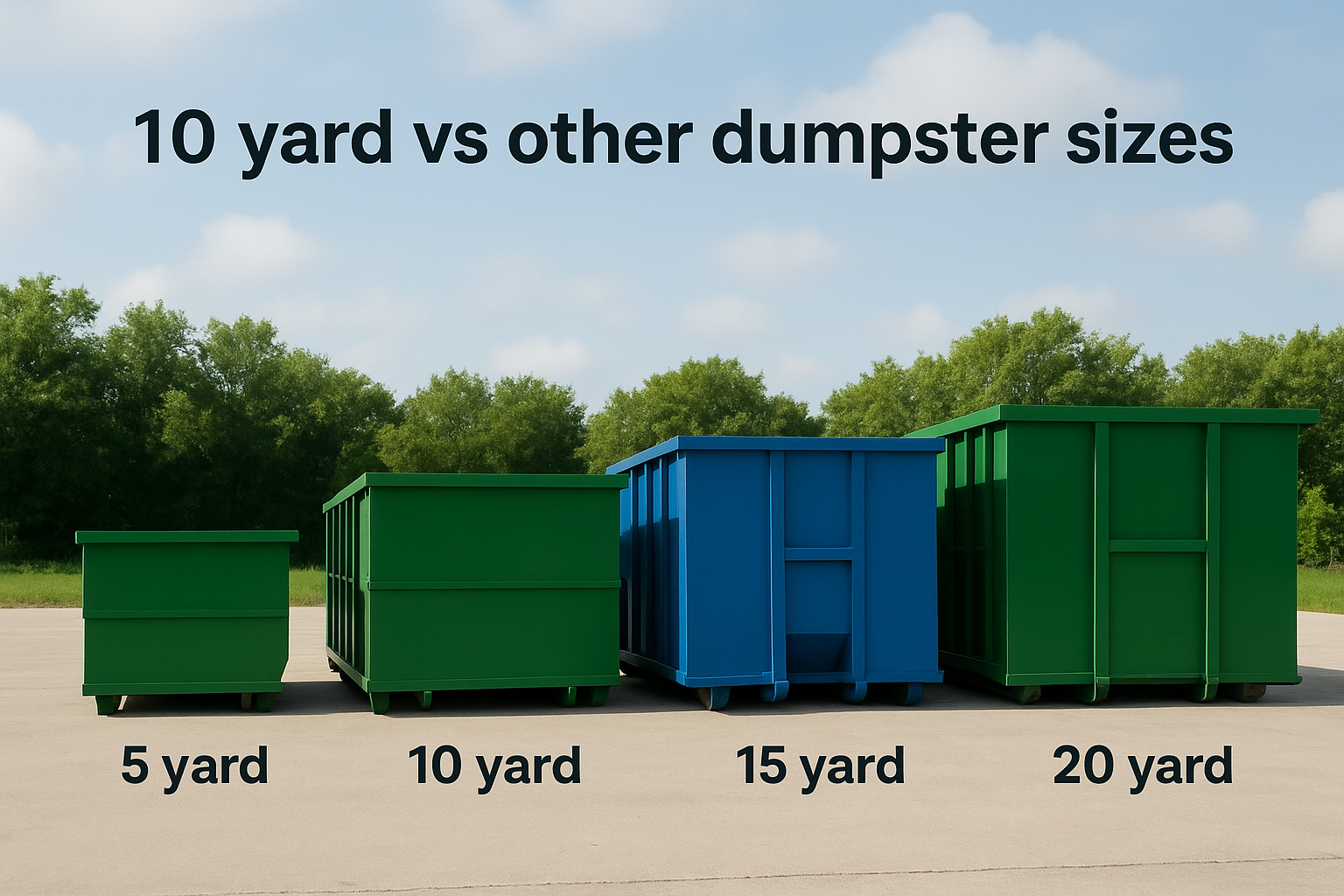
Understanding where the 10 yard fits in the lineup helps you make a faster, more confident decision. Dump Express offers four sizes: 5, 10, 15, and 20 yards. Each one targets a different project scope, and picking the wrong one usually costs you more in the end.
How it compares to a 5 yard dumpster
The 5 yard container is a compact option designed for very small jobs like a single-room cleanout or minor yard debris. If your project produces more than one pickup truck load of waste, the 5 yard will fill up fast and you may need a second haul. The 10 yard gives you roughly three times the volume, which covers most single-space residential projects without running short.
If you’re unsure whether a 5 yard will be enough, the 10 yard is almost always the safer call.
How it compares to 15 and 20 yard dumpsters
Larger containers like the 15 and 20 yard options carry significantly more volume and higher weight allowances, making them the right fit for multi-room renovations, full house cleanouts, or construction debris. If your project stays contained to one or two rooms, those sizes add cost without adding real value for your specific job.
Delivery, placement, and local rules in MA
When you order a 10 yard dumpster in Massachusetts, delivery logistics and local regulations affect how smoothly your rental goes. Cape Cod towns and Plymouth area municipalities each have their own rules about where containers can sit, so knowing the basics before your dumpster arrives saves you from last-minute complications.
Confirming your placement plan with your rental company before delivery day is the fastest way to avoid delays.
Placement on your property
Most customers place their 10 yard dumpster in a driveway or on a flat, accessible surface. The container needs enough clearance for the delivery truck to drop it safely. Keep at least 15 to 20 feet of overhead clearance in mind if trees or utility lines run across your driveway.
Boards or plywood under the container protect your driveway surface from scratches or pressure marks during the rental period. If your driveway is gravel or pavers, ask your rental company whether protective boards are part of their standard delivery.
Street placement and permits
If you need to place the dumpster on a public street or town road, you typically need a permit from your local municipality. Requirements vary by town across Cape Cod and the Plymouth area. Your rental company can point you in the right direction since local permit questions come up regularly.
Quick recap and next steps
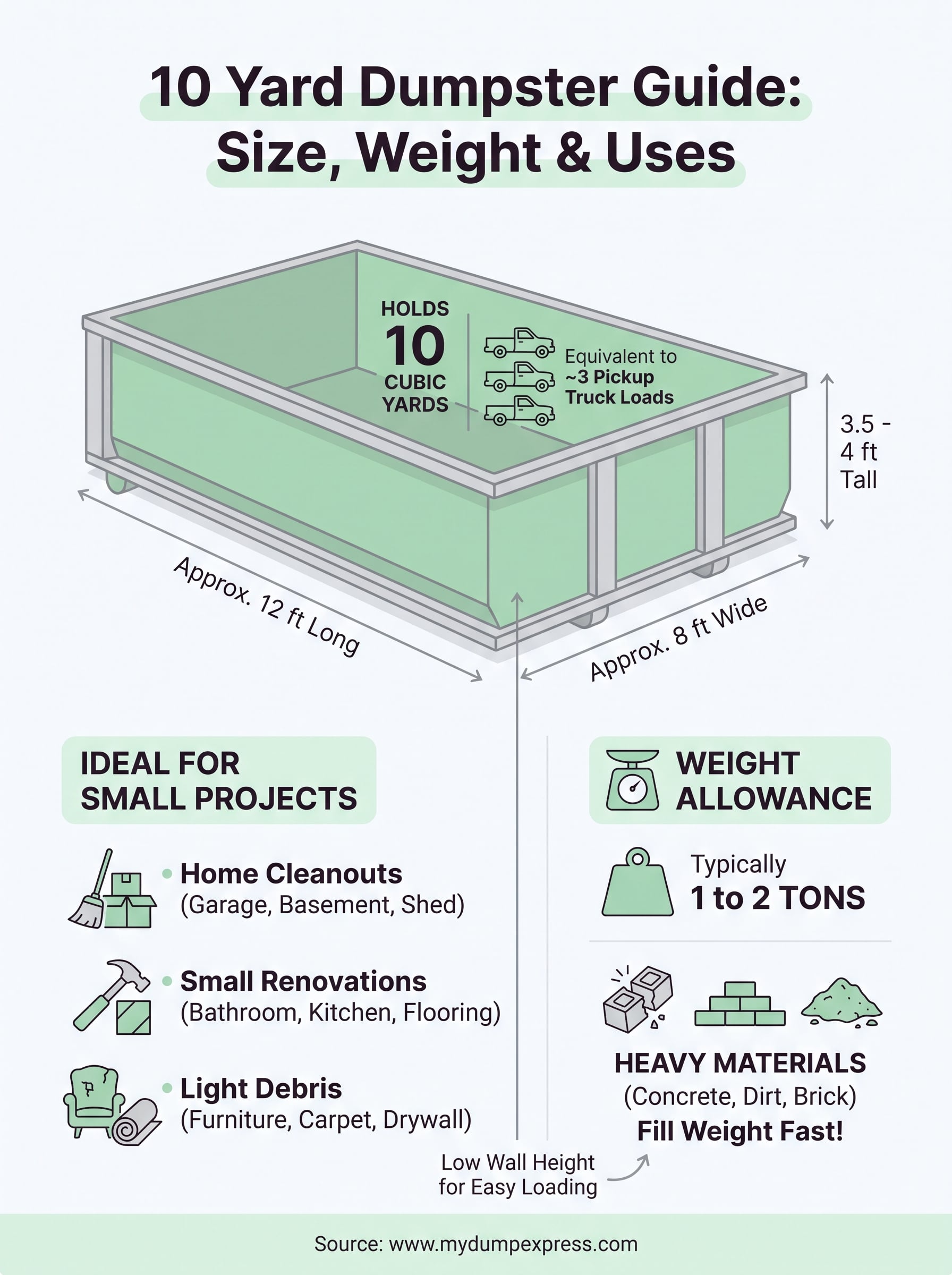
If you’ve been trying to figure out what is a 10 yard dumpster, here’s the short version: it holds 10 cubic yards of material, measures roughly 12 feet long by 8 feet wide, and stands about 3.5 to 4 feet tall. It works best for single-room renovations, garage cleanouts, and small debris removal projects. The low wall height makes loading simple, and the footprint fits most standard driveways without blocking access.
Your decision comes down to project scope and material weight. If your job stays contained to one or two spaces and involves lighter materials like furniture, drywall, or carpet, this size fits well. Heavier demolition debris may push the weight limit faster than the volume fills. When you’re ready to book or need help confirming the right container for your specific job, get a quote from Dump Express and talk to a local team that knows Cape Cod well.