
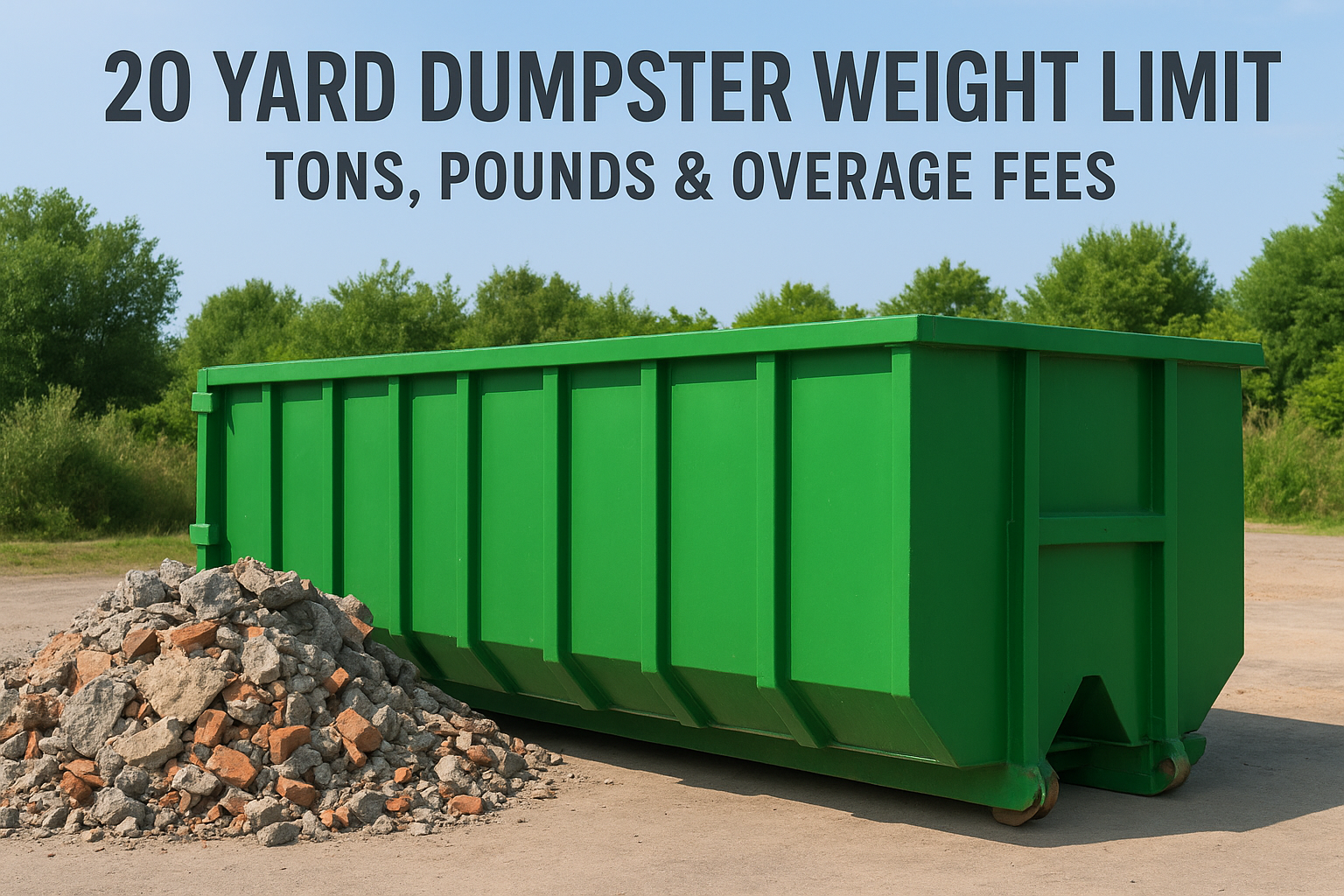
You’ve picked a 20 yard dumpster for your renovation or cleanout, but nobody mentioned what happens if you fill it with heavy debris like shingles, concrete, or wet drywall. That’s when a surprise invoice shows up. The 20 yard dumpster weight limit is the number that determines whether your rental stays on budget or costs you hundreds extra after pickup.
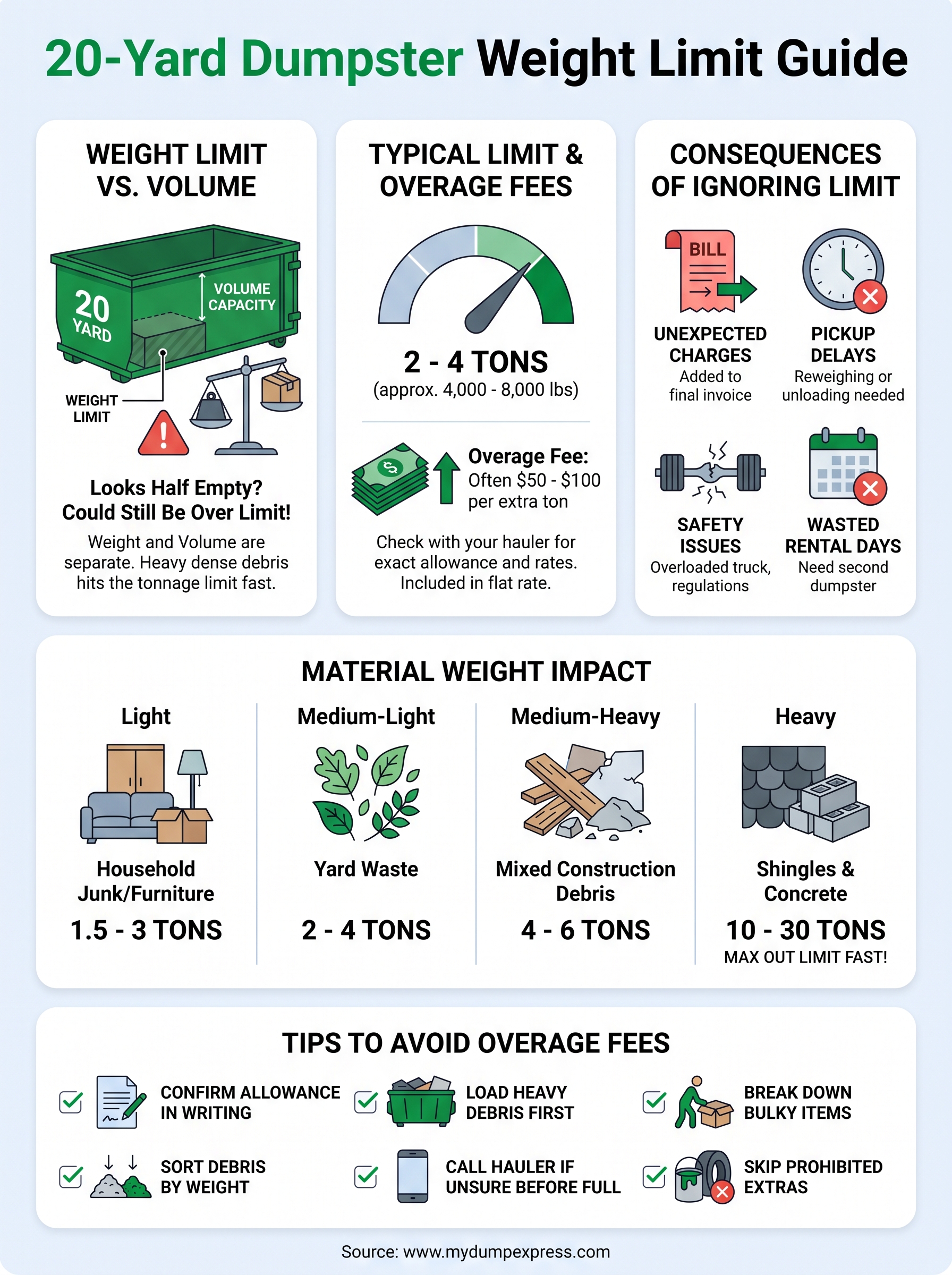
Most 20 yard dumpsters carry a weight limit between 2 and 4 tons, depending on the hauler and local disposal rates. Go over that limit, and you’ll pay an overage fee calculated per extra ton, often between $50 and $100. Knowing this number before you start loading is the only way to avoid getting billed for it after the fact.
In this guide, we’ll break down typical weight allowances in both tons and pounds, explain how different materials affect how fast you hit that limit, and show you what overage charges actually look like on a bill. We’ll also cover how to choose the right size from the start, based on 20+ years of hauling dumpsters across Cape Cod and Plymouth.
Why the weight limit matters for your rental
Every dumpster rental comes with a weight allowance built into the base price, and that allowance is set by the disposal facility, not by guesswork. When your hauler quotes you a flat rate for a 20 yard container, that price already includes a fixed number of tons. Cross that line and the facility charges the hauler more to process your load, and that extra cost gets passed straight to you as an overage fee.
Homeowners tend to think about dumpsters in terms of volume, how much space is left in the box, not weight. That’s the mistake that catches people off guard. A dumpster can look half empty and still be at its tonnage limit if you’ve loaded it with concrete chunks, roofing shingles, or soaked carpet. Weight and volume are two separate limits, and you can hit either one first depending on what you’re throwing away.
A 20 yard dumpster that looks half empty can still be over its weight limit if you’re loading dense debris.
Contractors feel this pressure even more than homeowners because job site timelines don’t leave room for a second trip. If a dumpster gets flagged as overweight at the transfer station, the hauler has to deal with it after the fact, sometimes with a delayed pickup while paperwork gets sorted out. That kind of delay can stall a renovation crew for a day or more, which costs far more than the overage fee itself.
Here’s what’s actually at stake when you ignore the weight limit:
- Unexpected charges added to your final invoice after pickup, often $50 to $100 per extra ton
- Pickup delays if the load needs to be reweighed or partially unloaded before hauling
- Safety issues with an overloaded truck axle, which is regulated under state transportation weight limits
- Wasted rental days if you have to order a second dumpster because the first one filled by weight before you finished the project
Understanding your weight limit upfront isn’t just about saving money. It’s about making sure the truck that shows up on pickup day can legally and safely haul your load away on schedule, without a call from the hauler asking you to remove material first.
How to estimate your debris weight before renting
Before you book a 20 yard dumpster, walk through your project and think in pounds, not just cubic yards. Start with the type of material you’re clearing out. A garage full of old furniture and boxes weighs far less than the same volume of roofing shingles or construction debris. Match your project type to a rough weight category before you call for a quote, so you’re not guessing on delivery day.
Quantity matters just as much as material type. Measure or estimate the square footage of the area you’re clearing, whether that’s a roof, a basement floor, or a demolished deck, and multiply by the typical weight per square foot for that material. Roofing contractors do this constantly: a 1,500 square foot roof with three layers of shingles can easily push past 4 tons on its own, which means it might need a dumpster sized specifically for that load rather than a standard 20 yarder.
Estimate weight by material type and square footage, not by how full the dumpster looks.
Moisture changes everything too. Wet debris, soaked drywall, rain-heavy branches, damp carpet, can weigh 30% to 50% more than the same material dry. If you’re clearing storm debris or a flooded basement, budget for that extra weight upfront rather than finding out at pickup.
When in doubt, call your local hauler before booking. A team that works Cape Cod and Plymouth job sites daily can tell you within a few hundred pounds what your specific project will run, based on similar jobs they’ve hauled before.
What common materials weigh in a 20 yard dumpster
Different debris fills a 20 yard dumpster at wildly different rates, and knowing the numbers ahead of time saves you from guessing. Shingles and concrete sit at the heavy end, while household junk and yard waste sit at the light end. Here’s a breakdown of what typically comes through on Cape Cod jobs:

| Material | Approx. weight per cubic yard | Tons to fill a 20 yard dumpster |
|---|---|---|
| Household junk/furniture | 150-300 lbs | 1.5-3 tons |
| Yard waste (branches, leaves) | 200-400 lbs | 2-4 tons |
| Wood/lumber debris | 300-500 lbs | 3-5 tons |
| Mixed construction debris | 400-600 lbs | 4-6 tons |
| Drywall (dry) | 500-700 lbs | 5-7 tons |
| Roofing shingles | 1,000-1,500 lbs | 10-15 tons |
| Concrete/brick/dirt | 2,000-3,000 lbs | 20-30 tons |
Shingles and concrete can max out a 20 yard dumpster’s weight limit before it’s even half full.
Notice how concrete and shingles hit their tonnage limit while the box still looks nowhere near full. That’s why a roofing tear-off or a concrete removal job almost always needs a smaller container, or a dumpster rated specifically for heavy debris, rather than a standard 20 yarder loaded to the rim.
Mixed loads are the trickiest to estimate because most cleanouts aren’t just one material. A basement cleanout might combine old furniture, damp carpet, and a few bags of debris. Add those categories together using the table above, and you’ll get a realistic tonnage estimate instead of an unpleasant surprise on your invoice.
Tips to avoid overage fees on your rental
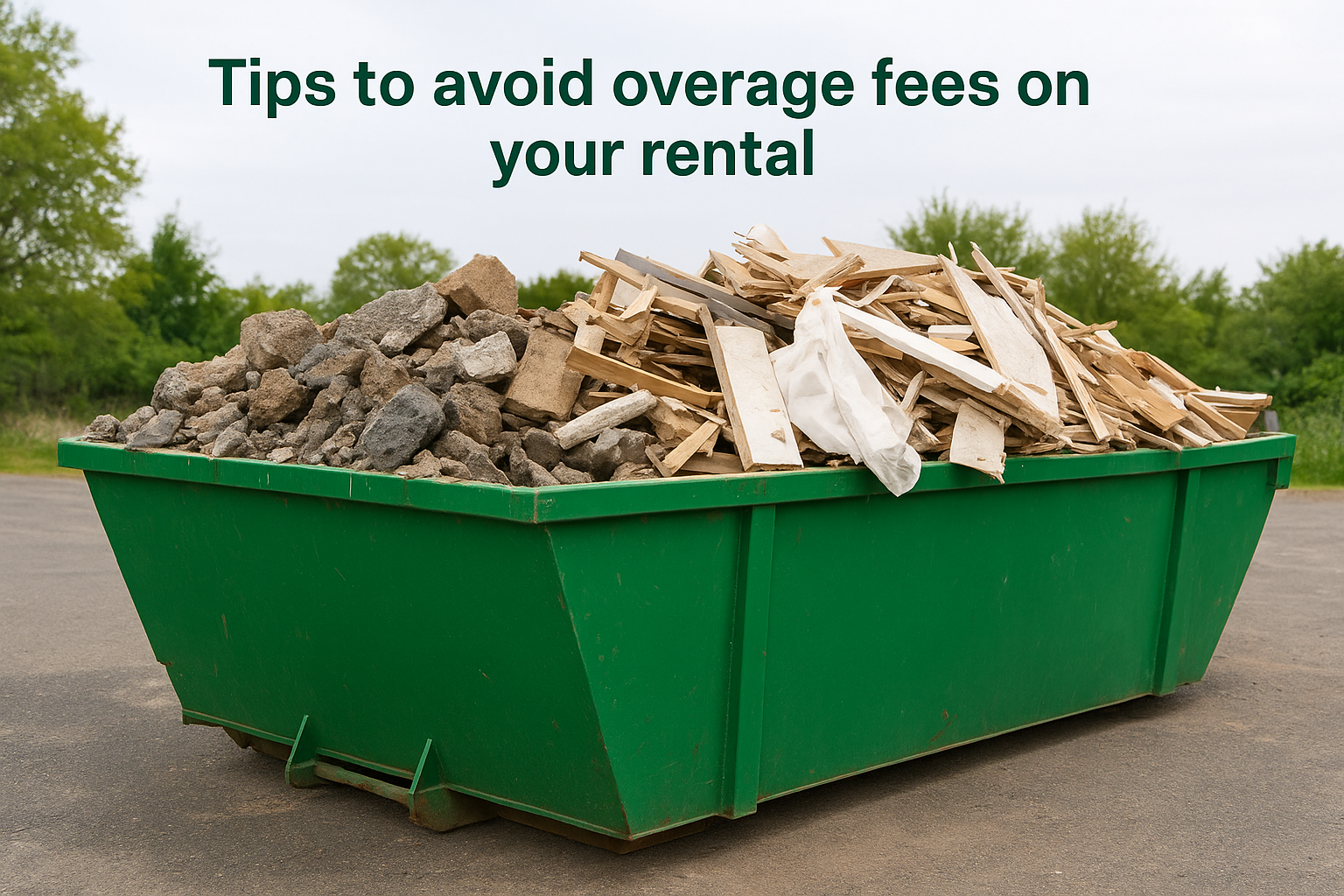
Staying under your weight limit starts before the dumpster even arrives. Sort your debris by material type instead of tossing everything in one pile. Concrete, dirt, and shingles should go in a separate load from lighter household junk, because mixing heavy and light debris makes it harder to judge how close you are to your limit until it’s too late.
Ask your hauler for the exact tonnage included in your quote before you book, not after. A reputable local company will tell you the number upfront in tons and pounds, plus the per-ton overage rate, so you can plan your load accordingly. If you’re not sure your project fits, size up rather than risk a second haul.
Sorting debris by weight before loading is the single easiest way to avoid an overage bill.
Follow these steps to keep your rental on budget:
- Confirm the weight allowance in writing before delivery, not as a verbal estimate
- Load heavy debris first and spread it evenly across the floor of the dumpster
- Skip the extras, wet paint cans, tires, and appliances often carry separate fees on top of tonnage charges
- Break down bulky items to use volume more efficiently before you assume you need a bigger box
- Call before you’re full if you’re unsure, most Cape Cod haulers will tell you if you’re approaching the limit
Finally, don’t assume every hauler prices overages the same way. Some charge a flat rate per extra ton, others tack on a percentage of the base rental. Ask directly, and get it in writing alongside your delivery confirmation.
Planning your next cleanout with confidence
A 20 yard dumpster works great for most cleanouts, but only when you respect its weight limit. Know your material, estimate the tonnage before you load, and you’ll skip the surprise fees that catch so many first-time renters off guard. Heavy debris like shingles and concrete fills that tonnage fast, while household junk and yard waste give you more room to work with.
Getting the size and weight allowance right the first time saves you money and keeps your project on schedule, whether you’re clearing a garage or tearing off a roof. Don’t leave it to guesswork on delivery day. Talk to a local team that hauls these loads every week and knows what your specific project will run.
If you’re ready to book a dumpster sized right for your job, get a transparent quote from Dump Express and rent with confidence, not surprises.