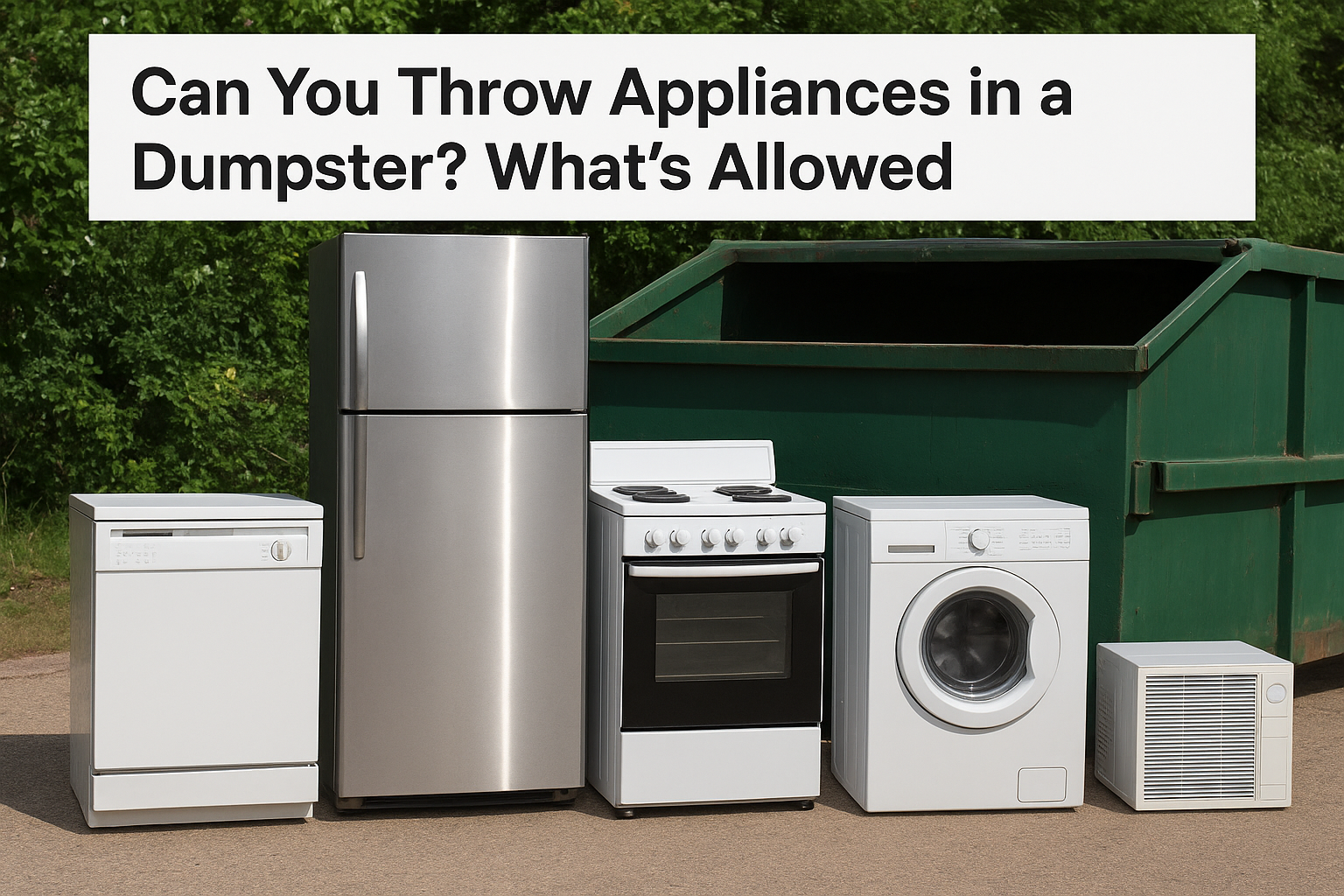
You just pulled an old fridge out of the kitchen, or you’re tearing through a garage full of dead appliances, and you’re wondering: can you throw appliances in a dumpster? It’s a fair question, because the rules aren’t the same for every machine, and getting it wrong can mean a rejected load or a fine you didn’t see coming.
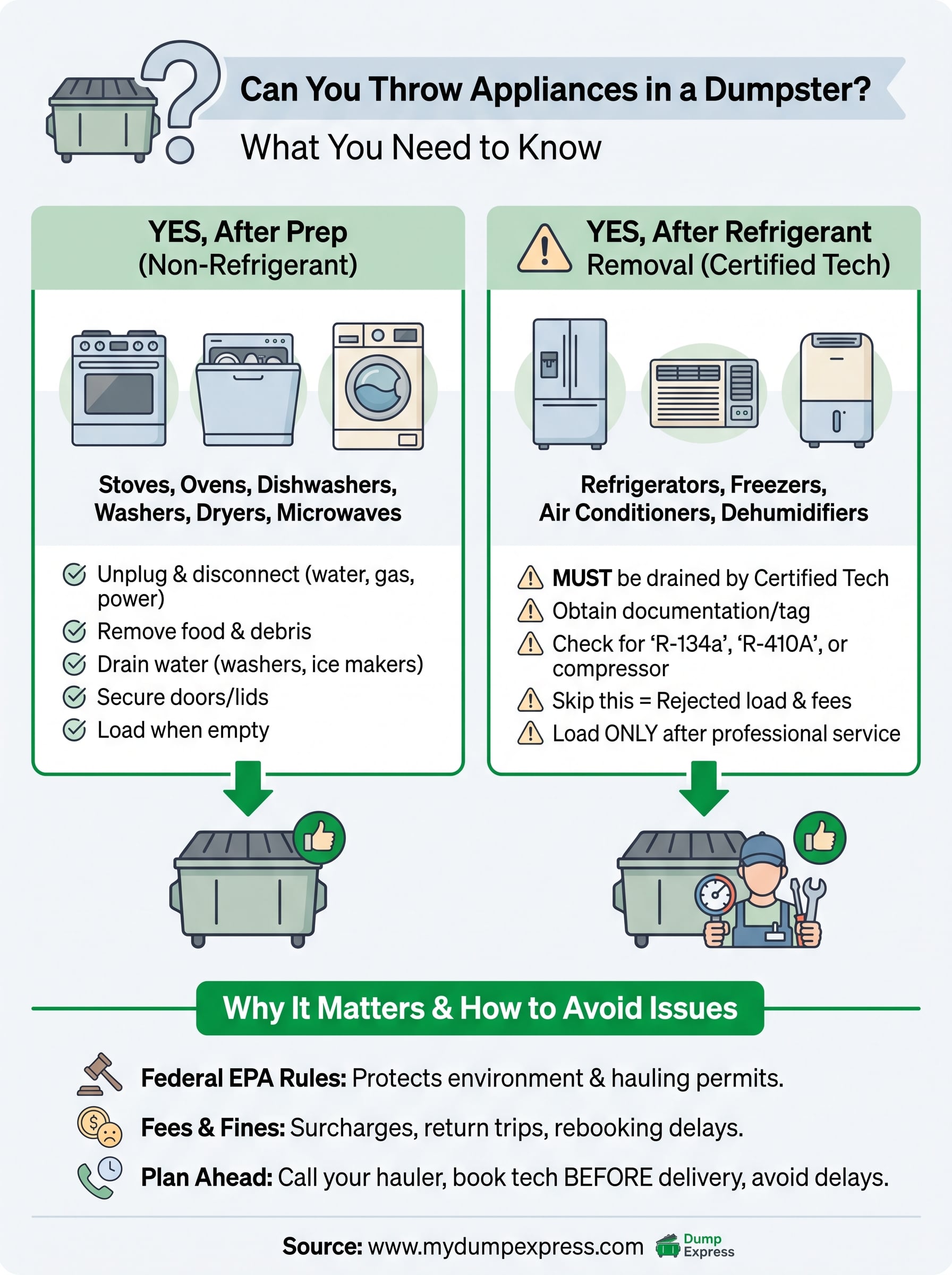
Here’s the short answer: some appliances go in the dumpster without a problem, while others need special handling first because of what’s inside them. Refrigerant-containing units, like refrigerators, freezers, air conditioners, and dehumidifiers, fall under EPA rules and usually can’t go in a standard dumpster until that refrigerant is removed. Other appliances, like stoves, dishwashers, or washers and dryers, are typically fine once they’re empty and unplugged.
In this article, we’ll break down exactly which appliances are allowed, which ones need pre-disposal steps, and how surcharges or local Cape Cod rules might factor into your rental. That way you can plan your dumpster order without any surprises when pickup day arrives.
Why appliance disposal rules matter
Appliance disposal rules exist because certain machines carry hidden environmental risks that a landfill or transfer station isn’t built to handle safely. Refrigerators, freezers, and window air conditioners use refrigerants that are regulated by federal law, and dumping them without draining that refrigerant first can release chemicals that damage the ozone layer and violate the Clean Air Act. That’s not a small technicality. It’s the reason your dumpster rental company or local disposal facility will flag these units before they ever reach a landfill.
Federal rules you can’t ignore
Under EPA regulations, anyone disposing of appliances containing refrigerant must have that refrigerant recovered by a certified technician before the unit is scrapped or landfilled. This applies to household refrigerators, freezers, dehumidifiers, and most air conditioning units. You can read the specifics directly from the EPA’s guidance on appliance disposal. Skipping this step doesn’t just risk a fine for you personally, it can put the hauling company’s disposal permits at risk too, which is why reputable dumpster services take it seriously.
Refrigerant-bearing appliances aren’t banned from disposal, they just need to be drained by a certified tech before they ever touch your dumpster.
What a rejected load actually costs
Getting this wrong doesn’t just mean a phone call. Most Massachusetts transfer stations and landfills will physically reject a load if they spot an intact appliance with refrigerant still inside, and that rejection becomes your problem to solve. Here’s what that typically triggers:
- Return trip fees if the hauler has to bring the appliance back to your property
- Rebooking delays that push your pickup date out by days
- Surcharges added to your final invoice for extra handling
- Wasted dumpster space taken up by an item that has to come back out
Local disposal facility requirements
Cape Cod and Plymouth-area disposal facilities also have their own posted rules on top of federal requirements, and they vary by town. Some transfer stations accept appliances only on specific collection days, while others require proof that refrigerant was already removed. A local hauler who works these facilities daily will know exactly what each site expects, which saves you from the guesswork of calling around before your rental even arrives.
How to tell which appliances need special handling
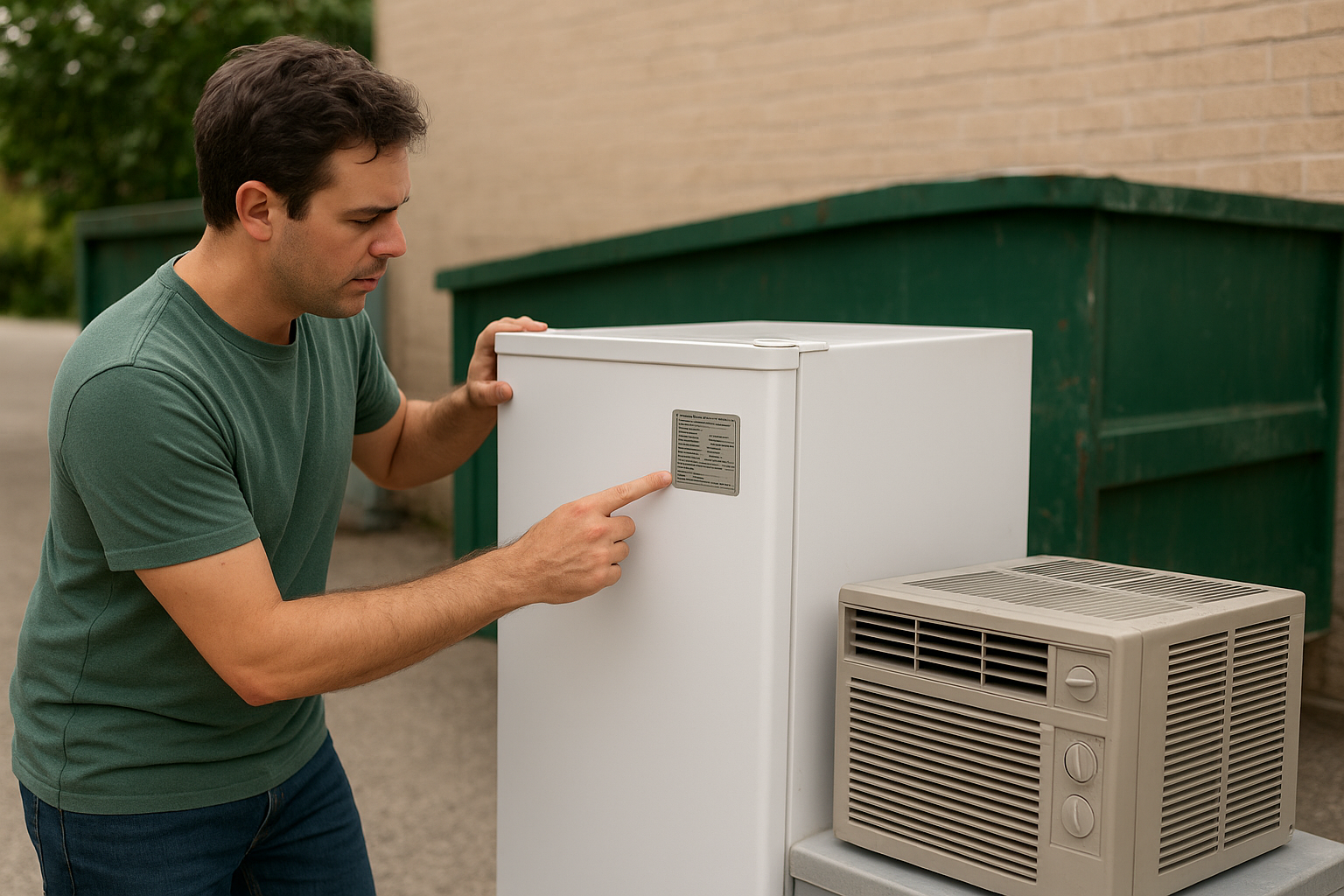
Before you toss anything into your rented dumpster, take thirty seconds to look at the appliance itself. Most units have a metal data plate or sticker somewhere near the back or bottom that lists what’s inside, and that label is your fastest way to know if you’re dealing with a refrigerant-containing unit or something that’s safe to load as-is. If you see words like "R-134a," "R-410A," or any refrigerant code, that appliance needs to be drained before it leaves your property.
Check for the compressor
A simpler trick works if the label is worn off: look for a compressor. Refrigerators, freezers, window air conditioners, and dehumidifiers all rely on a sealed compressor system to keep refrigerant circulating. If the appliance has one, treat it as regulated until a technician confirms otherwise.
If it has a compressor, assume it needs refrigerant removal before it touches your dumpster.
Sort by category, not guesswork
Here’s a quick reference so you’re not second-guessing every item on cleanout day:
| Appliance type | Special handling needed? |
|---|---|
| Refrigerator, freezer | Yes, refrigerant removal required |
| Window or portable AC unit | Yes, refrigerant removal required |
| Dehumidifier | Yes, refrigerant removal required |
| Stove, oven, range | No, load once unplugged |
| Dishwasher | No, load once unplugged |
| Washer, dryer | No, load once disconnected |
| Microwave | No, but check local e-waste rules |
When in doubt, call your dumpster rental provider before loading day. A quick photo of the appliance’s label sent ahead of time can save you a rejected load and a return trip later.
How to prep and dispose of appliances the right way
Getting an appliance ready for the dumpster takes a few extra minutes, but skipping those steps is exactly how you end up with a rejected load. Prepping appliances properly means addressing refrigerant first, then handling the physical cleanup that every unit needs before it’s safe to load.
Schedule refrigerant removal first
For any refrigerant-bearing appliance, your first call should be to a certified HVAC technician or an appliance retailer that offers removal service when you buy a replacement. Many Cape Cod appliance stores will pull the old unit’s refrigerant for a small fee, sometimes for free with a new purchase. Once the technician confirms the refrigerant is out, they’ll typically tag the unit or give you a receipt. Keep that documentation handy since some transfer stations ask for proof before they’ll accept the appliance.
Draining refrigerant isn’t optional paperwork, it’s the one step that determines whether your load gets accepted or sent back.
Handle the physical prep
After refrigerant is addressed, focus on the parts you can control yourself. Run through this checklist before anything goes in the dumpster:
- Unplug and disconnect the appliance fully, including water lines for washers and dishwashers
- Remove all food, packaging, and loose debris from inside
- Take off doors or secure them shut so they don’t swing open and take up extra space
- Drain any remaining water from washers, dishwashers, or ice makers
- Wipe down interiors if the unit sat unused for a while, since mold and odors can linger
Loading a clean, drained, disconnected appliance takes seconds and won’t create problems for the hauler pulling your dumpster later. Prepping it right the first time also protects the rest of your load from moisture damage or contamination.
Appliance-by-appliance rules for dumpster disposal
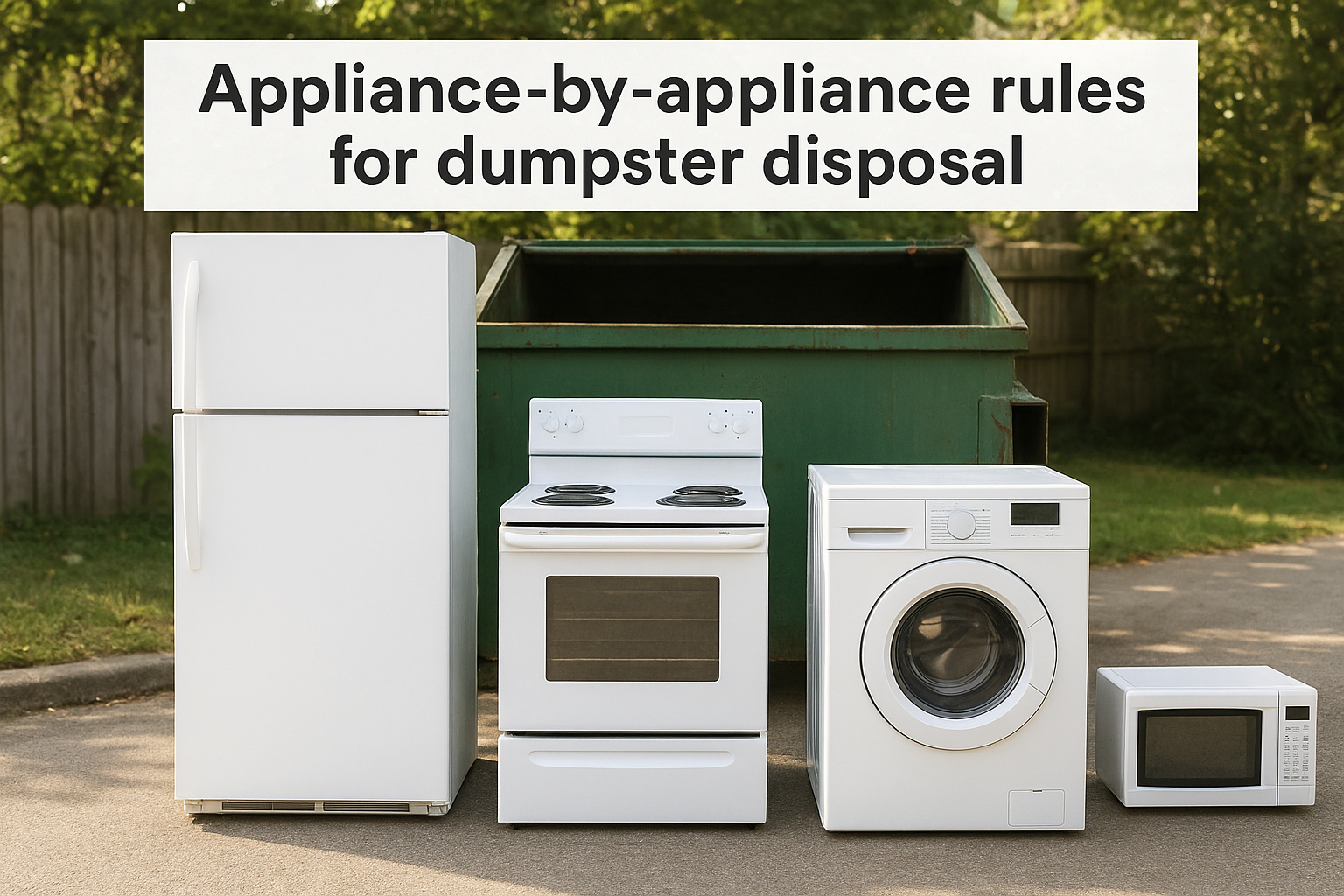
Every appliance has its own quirks, and knowing the specifics ahead of time saves you from a mid-project scramble. Below is a rundown of the appliances homeowners and contractors ask about most, along with what each one actually requires before it goes in the dumpster.
Kitchen appliances
Refrigerators and freezers top the list of appliances that need refrigerant removal before disposal, no exceptions. Stoves, ovens, and ranges are usually fine once unplugged or disconnected from gas lines, but gas units need the line capped by a professional first. Dishwashers just need to be disconnected from water and drain lines, and microwaves can go straight in, though some towns prefer they’re recycled through e-waste programs instead.
Laundry room appliances
Washers and dryers rarely give anyone trouble since they don’t contain refrigerant. The only prep that matters is disconnecting the water supply lines and draining any standing water from the washer drum, since a heavy, waterlogged machine is harder to lift and can leak inside your dumpster.
Cooling and climate units
Window air conditioners, portable AC units, and dehumidifiers all fall under the same refrigerant rule as refrigerators. Don’t assume a small unit is exempt just because of its size. The EPA’s rules apply regardless of capacity.
Size doesn’t exempt an appliance from refrigerant rules. A mini-fridge follows the same disposal law as a full-size unit.
| Appliance | Refrigerant removal required? | Common prep step |
|---|---|---|
| Refrigerator/freezer | Yes | Tech certification |
| Window/portable AC | Yes | Tech certification |
| Dehumidifier | Yes | Tech certification |
| Stove/oven | No | Cap gas line if applicable |
| Dishwasher | No | Disconnect water lines |
| Washer/dryer | No | Drain and disconnect |
| Microwave | No | Check local e-waste rules |
When you’re unsure which category an appliance falls into, treat it like a refrigerant-containing unit until proven otherwise. It’s the safer default and keeps your dumpster rental on schedule.
Avoiding fees and delays on your dumpster rental
Surcharges on appliance disposal almost always trace back to one thing: an appliance showing up at the facility without the prep it needed. Planning your dumpster rental around appliance rules from the start costs you nothing extra, but fixing a rejected load after the fact can add real money and real time to a project that was supposed to be simple.
Talk to your hauler before delivery
Call your dumpster provider before the container even shows up and tell them exactly what you’re disposing of. A hauler who works Cape Cod and Plymouth towns daily will know which facilities need refrigerant documentation and which ones don’t, and they can flag any town-specific rule before it becomes your problem on pickup day.
A five-minute call before delivery beats a return trip fee after pickup, every time.
Common fees to watch for
Here’s what typically shows up on an invoice when appliance prep gets skipped:
- Refrigerant recovery fee if the hauler has to arrange removal on your behalf
- Rejected load fee charged by the transfer station and passed through to you
- Return trip charge for a second pickup after an appliance gets pulled from the load
- Rebooking delay that pushes your entire rental timeline back
Each of these is avoidable with a phone call and thirty seconds spent checking a data plate.
Know your rental window
Factor appliance prep time into your rental period, not just your demo or cleanout schedule. If you’re waiting on a technician to pull refrigerant from a fridge, book that appointment before your dumpster arrives, not after. Dump Express offers flexible rental durations for exactly this reason, so a day or two spent lining up refrigerant removal doesn’t eat into the time you need for the rest of the project. Rushing an appliance into the dumpster before it’s properly drained is how a straightforward cleanout turns into an extra invoice line.
Getting your cleanout done without the headaches
At this point, the answer to "can you throw appliances in a dumpster" should feel simple: most appliances load right in, and the ones with refrigerant just need that gas removed first by a certified tech. Check the data plate, drain what needs draining, disconnect what needs disconnecting, and your dumpster rental stays on schedule with zero surprise fees. Skipping that thirty-second check is the only thing that turns an easy cleanout into a rejected load and a return trip you didn’t budget for.
Dump Express has spent over 20 years handling appliance-heavy cleanouts and job sites across Cape Cod and Plymouth, and our team can tell you exactly what your local transfer station requires before your container even arrives. If you’ve got a fridge, an AC unit, or a garage full of mystery appliances to clear out, get a fast, transparent quote from Dump Express and skip the guesswork on pickup day.