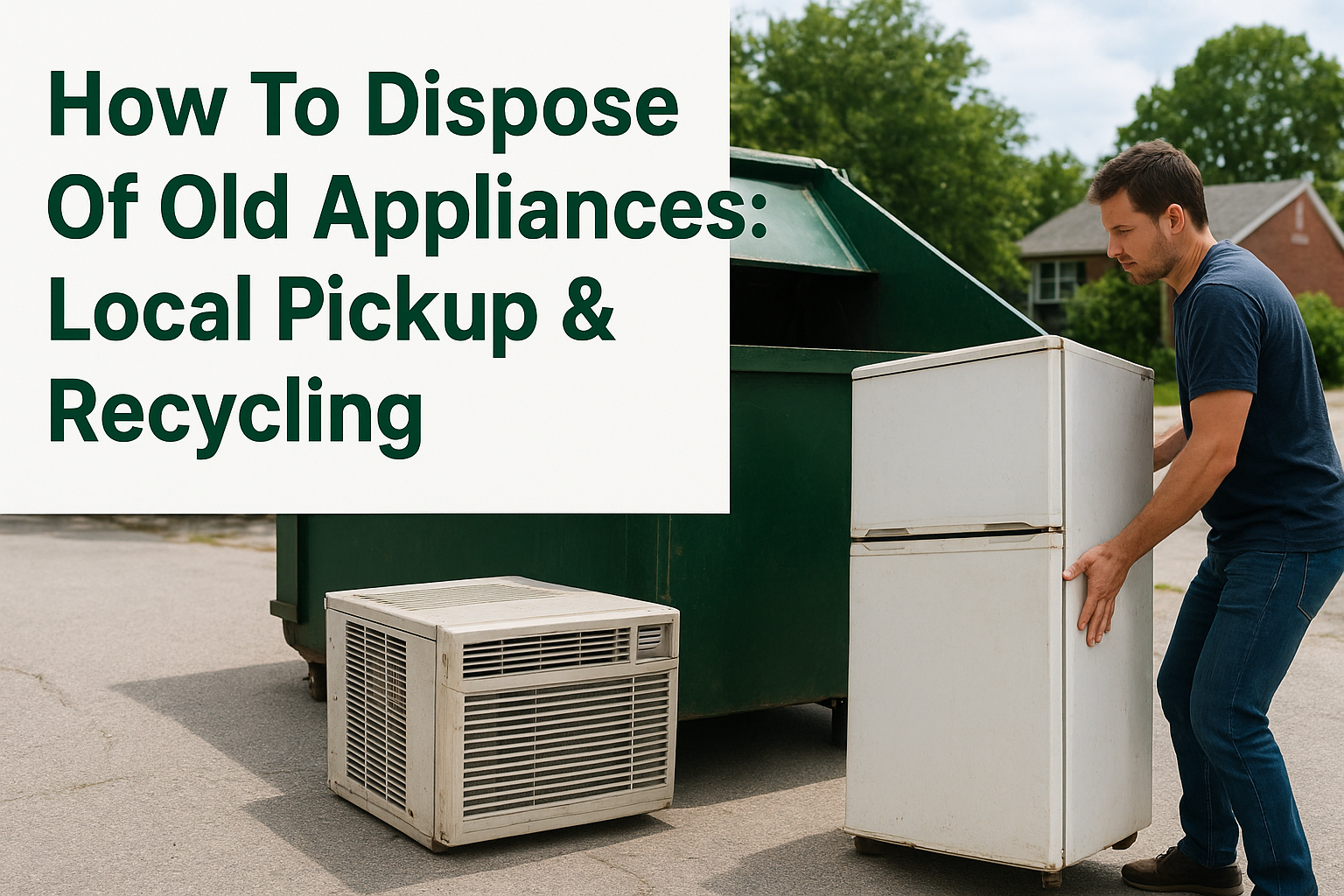
That old fridge in the garage or the washer that finally quit, figuring out how to dispose of old appliances isn’t as straightforward as dragging them to the curb. Most towns on Cape Cod and in the Plymouth area have specific rules about appliance disposal, and ignoring them can mean fines or a rejected pickup.
The good news: you have more options than you probably think. From municipal bulky waste pickups and recycling centers to donation programs and manufacturer take-backs, there are several practical ways to get rid of unwanted appliances responsibly. And when you’re dealing with a larger cleanout, clearing a kitchen remodel, emptying a house, or swapping multiple units at once, a dumpster rental from Dump Express gives you one place to toss everything (appliances included) without scheduling a dozen separate pickups.
This guide breaks down each disposal method available to you, what works best for different situations, and how to avoid common mistakes that slow the process down.
What counts as an appliance and what not to do
Before you figure out how to dispose of old appliances, you need to know what actually qualifies as one. Major appliances (sometimes called "white goods") include refrigerators, washing machines, dryers, dishwashers, ovens, ranges, air conditioners, and water heaters. Small appliances like microwaves, toasters, and coffee makers fall into a separate category that most municipal programs handle differently, or not at all.
Major vs. minor appliances
Major appliances are large, heavy units that typically run on electricity or gas and often require professional handling during removal. Minor appliances are countertop or portable devices that plug into a standard outlet. Most bulky waste and haul-away programs on Cape Cod focus on major appliances because of the refrigerants, compressors, and metals they contain.
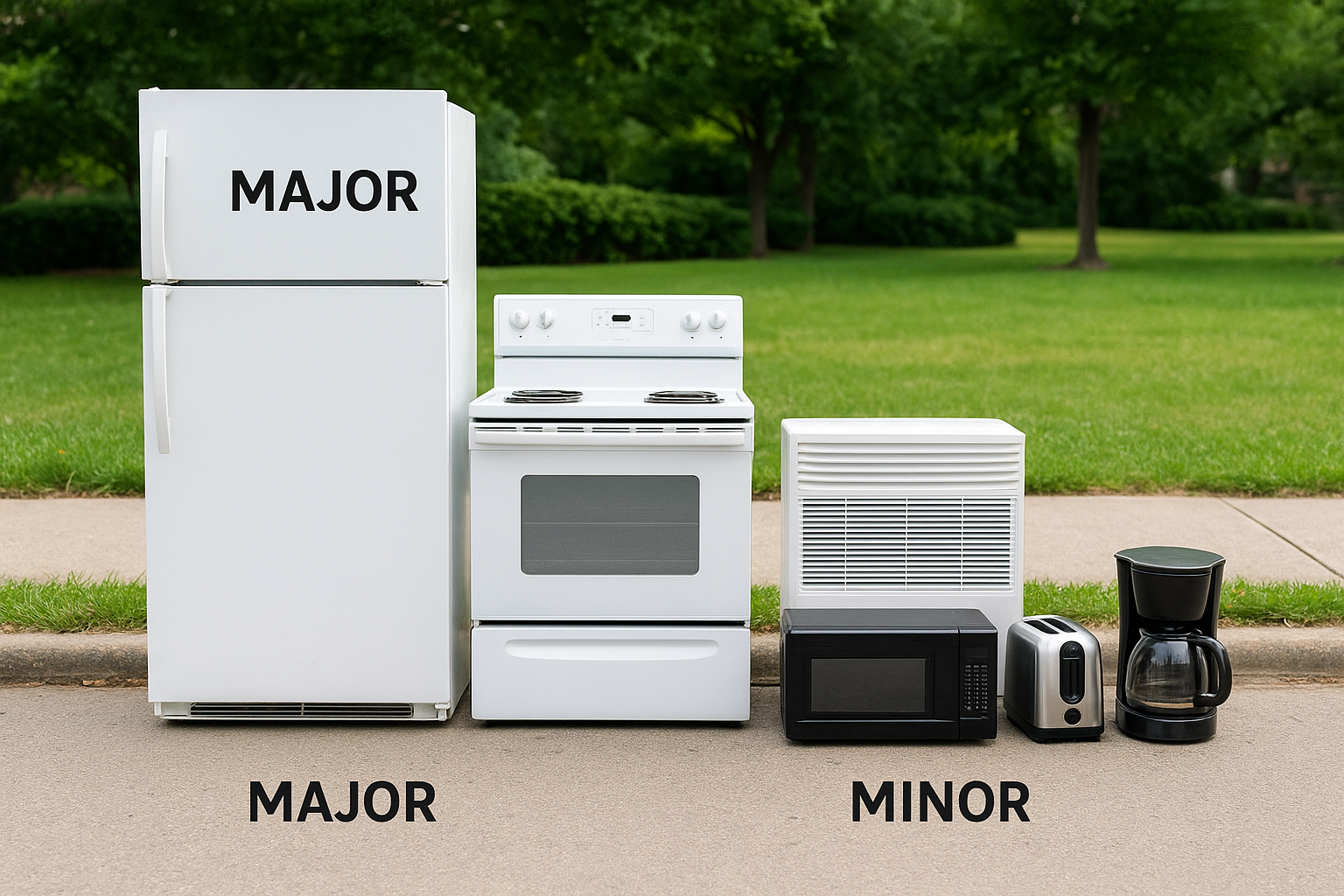
Here is a quick breakdown to help you sort what you have:
| Category | Examples | Typical handling |
|---|---|---|
| Major appliances | Fridge, washer, dryer, stove, A/C | Bulky pickup, haul-away, recycling center |
| Minor appliances | Microwave, toaster, blender | E-waste drop-off, donation |
What not to do with old appliances
The most common mistake is leaving an appliance at the curb without scheduling a pickup first. Many Cape Cod and Plymouth area towns require you to call ahead or book a specific bulky waste day, and uncollected units can result in fines. You should also never attempt to dismantle refrigerators or air conditioners yourself, since these contain refrigerants regulated under the Clean Air Act that require certified technicians to recover.
Releasing refrigerants from old appliances is illegal under federal law and can result in significant penalties for homeowners and contractors alike.
Dumping appliances illegally, whether in a vacant lot or behind a commercial building, creates real liability for you and harms the environment. The right move is always to use one of the legitimate disposal options covered in this guide.
Step 1. Decide if you can reuse, donate, or sell it
Before you look into how to dispose of old appliances through recycling or pickup programs, check whether the unit still works. A functioning appliance has real value to someone else, and moving it through donation or resale keeps it out of a landfill and can save you hauling costs entirely.
Donate or give it away
If the appliance runs, local donation centers like Habitat for Humanity ReStores accept large appliances in working condition. Call ahead before you haul anything, since not every location takes oversized items without an appointment.
Habitat for Humanity ReStores resell donated appliances at reduced prices and put the proceeds toward affordable housing projects in the local community.
Many Cape Cod community boards and Facebook groups also connect neighbors looking for secondhand appliances, which makes a free local transfer fast and straightforward.
Sell it for cash
A working washer, dryer, or refrigerator can fetch $50 to $200 on resale platforms depending on age and condition. Post it with clear photos and honest notes about any wear. Good options include:
- Facebook Marketplace for fast local pickups
- Craigslist for buyers who actively search appliances
- OfferUp for mobile-friendly listings
Buyers typically arrange their own pickup, which means zero hauling effort on your end. If the unit has a known defect, list it as "for parts" and price it lower to attract buyers who repair appliances.
Step 2. Use retailer haul-away and take-back programs
When you’re replacing an old appliance with a new one, retailer haul-away is one of the simplest answers to how to dispose of old appliances. Major retailers like Home Depot, Lowe’s, and Best Buy offer to pick up your old unit when they deliver the new one. You typically arrange this at the time of purchase, either online or in-store, and there may be a small fee depending on the retailer and your delivery area.
Confirm haul-away availability and any fees before you finalize your purchase, since policies vary by store location and delivery zone.
What retailers typically offer
Most big-box appliance retailers include haul-away as an add-on during checkout. Here’s what you can expect from common options:
| Retailer | Haul-away available | Typical fee |
|---|---|---|
| Home Depot | Yes | Free or $25 with delivery |
| Lowe’s | Yes | Free with delivery |
| Best Buy | Yes | $29.99 per item |
Manufacturer and EPA take-back programs
Some appliance manufacturers run their own take-back programs, particularly for refrigerators and freezers. The EPA’s Responsible Appliance Disposal program partners with utilities and retailers to ensure refrigerants and foam insulation are recovered safely before the unit is recycled. Check your manufacturer’s website directly to see if they participate before you schedule anything else.
Step 3. Schedule local pickup or drop-off in MA
When you’re not buying a replacement appliance and still need to figure out how to dispose of old appliances, your local municipality is the next place to look. Most Cape Cod and Plymouth area towns run scheduled bulky waste pickup days or accept appliances at transfer stations year-round.
Municipal bulky waste pickup
Your town’s Department of Public Works typically schedules bulky waste pickup a few times per year. To use this service, you need to call or register online before the scheduled date. Leaving a unit at the curb without registering it first often results in the crew skipping it entirely.
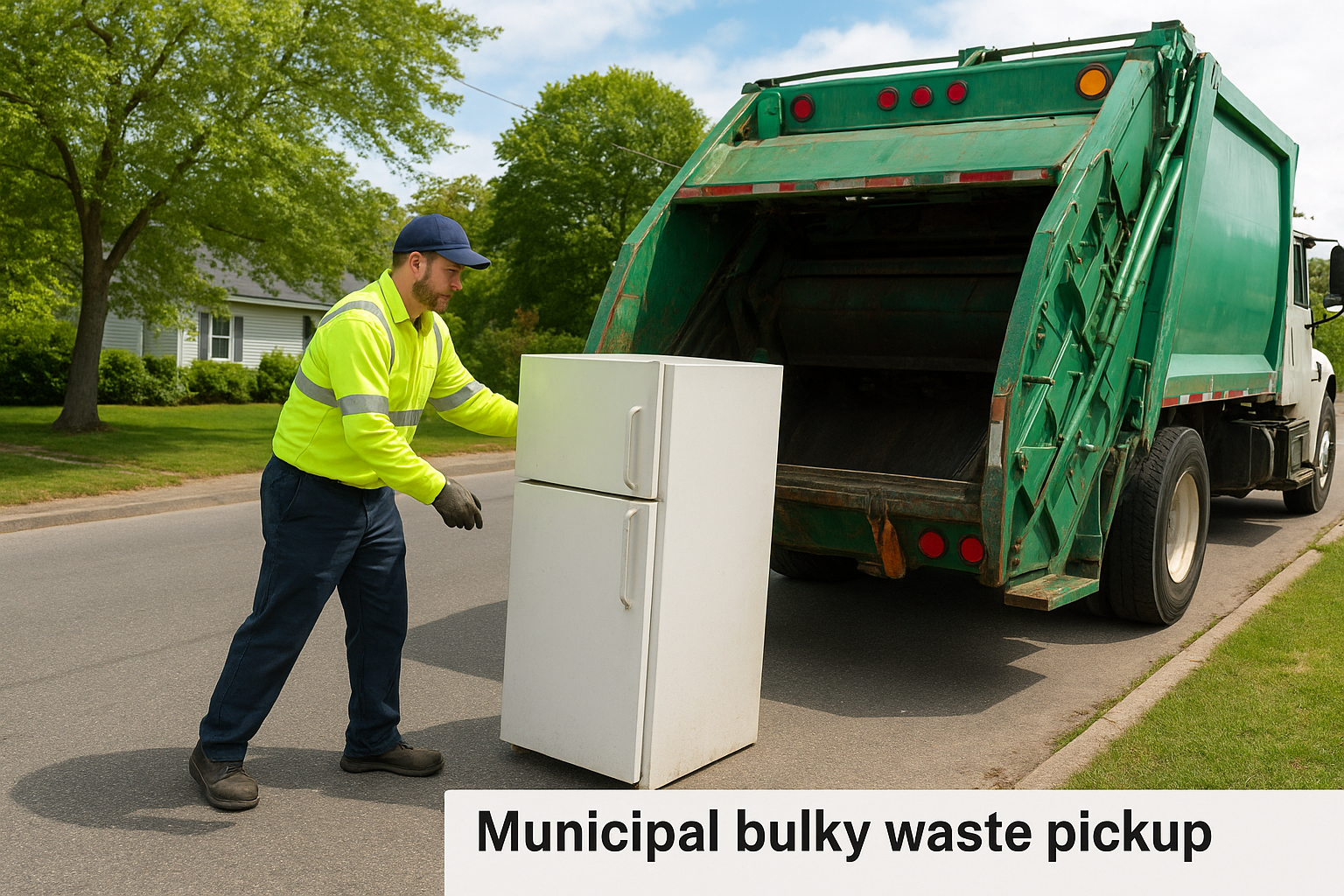
Check your town’s website directly for pickup dates and registration steps, since schedules vary by town and change seasonally.
Here are the general steps to follow:
- Find your town’s DPW contact page or call the main town hall number
- Confirm the next scheduled bulky waste day
- Register your appliance at least 48 hours in advance
- Place the unit at the curb on the scheduled morning
Transfer stations and recycling centers
Many Cape Cod transfer stations accept appliances during regular operating hours for a small drop-off fee, typically between $10 and $30 depending on the item. Call your local facility first to confirm they take the specific unit you have. Bring proof of residency such as a driver’s license or utility bill, since most stations restrict access to town residents only.
Step 4. Use a dumpster for cleanouts and remodel debris
Sometimes the question of how to dispose of old appliances is only part of a bigger job. If you’re clearing out a full house, gutting a kitchen, or managing a renovation, scheduling separate pickups for every item wastes time and adds up fast. A dumpster rental handles appliances and all the surrounding debris in one drop, which simplifies the entire project.
A single 10-yard or 15-yard dumpster can hold a full kitchen remodel‘s worth of appliances, cabinetry, flooring, and construction debris at once.
When a dumpster makes sense
A dumpster works best when you’re dealing with more than one or two appliances, or when disposal is tied to a larger project. Common situations include emptying an estate, remodeling a kitchen, or clearing a basement of bulky items over several days.
Dump Express delivers dumpsters across Cape Cod and the Plymouth area, with sizes from 5 to 20 yards. You can match the container size to your project so you’re not paying for more capacity than you actually need.
What you can and cannot throw in
Most standard household appliances go directly into the dumpster with no extra steps. Here’s a quick reference for common items:
- Washers, dryers, stoves, dishwashers: accepted
- Refrigerators and A/C units: contact Dump Express first, as refrigerant removal may be required
- Hazardous materials (paint, chemicals, propane tanks): not accepted
Wrap up and book the right removal option
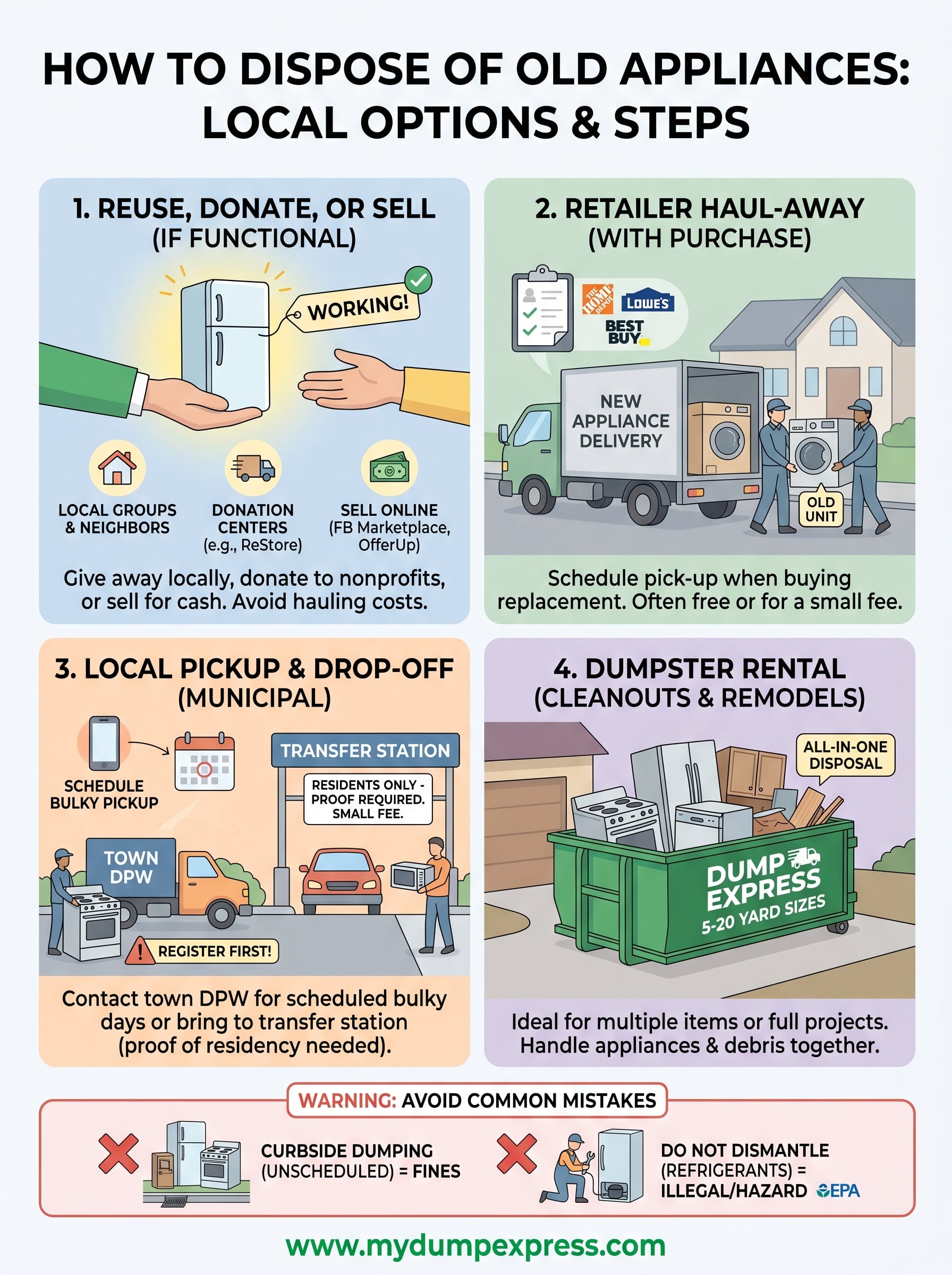
Knowing how to dispose of old appliances comes down to matching the right method to your situation. If the unit still works, donate or sell it first to save time and hauling costs. If you’re buying a replacement, use retailer haul-away at checkout. For standalone removals, contact your town’s DPW or drop it at a local transfer station. And when appliances are part of a bigger cleanout or remodel, a dumpster rental handles everything in a single step.
Each option in this guide works well on its own terms. The key is picking the one that fits your timeline, budget, and project size rather than defaulting to the slowest or most complicated route. For Cape Cod and Plymouth area residents dealing with multiple items or a full renovation, a dumpster gets it done without the back-and-forth. Book a dumpster rental with Dump Express and get your project cleared on your schedule.