
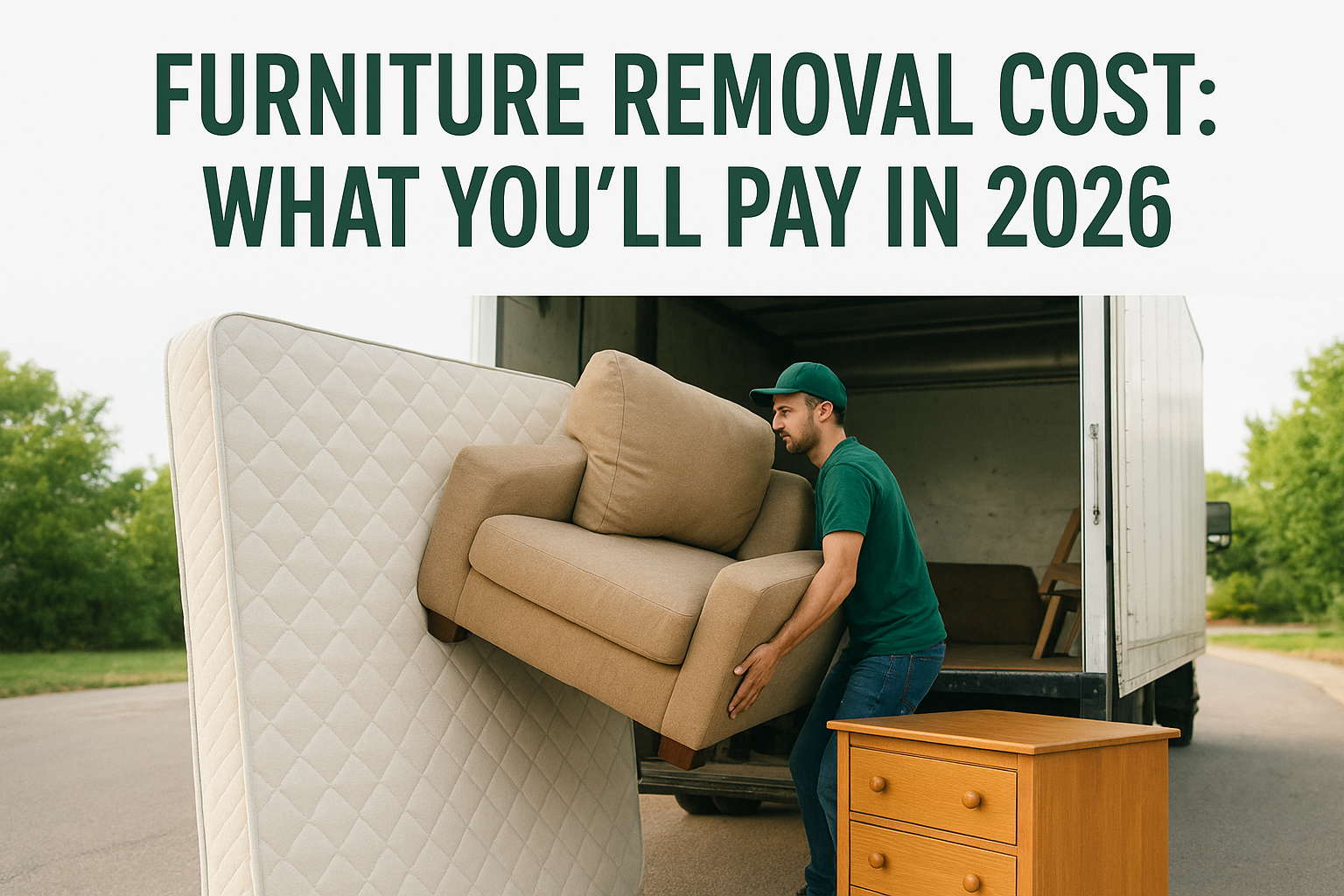
Old couch sitting on the curb while you try to figure out what it’ll cost to make it disappear? Furniture removal cost varies more than most homeowners expect, and guessing wrong means either overpaying a hauling crew or renting a dumpster that’s way bigger than you need. Prices swing based on how much furniture you’re getting rid of, how far the crew has to carry it, and whether you’re on Cape Cod or somewhere with fewer local options.
If you’re trying to budget before you book anything, you want real numbers, not vague ranges pulled from a national average. This article breaks down what junk removal companies typically charge per item and per truckload, compares that to renting your own dumpster, and shows you where hidden fees tend to sneak in, like stairs, long carries, or mattress disposal surcharges.
We’ll also walk through when hauling services make sense versus when a dumpster rental saves you money, especially if you’re clearing out more than a couch and a mattress. By the end, you’ll know exactly what to expect to pay in 2026 and how to avoid the most common overcharges homeowners run into on the Cape.
Why furniture removal costs vary so much
Ask five companies for a quote on the same couch and you’ll get five different numbers. That’s because furniture removal cost isn’t a fixed rate, it’s a formula built from volume, labor, distance, and local disposal fees. A single armchair near the curb costs almost nothing to haul compared to a basement full of furniture that needs to be carried up two flights of stairs. Understanding these variables before you call anyone helps you spot a fair quote from an inflated one.
Item type and volume drive the base price
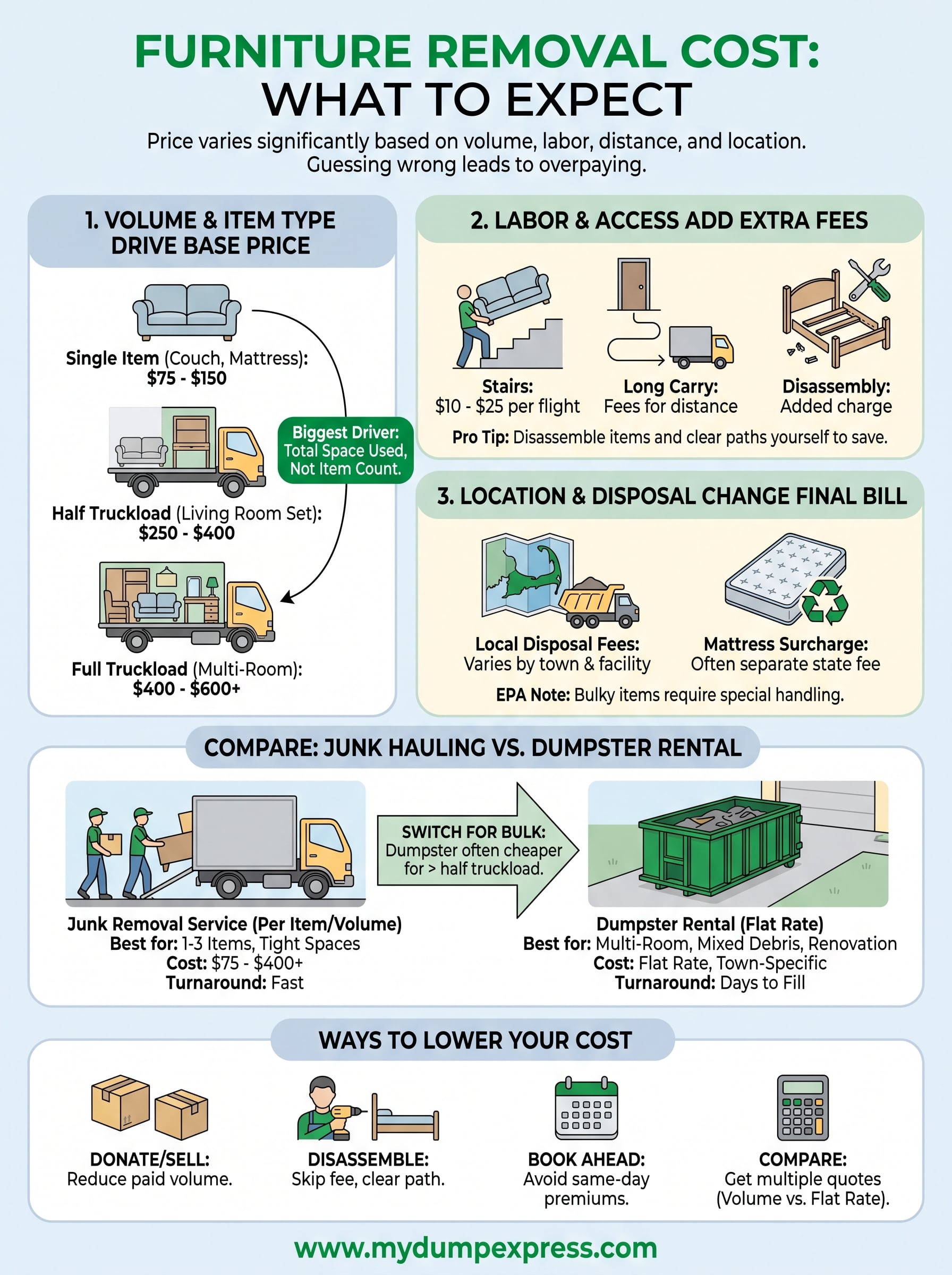
Most hauling companies price by how much space your items take up in the truck, not strictly by piece count, though certain items like mattresses, recliners, and sectional sofas carry their own surcharges because they’re bulky and hard to dispose of. A single item pickup, like one couch or one mattress, usually runs cheaper per piece than a full load, but the per-item rate climbs fast once you add a second or third piece.
| Load size | Typical items | Estimated cost |
|---|---|---|
| Single item | One couch or mattress | $75-$150 |
| Minimum load (1/4 truck) | Couch, chair, small table | $150-$250 |
| Half truckload | Living room set, mattress, dresser | $250-$400 |
| Full truckload | Whole apartment or multiple rooms | $400-$600+ |
The single biggest driver of your furniture removal cost is how much you’re hauling, not which piece of furniture it is.
Labor, access, and distance add extra fees
Beyond volume, the physical work of getting furniture out of your home changes the price. Crews charge more when they have to navigate narrow hallways, walk-up apartments, or long distances from your door to the truck. Expect these common add-ons:
- Stair fees, often $10-$25 per flight per item
- Long carry charges when the truck can’t park near the entrance
- Disassembly fees for bed frames, sectionals, or large wall units
- Same-day or emergency scheduling premiums
These fees rarely show up in the initial quote unless you specifically describe your setup, which is why a phone consultation that asks about stairs and parking usually produces a more accurate number than an online estimate alone.
Location and disposal fees change the final bill
Where you live matters more than most people realize. Companies operating in dense urban areas or remote regions often charge more simply because dump fees and drive time are higher. On Cape Cod, disposal costs vary town by town depending on the transfer station or landfill each hauler uses, and mattress disposal in particular often carries a separate state-mandated recycling fee. The U.S. Environmental Protection Agency notes that bulky items like furniture and mattresses require special handling in many municipal waste systems, which is part of why these charges exist rather than being padded profit (https://www.epa.gov/facts-and-figures-about-materials-waste-and-recycling). A company with local yard locations and established relationships with nearby facilities can usually pass along lower disposal costs than one trucking your furniture across county lines.
How to estimate your furniture removal cost
Getting an accurate furniture removal cost estimate before you pick up the phone saves you from surprise add-ons later. Walk through your home, count what’s leaving, and note anything that might complicate the pickup. Most companies base quotes on a mix of volume and access, so the more detail you give them upfront, the closer their number will land to your final bill.
Count and categorize what’s leaving
Start by listing every piece of furniture you want gone, then group items by size. A dresser and a nightstand take up far less truck space than a sectional sofa or a queen mattress set, and that difference directly changes your quote.
- Small items (nightstands, chairs, end tables)
- Medium items (dressers, loveseats, desks)
- Large items (sofas, sectionals, mattresses, appliances)
- Anything requiring disassembly (bed frames, bunk beds, wall units)
Measure the path from door to truck
Once you know what’s going, think about how it gets out. Note how many stairs are involved, whether there’s a working elevator, and how far the truck will need to park from your entrance. These details determine whether labor fees get added on top of the base volume price.
Give a hauler your item list and your access details, and you’ll get a quote that actually matches your final invoice.
Get quotes from at least two companies
Two estimates rarely match exactly, but comparing them tells you what’s fair for your area. Ask each company the same three questions:
- Is your quote based on truck volume or per item?
- Do stairs, long carries, or disassembly cost extra?
- Is disposal or dump fee included in the quoted price?
Quotes that skip these answers usually turn into higher final bills. Providers who answer clearly, and who know your town’s disposal rules, tend to be the ones who show up on schedule and charge what they promised.
Using this approach, most homeowners can estimate their furniture removal cost within $50 to $75 of the actual bill before a truck ever pulls into the driveway. That’s close enough to plan a real budget instead of guessing.
Furniture removal vs dumpster rental and other options
Hiring a hauling crew isn’t the only way to get rid of old furniture, and it isn’t always the cheapest. Once you’re clearing out more than a couch and a mattress, a dumpster rental often beats paying per item, especially if you’re mixing furniture with other debris from a move, renovation, or estate cleanout. Comparing the real costs side by side, rather than assuming a junk removal truck is always faster and better, helps you avoid overpaying for a job a dumpster could handle for less.
Comparing the main disposal options
Each option fits a different situation, and the right choice usually comes down to volume and timeline. A single sofa on moving day calls for a different solution than a garage full of old furniture, boxes, and yard waste.
| Option | Best for | Typical cost | Turnaround |
|---|---|---|---|
| Junk removal service | 1-3 items, tight spaces | $75-$400+ | Same day to next day |
| Dumpster rental (10-yard) | Multi-room cleanouts, mixed debris | Flat rate, town-specific | Delivered same or next day, days to fill |
| DIY truck haul to transfer station | Small loads, flexible schedule | Gas + dump fee | Depends on your time |
| Donation pickup | Furniture in good condition | Free | Days to schedule |
If you’re clearing more than one room, a flat-rate dumpster almost always beats paying per item for furniture removal.
Why volume changes the math
Hauling companies charge more as your load grows, since every extra piece adds truck space and labor time. A dumpster rental, by contrast, charges one flat rate no matter how full it gets, up to the container’s limit. That makes it a better fit once you’re past a half truckload of furniture, particularly during a full home cleanout or renovation where furniture is just one part of what’s leaving.
Weighing convenience against cost
Quick, single-item pickups still favor a hauling service, since scheduling a dumpster for one couch rarely makes sense. Renting works best when you have days, not hours, to fill the container and want to add mattresses, appliances, or construction debris without calling multiple services. Knowing which category your project falls into before you book keeps you from paying hauling-service rates for a dumpster-sized job.
Ways to lower your furniture removal cost
Smart planning before pickup day can shave real money off your furniture removal cost, sometimes cutting a bill by half. Most savings come from reducing volume, timing your project well, and doing a little prep work yourself instead of paying a crew to do it for you.
Sort what you’re actually keeping
Before anything goes to the curb, separate items into keep, donate, and haul piles. Furniture in decent shape often qualifies for free donation pickup through local charities, which removes it from your paid load entirely and shrinks the volume a hauling crew has to charge you for. Selling or giving away even one large piece, like a dresser or dining set, can drop you from a half truckload rate into the minimum load bracket.
Break down large pieces yourself
Disassembling bed frames, bunk beds, or modular sectionals before the crew arrives eliminates the disassembly fee most companies tack onto bulky items. A cordless drill and twenty minutes of work on a bed frame can save $20 to $40 on your final invoice. Clearing a straight path from the item to the truck also helps you skip long-carry charges that add up fast in older homes with narrow hallways.
Doing the disassembly and staging yourself is the fastest way to cut a hauling quote without cutting corners on service.
Time your pickup strategically
Scheduling matters more than most homeowners realize. Same-day and emergency requests almost always cost more than a pickup booked a few days out, since companies charge a premium for squeezing you into an already-set route. Combining multiple rooms into one visit, rather than calling separately for the bedroom set and then the living room furniture a week later, also spreads the base labor fee across more items instead of paying it twice.
Compare per-item pricing against a flat rate
Once you’re past three or four large pieces, run the numbers on a dumpster rental before committing to a per-item quote. A flat-rate container often beats hauling service pricing for anything approaching a half truckload, especially if you’re already tackling a renovation or cleanout where furniture is only part of the debris leaving your property.
Budgeting for your furniture removal
Your furniture removal cost ultimately comes down to volume, access, and timing, three things you control more than you might think. A single couch pickup will always cost less than a full truckload, stairs and long carries will always add fees, and booking ahead will always beat a same-day scramble. Use the estimate ranges above to set a realistic budget before you call anyone, and don’t be afraid to ask a company the three questions from earlier: how they price, what triggers extra fees, and whether disposal is included.
If your project has grown past a couch and a mattress into a full cleanout, renovation debris, or multiple rooms of furniture, running the numbers on a flat-rate container usually saves you money over per-item hauling. Get a town-specific dumpster rental quote from Dump Express and see exactly what your project costs before you commit to anything.