
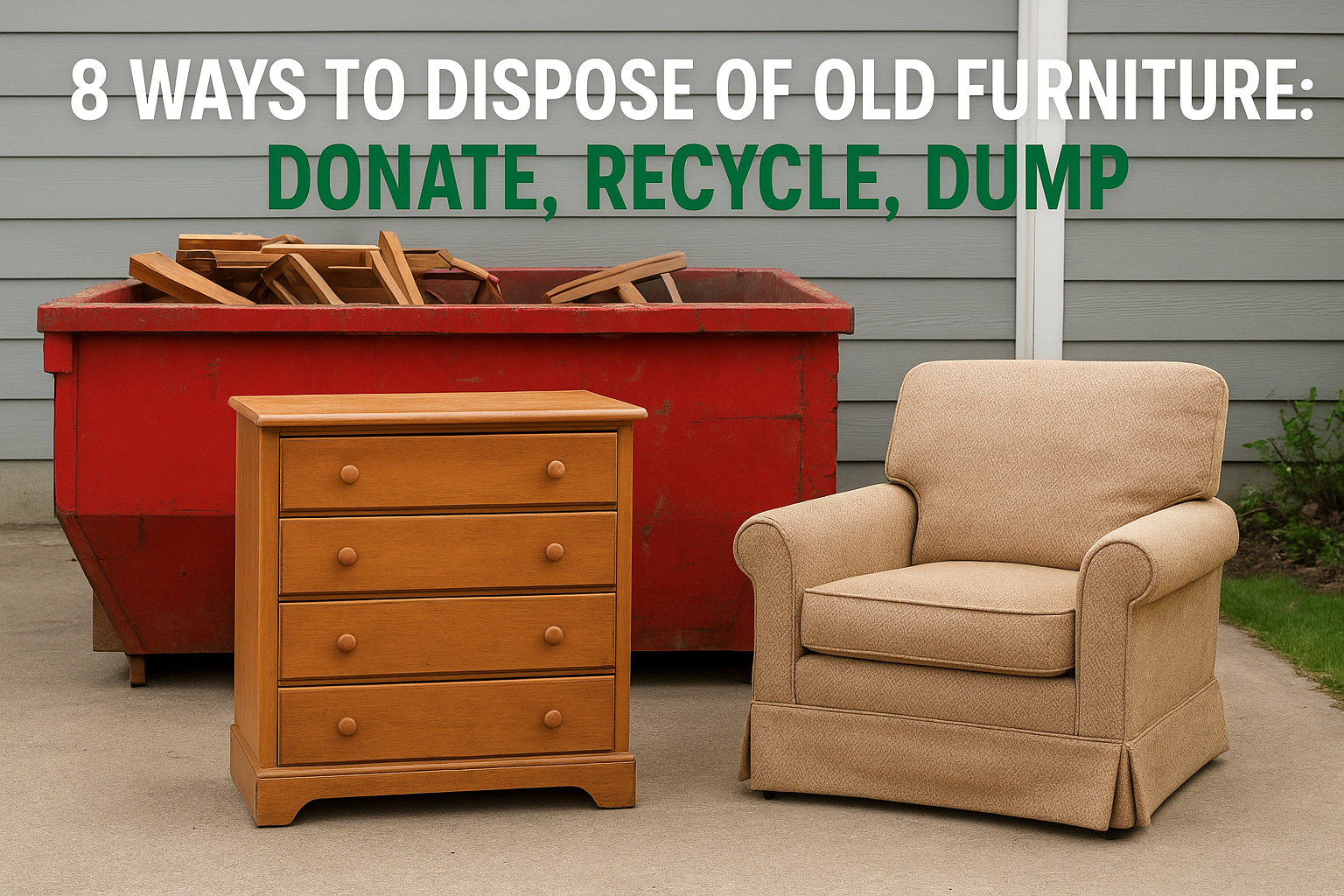
That old couch has been sitting in the garage for months. The dining set you replaced is collecting dust. If you’re figuring out how to dispose of old furniture, you’re not alone, it’s one of the most common questions people run into during moves, renovations, and home cleanouts. The good news is you have more options than you probably think, and not everything has to end up in a landfill.
Some pieces still have life in them and can be donated or sold. Others are too far gone and just need to go. The right approach depends on the condition of the furniture and how quickly you need it out of your space. Here on Cape Cod and the South Shore, we see this all the time, homeowners mid-project with bulky items and no clear plan for getting rid of them. That’s a big part of why people rent dumpsters from Dump Express in the first place.
This guide breaks down eight practical ways to get rid of unwanted furniture, from donation and resale to curbside pickup and dumpster rental. We’ll cover what works best for different situations so you can pick the option that fits your timeline, your budget, and the condition of what you’re tossing.
1. Rent a dumpster for a furniture cleanout
If you’re dealing with multiple pieces at once, a dumpster is often the most efficient and straightforward option. Rather than coordinating multiple trips or waiting on pickup windows, you load everything on your schedule and the rental company handles the rest. This is especially useful when you’re working through how to dispose of old furniture during a bigger project like a full room renovation or an estate cleanout.
Best for
Renting a dumpster works best when you have more than one or two pieces to remove, or when the furniture is in poor condition and no charity will take it. It also makes sense when you’re already generating other debris and want one container for everything.
- Full room or whole-house furniture cleanouts
- Estate cleanouts that mix furniture with other junk
- Renovation projects where debris and furniture removal overlap
How it works
You book online or by phone, choose a dumpster size that fits your load, and pick a delivery date. The rental company drops the container at your property, you fill it at your own pace, and they schedule a pickup when you’re ready. At Dump Express on Cape Cod, delivery is available seven days a week, with same-day options if you call early enough.
Sizing matters more than most people expect: a 10-yard dumpster handles a standard room cleanout, while a 15 or 20-yard fits a whole-house furniture purge.
What you can and cannot throw away
Most furniture loads in without any problem. That said, hazardous materials are never allowed, regardless of the rental company you use.
| Accepted | Not Accepted |
|---|---|
| Sofas, chairs, tables | Paint cans, propane tanks |
| Bed frames and mattresses | Certain electronics |
| Bookshelves and dressers | Asbestos-containing materials |
Note that some companies charge a mattress surcharge, so ask about that upfront when you book.
Typical cost and timing
Prices vary by dumpster size and your specific location, but most residential furniture cleanouts on Cape Cod fall in the $300 to $600 range. Delivery typically happens within one to two business days, and rental periods usually run around seven days before pickup is scheduled.
2. Donate furniture in good condition
Donation is one of the best ways to handle how to dispose of old furniture when the pieces still have real use left in them. You keep usable items out of the landfill, and someone else gets furniture they actually need.
Best for
This option works best when your furniture is clean, structurally sound, and free of major damage. If a piece has stains, broken frames, missing hardware, or strong odors, most organizations will turn it away at the door. Donation is ideal for sofas, tables, dressers, and bed frames that are simply no longer your style rather than items that are worn out.
How it works
You contact a local charity or thrift organization, describe the items, and either drop them off yourself or schedule a free pickup from your home. Organizations like Habitat for Humanity ReStores accept larger furniture pieces and often provide pickup service. Call ahead, because most organizations will not accept furniture without confirming condition first.
Scheduling a pickup saves you significant time and effort, but slots can book out a week or more in advance.
What donation centers accept and reject
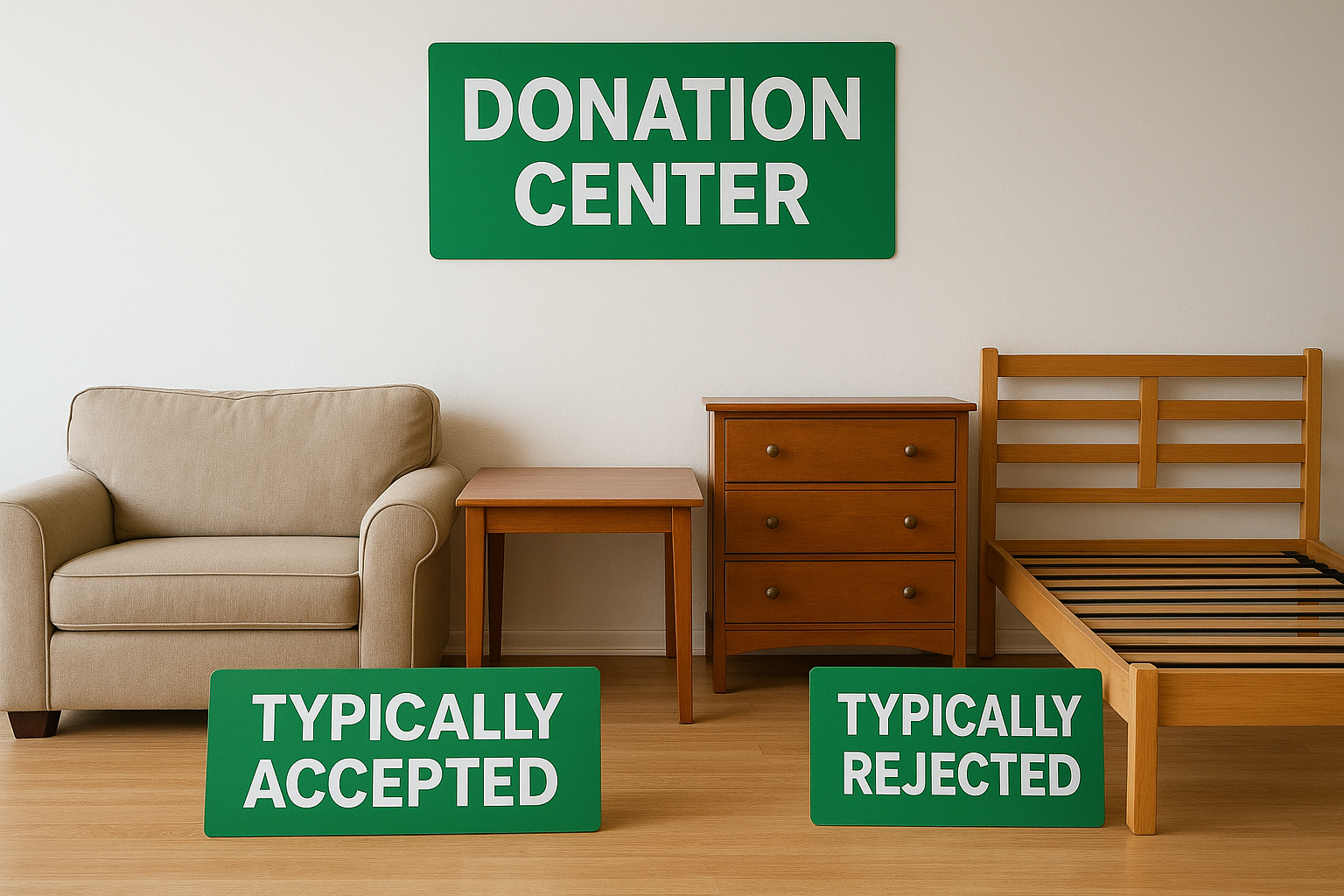
| Typically Accepted | Typically Rejected |
|---|---|
| Sofas and chairs in good condition | Furniture with stains or odors |
| Tables and dressers | Broken frames or missing legs |
| Bed frames (no mattresses) | Mattresses and box springs |
Typical cost and timing
Donation is free for you, and many organizations offer free pickup. Lead times for scheduled pickups typically run three to ten days, depending on demand in your area.
3. Sell furniture locally for cash
Selling your furniture before disposal is worth considering when you’re working through how to dispose of old furniture and the pieces are still in decent shape. A quick local sale puts money back in your pocket and avoids the hassle of scheduling pickups or hauling anything yourself.
Best for
This option works best when your furniture is clean and functional, even if it’s not perfect. Buyers on local marketplaces are generally less picky than donation centers, which means pieces with minor wear or cosmetic flaws can still move fast.
- Sofas, tables, and dressers in usable condition
- Items too worn for donation but still structurally sound
- Furniture you need gone within one to two weeks
How it works
Post your items on Facebook Marketplace or Craigslist with clear photos and an honest description. Both platforms are free and connect you directly with local buyers who pick up the furniture themselves, so you never need to haul or ship anything.
Listing multiple pieces as a bundle often attracts buyers faster and clears your space in a single transaction.
How to price and list it fast
Search the same item on Facebook Marketplace to see what comparable pieces are selling for locally, then price yours 10 to 20 percent below that. Include clear photos from multiple angles, the item dimensions, and an honest note on condition to reduce back-and-forth with buyers.
Typical cost and timing
Listing is free on most platforms. Items priced fairly typically sell within three to seven days, though high-demand pieces like solid wood dressers or sectional sofas can move within 24 hours.
4. Give it away using local pickup groups
Giving furniture away for free is one of the fastest ways to handle how to dispose of old furniture when you need things gone quickly and aren’t concerned about getting paid. Local pickup groups connect you with neighbors who are actively looking for free furniture, and transactions often close within hours of posting.
Best for
This approach works well for furniture that is functional but not worth selling, like an older bookshelf, a basic coffee table, or a chair that’s seen better days. It’s also a good fit when you have a tight deadline and just want the piece gone without any back-and-forth negotiation on price.
How it works
Post your item on Facebook’s "Buy Nothing" groups or Craigslist’s "Free" section with a photo, the dimensions, and your general area. Interested people message you directly to arrange a pickup time. Most successful giveaways involve first-come, first-served rules, so state that clearly in your post to avoid managing a long list of interested parties.
Placing the item at the curb and marking it "free" often gets it picked up within a few hours, especially in higher-traffic neighborhoods.
How to avoid no-shows and curb issues
No-shows are the biggest frustration with free giveaways. Confirm a specific pickup window with whoever claims the item, and keep a backup contact. If the piece sits outside unclaimed after 24 hours, remove it from your curb to stay compliant with local ordinances.
Typical cost and timing
Giving furniture away is completely free. Most pieces find a taker within one to three days when listed clearly with a photo.
5. Use municipal bulky item pickup
Municipal bulky item pickup is one of the most overlooked options when figuring out how to dispose of old furniture. Most towns and cities offer scheduled large-item collection as part of their regular waste services, which means you may already be paying for a removal option you’ve never used.
Best for
This option works best when you have one or two large pieces to remove and a flexible timeline. If the furniture is too worn for donation or resale, bulky pickup lets you handle removal with no out-of-pocket cost.
How it works
Contact your town’s public works or sanitation department to schedule a pickup date. Most municipalities require you to call ahead or submit a request online rather than simply leaving items at the curb on regular trash day. On the pickup date, you place your furniture at the designated curbside location before the collection window begins.
Check your town’s specific rules before placing anything at the curb, since procedures vary significantly between municipalities.
Rules that commonly trip people up
Many towns limit the number of items per pickup and some charge a small fee per piece. Mattresses are frequently handled separately and may require a special disposal sticker purchased in advance.
Common rules to check before you schedule:
- Item limits (often two to four pieces per pickup)
- Required advance notice of 48 to 72 hours
- Mattress sticker or separate disposal fees
- Specific curbside placement instructions
Typical cost and timing
Bulky pickup is free or low-cost in most municipalities. Scheduling windows typically run one to three weeks out, so plan ahead if you’re working against a deadline.
6. Recycle or scrap what you can
When you’re working through how to dispose of old furniture, recycling is worth considering before you send everything to the landfill. Many furniture pieces contain materials that scrap yards and recycling centers actively accept, and breaking items down correctly can reduce what you need to haul or pay to dump.
Best for
Recycling works best when your furniture is broken or worn past the point of donation or resale, but still made of materials with clear recycling value. The strongest candidates include:
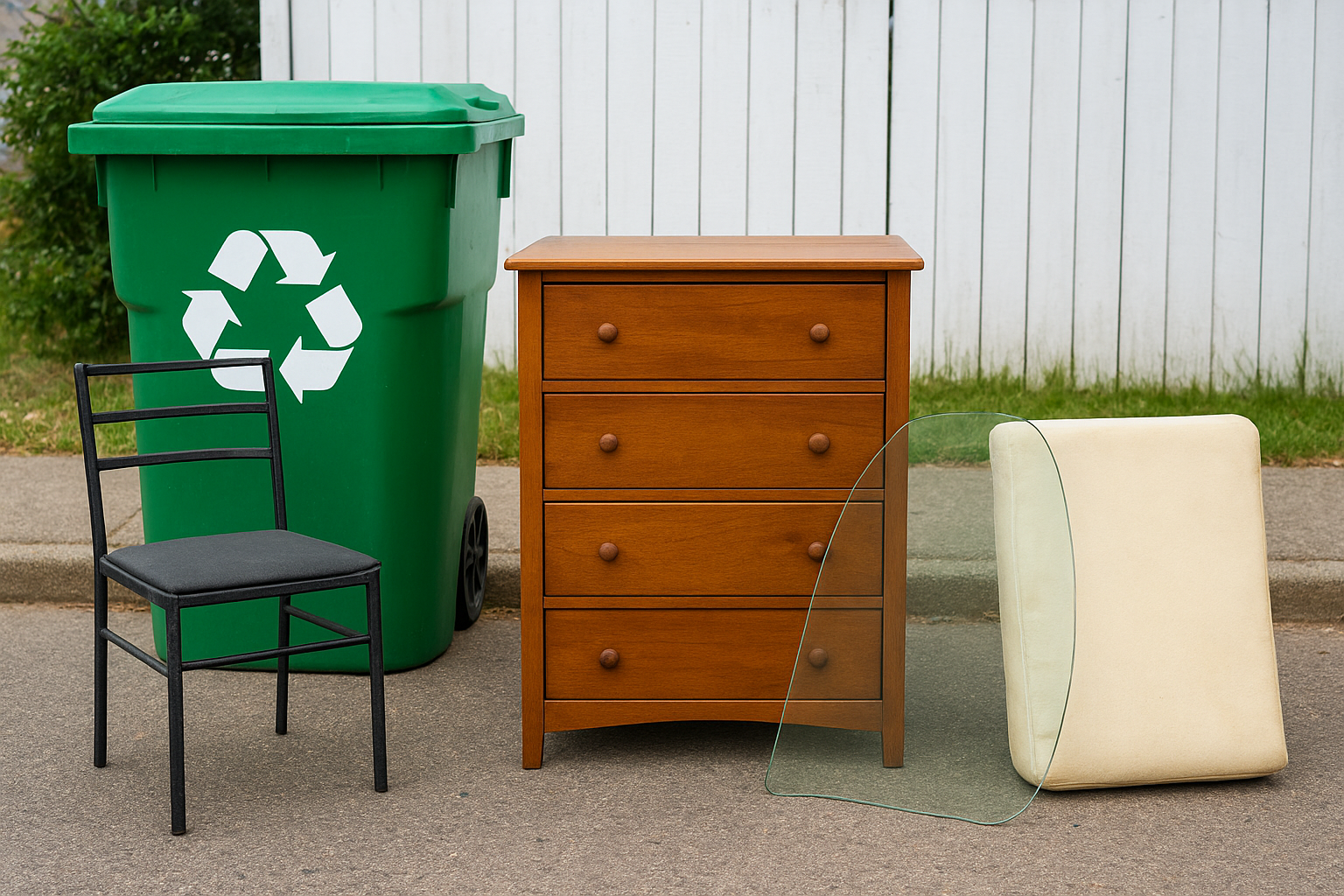
- Metal-framed chairs, shelving units, and bed frames
- Solid wood tables and dressers that can’t be sold
- Glass tabletops that can go to a glass drop-off
How it works
You separate the furniture by material type and bring each component to the right facility. Metal goes to a scrap yard, clean wood may go to your transfer station’s designated pile, and glass has its own drop-off. Foam cushions are the hardest material to place, but some mattress recyclers handle them.
Call your local transfer station before making a trip, since many Cape Cod and South Shore facilities have dedicated drop-off areas for wood and metal that most residents never use.
Common furniture materials and where they go
| Material | Where It Goes |
|---|---|
| Steel and aluminum frames | Scrap metal yard |
| Solid wood | Transfer station wood pile |
| Glass tabletops | Glass recycling drop-off |
| Foam cushions | Mattress or foam recycler |
Typical cost and timing
Scrap metal drop-offs are free or pay you a small amount based on weight. Wood and glass at transfer stations usually require a resident sticker or a small per-load fee. You can knock out the whole process in one afternoon if you call ahead.
7. Hire a junk removal company
Junk removal companies handle the lifting and hauling for you. If you’re figuring out how to dispose of old furniture and want the most hands-off experience possible, booking a crew gets your space cleared without you moving a single piece.
Best for
This option works best when you have large or heavy furniture you cannot safely move on your own, or when you’re working against a tight deadline and need everything out in a single visit. It also makes sense when your furniture is mixed in with other junk and sorting it yourself isn’t practical.
How it works
You call or book online, and a crew shows up at a scheduled time to carry everything out from inside your home and load it directly onto their truck. Most companies quote you a price on-site before they start and offer next-day availability in most areas.
Confirm upfront whether the company donates or recycles usable pieces rather than sending everything straight to the landfill.
What affects the price
Several factors push the final cost higher or lower. The total volume of furniture, the floor level it sits on, and the difficulty of access all play a role. Removing one sofa from a ground-floor room costs far less than clearing a full bedroom set from a third-floor unit with no elevator.
Typical cost and timing
Most furniture removal jobs run $150 to $400 or more depending on load size. Crews are typically available same-day or next-day, making this one of the faster options when your timeline is tight.
8. Take it to a landfill or transfer station
Taking furniture directly to a landfill or transfer station is the most reliable fallback when every other option fails. If you’re still figuring out how to dispose of old furniture that’s too damaged to donate, too bulky for curbside pickup, and not worth a junk removal fee, driving it there yourself gives you full control over the timing.
Best for
This option works best when you have access to a truck or trailer and want to handle disposal in a single trip on your own schedule. It’s a practical choice when your furniture is in poor condition and no charity, buyer, or free pickup taker will take it off your hands.
How it works
You load the furniture into a truck or trailer, drive to your local transfer station or municipal landfill, and unload it in the designated drop-off area. Most facilities require you to show proof of residency, so bring your ID and be prepared to pay a per-load or per-item fee at the gate.
Call your facility ahead of time to confirm accepted materials and current fees, since rates and rules vary between towns.
Prep tips to save time and fees
Breaking down large furniture pieces before you arrive reduces the space they take up and can lower your disposal fee, since many facilities charge by volume or weight. Remove cushions separately and strip any metal hardware you can bring to a scrap yard instead.
Typical cost and timing
Most transfer stations charge $20 to $75 depending on load size and your town’s fee schedule. You can complete the entire drop-off in under two hours if you call ahead and arrive during off-peak hours.
Next steps for getting it done this week
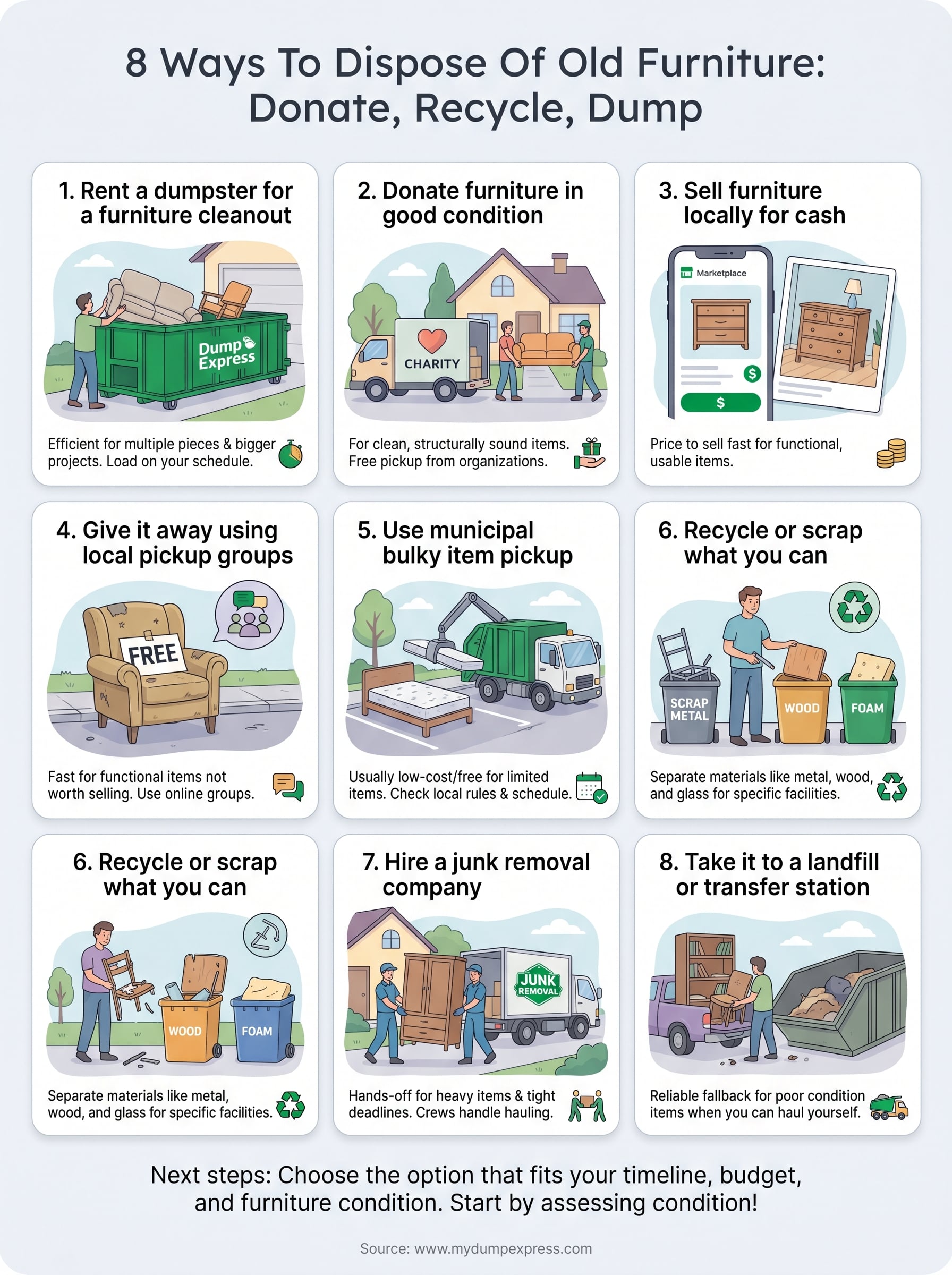
You now have eight practical ways to handle how to dispose of old furniture, so the only thing left is picking the one that fits your situation. Start by looking at the condition of each piece: if it’s clean and functional, try donation or a local sale first. If it’s worn out or you’re dealing with multiple items at once, a dumpster or transfer station trip is your most reliable path forward.
If you’re on Cape Cod or the South Shore and you have more than a piece or two to clear out, renting a dumpster is often the fastest and most flexible option. You load on your schedule, and the pickup happens when you’re ready. No coordinating with buyers, no waiting on municipal pickup windows. Book a dumpster rental with Dump Express and get your space cleared out this week.