
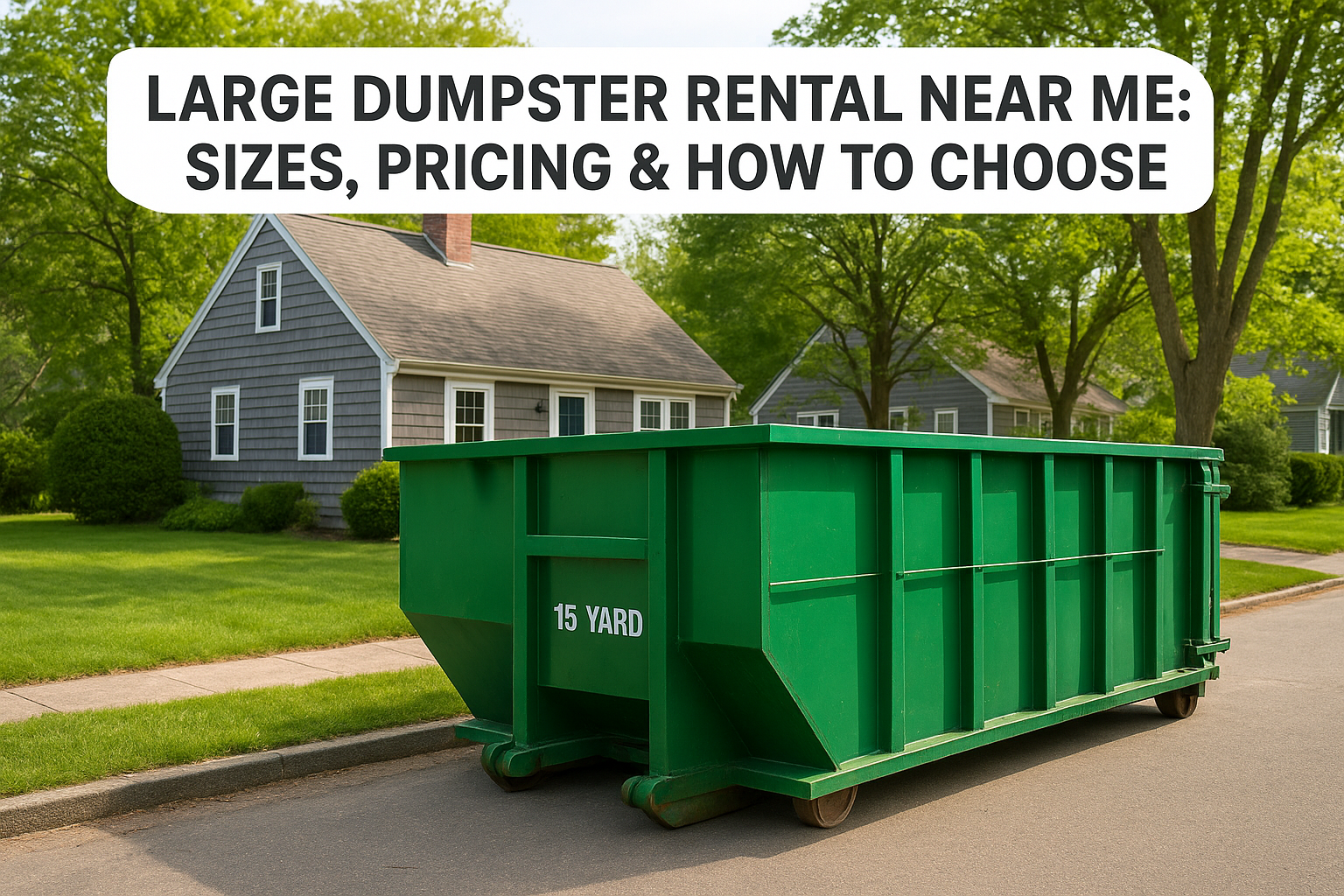
You’ve got a big cleanout, a renovation, or a construction job piling up debris fast, and a search for large dumpster rental near me just landed you on this page. That’s the right move. Guessing on size or hiring a company that doesn’t know your town’s rules turns a simple project into a headache of extra hauls, blocked driveways, or surprise fees.
This article gives you a straight answer: what counts as a "large" dumpster (usually the 15-yard and 20-yard containers), what they cost in a Cape Cod or Plymouth-area town, and how to pick the right size for your actual project instead of paying for space you won’t fill. We’ll also cover delivery timelines and what local providers can realistically promise versus what call-center companies advertise.
We’ve delivered dumpsters across 40+ towns in this region for over 20 years, so we know the access issues, permit quirks, and disposal facility schedules that affect your rental. By the end, you’ll know exactly which size to book, what it’ll run you, and how to get it delivered without the runaround.
Why the right dumpster size matters for your project
Ordering the wrong size costs you twice: once for the rental, and again when you realize it can’t hold everything. Undersized dumpsters force you into a second delivery and pickup, often with a rush fee tacked on to get it done before your contractor moves off-site. Oversized containers waste money on unused capacity and can make delivery harder if your driveway or street has tight clearance. Getting size right the first time keeps your project on schedule and your budget intact.
The single biggest cost driver in dumpster rental isn’t the size you pick, it’s picking the wrong one.
The real cost of ordering too small
Homeowners tackling a cleanout or renovation often underestimate volume because debris looks smaller in a pile than it does once it’s loaded. Bulky items like mattresses, furniture, and construction scraps take up more space than boxes of similar weight because they don’t stack efficiently. When a container fills up early, you’re stuck paying for a second haul, rescheduling your timeline, or piling excess debris on the ground, which most providers won’t remove and may charge extra to deal with later.
- A second delivery and pickup usually costs as much as the original rental
- Overflow debris left on-site can trigger a cleanup fee
- Contractors lose paid crew hours waiting on a dumpster swap
- Rush fees apply if you need a same-day second container
Large dumpster sizes at a glance
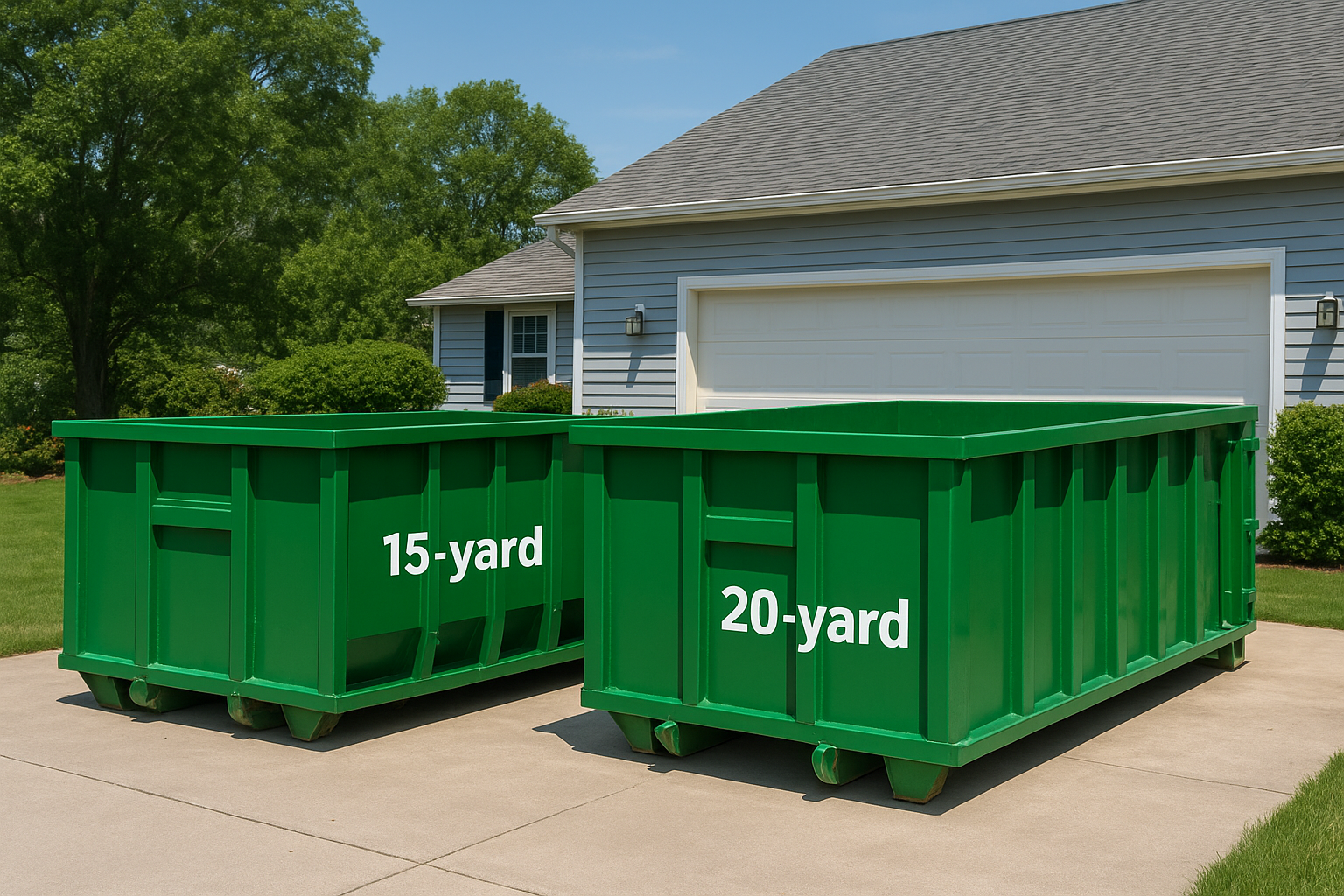
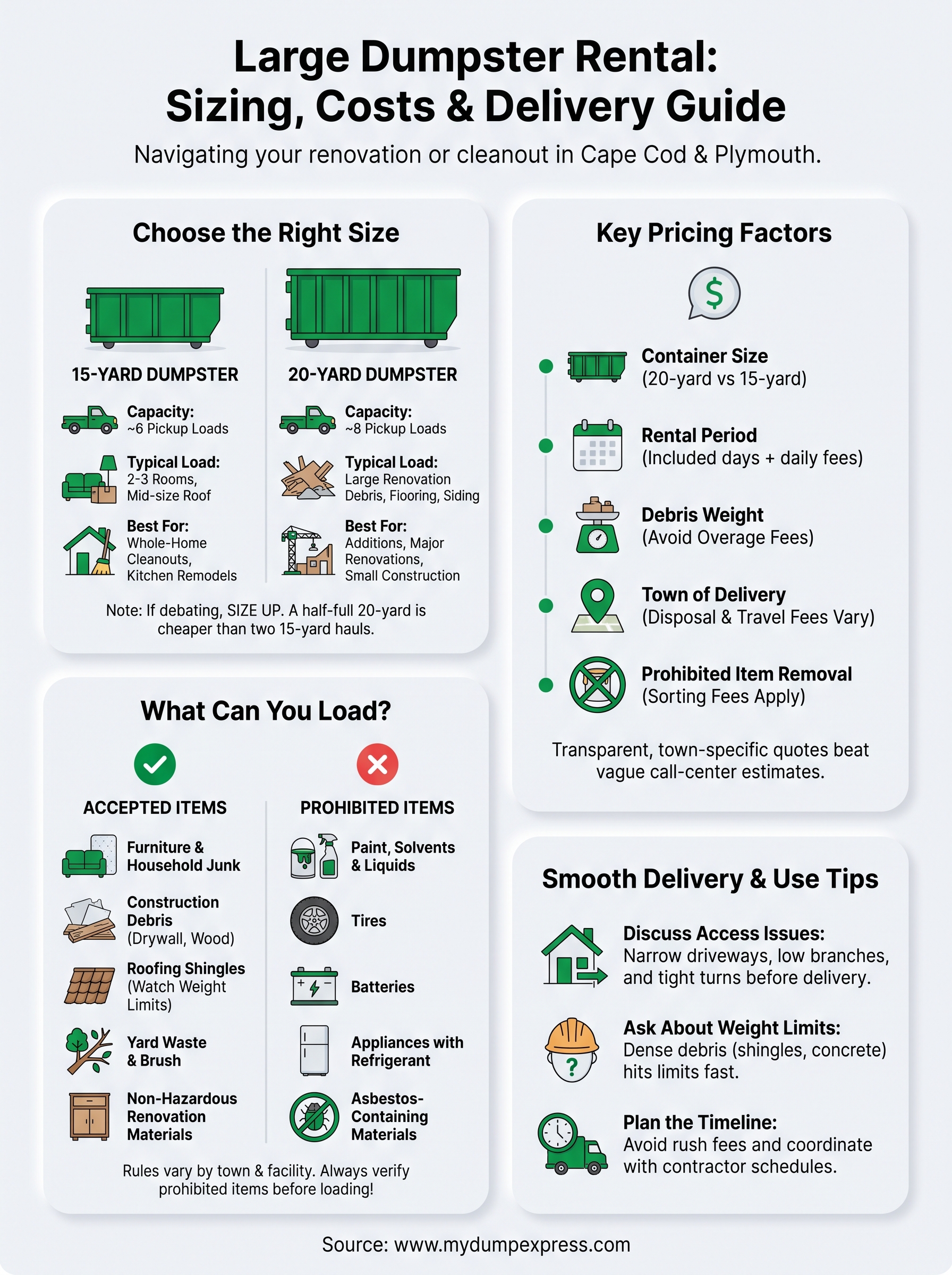
For bigger jobs, the choice usually comes down to two containers. Here’s how the 15-yard dumpster and 20-yard dumpster rental compare:
| Size | Capacity | Typical Load | Best For |
|---|---|---|---|
| 15-yard | ~6 pickup truck loads | 2-3 rooms of furniture, mid-size roof tear-off | Whole-home cleanouts, kitchen remodels |
| 20-yard | ~8 pickup truck loads | Large renovation debris, flooring, siding | Additions, whole-house renovations, small construction sites |
Knowing these benchmarks before you call a provider means you’re not relying on a phone rep’s guess, you’re making an informed decision based on your actual debris volume.
Access and placement matter as much as capacity
Placement determines whether a large container can even reach your property. Narrow driveways, low tree branches, and tight turns in older Cape Cod neighborhoods can rule out a 20-yard roll-off truck even when the size fits your debris volume. A local provider who’s delivered in your specific town before will flag these issues before the truck shows up, not after it’s stuck at the end of your driveway.
How to choose the right large dumpster for your needs
Start with the project type, not the container size. A kitchen remodel generates cabinets, countertops, and flooring, all bulky but not especially heavy, while a roofing tear-off produces dense shingles that fill a small footprint but hit weight limits fast. Matching the dumpster to your actual debris, rather than guessing based on square footage, is what separates a smooth rental from a costly do-over.
Match the dumpster to your project type
Run through your project against these common scenarios before you book:
- Whole-home cleanout: 15-yard, unless the home has multiple bedrooms of furniture and appliances, then move to 20-yard
- Kitchen or bathroom remodel: 15-yard covers most single-room jobs including cabinets and fixtures
- Roof replacement: 15-yard for smaller roofs, 20-yard for larger homes or multiple layers of shingles
- Room addition or major renovation: 20-yard, especially if framing, drywall, and flooring debris will pile up together
- Small construction site: 20-yard, with a plan to swap containers if the project runs long
If you’re debating between two sizes, size up. A half-full 20-yard costs less than a second delivery.
Ask about weight limits, not just volume
Weight limits catch people off guard more than volume does. Dense materials like shingles, concrete, or dirt hit a dumpster’s weight cap long before it looks full, and most rental agreements charge overage fees per ton once you cross that line. A provider who asks what you’re disposing of, not just how much space you think you need, is doing the sizing calculation correctly.
Talk to someone who knows your town
A quick call to a local provider beats guessing from a size chart. Dump Express offers a consultation before booking specifically because sizing depends on project type, town access rules, and debris density, not just cubic yards. Fifteen minutes on the phone with someone who’s delivered on your street before saves you from ordering the wrong container and paying for a second one.
What affects large dumpster rental pricing
Price quotes for a large dumpster rental swing more than people expect, and the reason usually comes down to five factors rather than one flat rate. Location within your service area matters because disposal facility distance affects fuel and time on every trip. Rental duration, debris type, and weight all stack on top of the base delivery fee, which is why a "cheap" quote from a call center often balloons once the actual invoice arrives.
Ask for a town-specific price before you book, not a regional average that gets adjusted later.
The main pricing factors
Here’s what actually drives the number you’ll pay for a 15-yard or 20-yard dumpster:
- Container size: 20-yard costs more than 15-yard, but not always proportionally more per cubic yard
- Rental period length: most providers include a standard window (often 7-10 days), with daily fees after that
- Debris weight: heavier loads like shingles or concrete may exceed included tonnage and trigger overage charges
- Town of delivery: disposal facility fees and travel distance vary by municipality across Cape Cod and Plymouth
- Prohibited item removal: sorting fees apply if banned materials show up in the load
Why transparent, town-specific pricing beats a phone quote
Call-center dumpster brokers often quote a regional average, then adjust once they know your actual town, which leads to surprise charges on delivery day. A provider displaying transparent, town-specific pricing on their website, the way Dump Express does across its 40+ service towns, lets you compare costs before you ever pick up the phone. That upfront number should already account for standard weight allowances and a typical rental period, so the only variables left are things you control, like extending the rental or overloading the container.
Specific quotes matter more than ballpark ranges when you’re comparing a large dumpster rental near me search result against another. Two providers quoting "20-yard dumpster, starting at $X" can mean very different final bills depending on what’s actually included in that base price.
What you can and cannot put in a large dumpster
Most household and construction debris goes in without issue, but certain materials are banned by disposal facilities, not just by your rental provider. Hazardous materials and anything that can leak, ignite, or contaminate a landfill load get rejected on-site, and that rejection can hold up your whole rental while the facility sorts out the problem. Knowing the list before loading day means you’re not scrambling to find separate disposal for that one item that sinks the rest of your timeline.
One banned item found at the facility can hold up your entire load, so sort before you load, not after.
Items that go in a large dumpster
For a 15-yard or 20-yard dumpster, you’re generally clear to load:
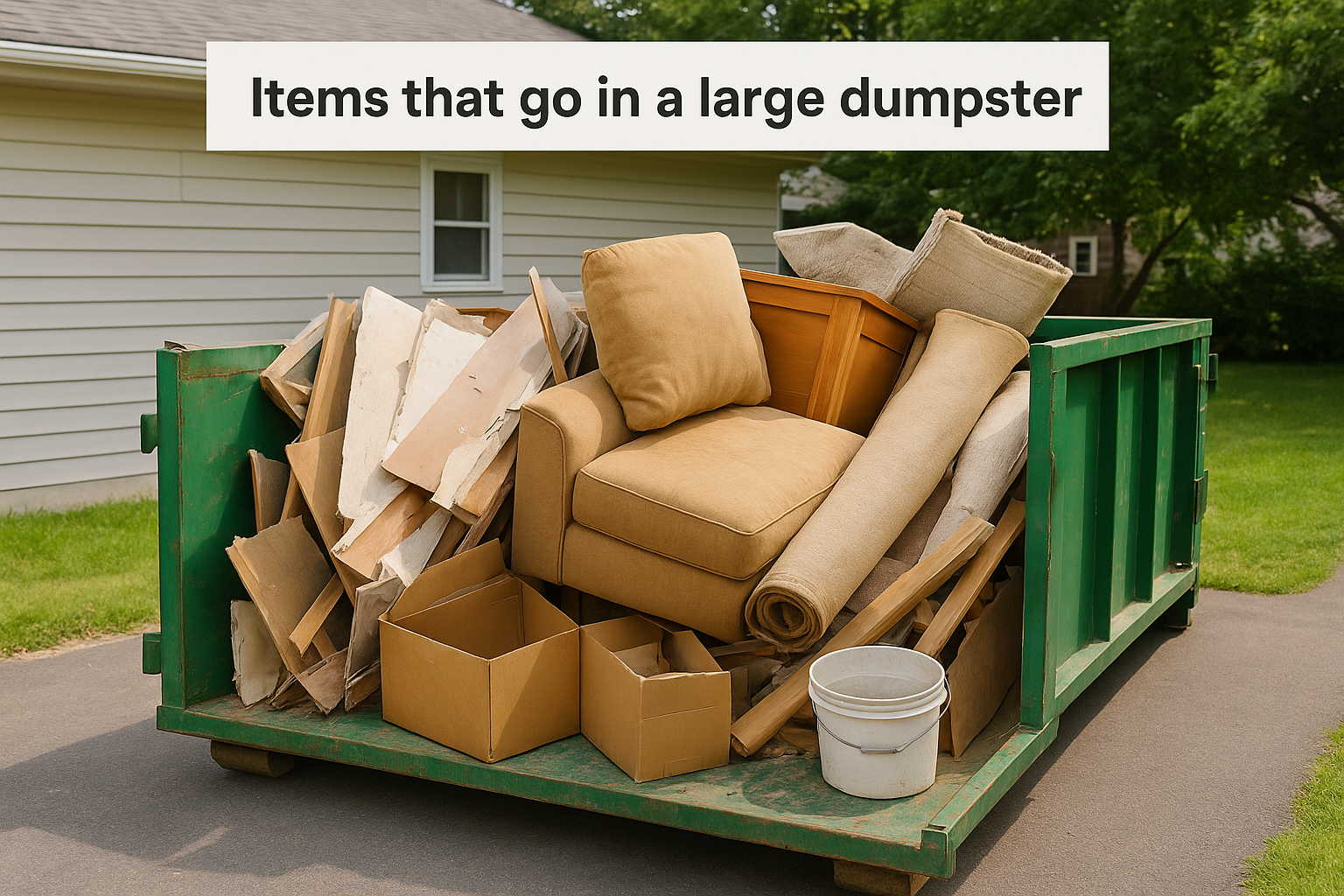
- Furniture, mattresses, and household junk
- Construction debris like drywall, wood, and flooring
- Roofing shingles (within weight limits)
- Yard waste and brush
- Non-hazardous renovation materials, including old cabinets and fixtures
Items that are prohibited
Disposal facilities across Massachusetts enforce bans on specific materials regardless of which company delivers your container. Common prohibited items include:
- Paint, solvents, and other liquids
- Tires
- Batteries
- Refrigerators and appliances with refrigerant (unless pre-arranged)
- Asbestos-containing materials
- Electronics in some towns, due to local e-waste rules
Ask before you assume
Rules vary by town, and what’s fine in one Cape Cod municipality might carry a surcharge or outright ban in another. Massachusetts also restricts certain items from standard disposal facilities under state solid waste regulations, which you can review through the Massachusetts Department of Environmental Protection. Verifying with your provider before delivery day, rather than after the truck arrives, keeps you from paying a sorting fee or getting stuck with a rejected load sitting in your driveway. A quick question during booking costs nothing; a rejected dumpster costs you time and money.
Getting your dumpster delivered near you
Picking the right size, understanding the pricing factors, and knowing what’s banned before loading day are the three things that separate a smooth rental from a costly do-over. You don’t need to guess at any of it. A local provider who delivers in your town already knows the access quirks, the disposal facility rules, and the sizing tradeoffs that a call-center broker can’t answer accurately.
When you’re ready to book, work with a team that shows town-specific pricing upfront and answers sizing questions before you commit to a container. That’s exactly how we operate across Cape Cod and Plymouth. Get a quote from Dump Express and talk to someone who’s delivered on your street before, not a rep reading from a script three states away.