
Whether you’re renovating, downsizing, or just tired of that couch nobody sits on, figuring out what to do with old furniture is one of those tasks that sounds simple until you’re standing in your living room staring at a 200-pound dresser. The good news: you’ve got more options than dragging it to the curb and hoping for the best. Some of those options might even put money back in your pocket.
This guide breaks down eight practical ways to get rid of unwanted furniture, from donating and selling to recycling and full-on disposal. We’ll cover which method makes sense for different situations, so you can pick the right one for your timeline, budget, and the condition of what you’re tossing. And when the pile gets big enough that you need a dumpster dropped in your driveway, that’s where we come in. At Dump Express, we deliver dumpsters across Cape Cod and Plymouth every day for exactly these kinds of projects, cleanouts, renovations, moves, and everything in between.
Let’s get into it.
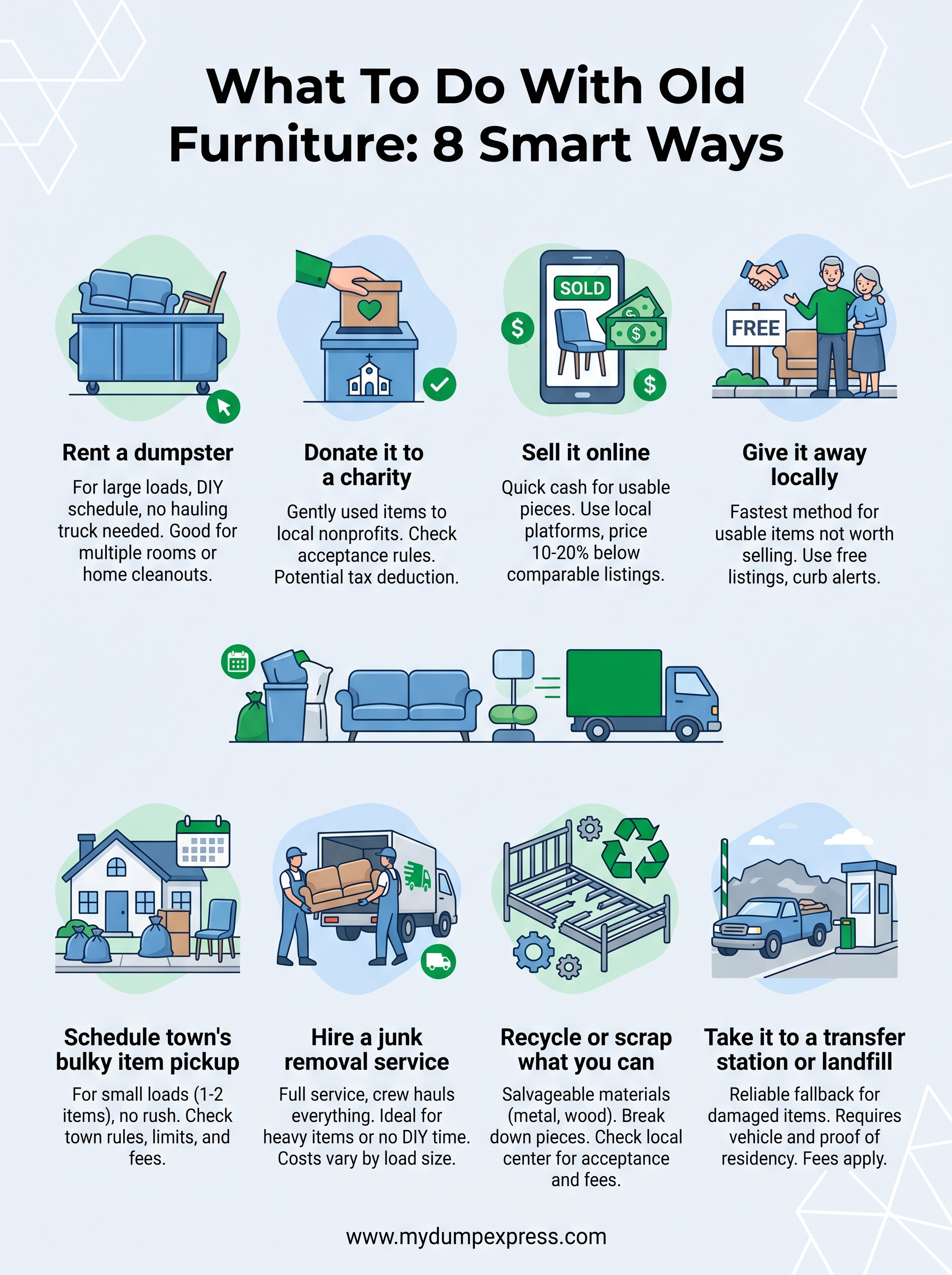
1. Rent a dumpster
Renting a dumpster is the most practical option when you’re figuring out what to do with old furniture and you’ve got more than one or two pieces to clear out. Instead of making several trips to the transfer station, coordinating pickups with strangers, or waiting months on a charity waitlist, you get a large container dropped in your driveway and fill it completely on your own schedule.
How a dumpster rental works for furniture
The process is straightforward. You book online or by phone, pick a size, and a driver delivers the dumpster to your property. You load it at your own pace over the rental period, then the company comes back and hauls it away. No renting a truck, no making multiple trips, and no asking your neighbors to help you carry a sectional down the stairs.
How to choose the right dumpster size
Furniture takes up more room than you’d expect once you start stacking. A 10-yard dumpster handles a few large pieces like a couch, a mattress, and a full bedroom set without trouble. If you’re clearing out multiple rooms or an entire home, a 15- or 20-yard container gives you the space to work without overfilling. When in doubt, size up rather than squeeze things in.
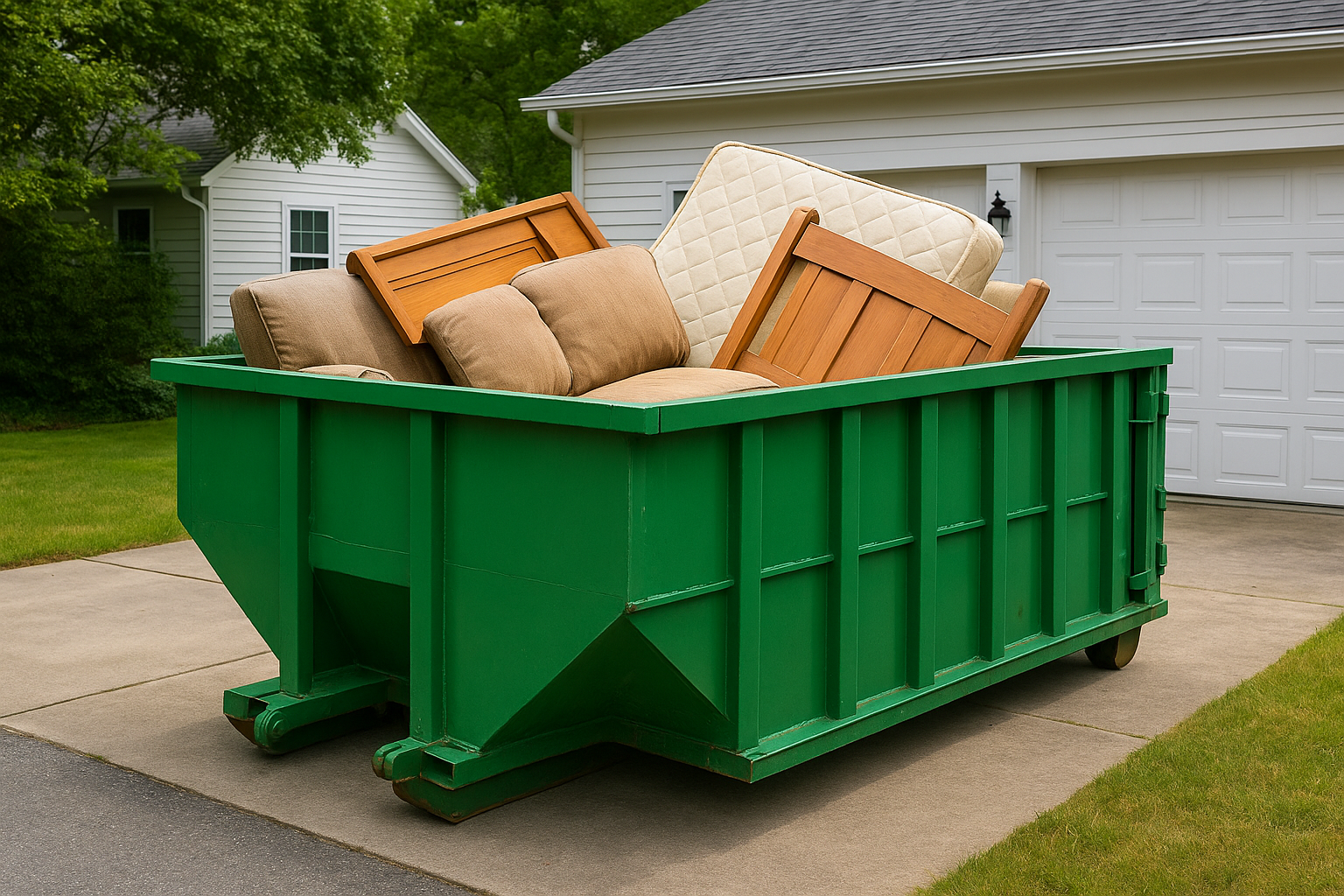
Overfilling a dumpster past the fill line creates safety and hauling problems, and most companies will charge extra or refuse to pick it up.
What you can and can’t throw away
Most standard furniture like sofas, beds, dressers, chairs, and tables goes in without any issue. What you typically can’t include are hazardous materials, such as anything soaked in paint or chemicals, and certain electronics. Cushions and fabric upholstery are generally fine. Always check with your rental company before tossing anything that might fall into a gray area.
Cost, delivery, and pickup timing in Cape Cod and Plymouth
At Dump Express, pricing varies by town across Cape Cod and Plymouth and is listed on the website so you know exactly what to expect before you book. Delivery is available seven days a week, and pickup is scheduled on business days when disposal facilities are open. Same-day delivery is possible in some cases if your timeline is tight.
2. Donate it to a charity
Donating is a strong option when figuring out what to do with old furniture that still has life in it. Local charities and nonprofits accept gently used pieces and put them back into homes that need them. The catch is that not every organization accepts all items, and free pickup is not always guaranteed.
Where to donate furniture in Massachusetts
Several organizations across Massachusetts accept furniture donations and serve the Cape Cod and Plymouth area directly. Look into these options first:
- Habitat for Humanity ReStore: accepts large furniture and offers scheduled pickup in many service areas
- Salvation Army: takes most household furniture at drop-off or by appointment
- Local shelters and nonprofits: call ahead to ask what they currently need
How to find charities that pick up furniture
Call before assuming pickup is available. Habitat for Humanity ReStores schedules pickup for large items, but lead times of one to three weeks are common, especially during summer on Cape Cod.
If your timeline is tight, free pickup may not work. Have a backup plan ready before you commit.
What condition rules get donations rejected
Most charities reject torn, stained, or structurally damaged furniture. Upholstered items with odors, visible pet damage, or heavy wear typically don’t qualify. Check the organization’s specific guidelines before scheduling a pickup or loading your car.
Tax deduction basics and what to document
Your donation may qualify as a tax-deductible charitable contribution. Get a written receipt from the charity, record the fair market value of each piece, and keep photos of the items before they leave your property.
3. Sell it online
Selling is a solid move when you’re figuring out what to do with old furniture that’s still in good shape. The right platform and a straightforward listing can turn pieces you no longer want into quick cash without much coordination.
Best places to sell used furniture locally
Facebook Marketplace is the strongest option for local furniture sales. Buyers can see your location, message directly, and arrange pickup without any shipping involved. Other platforms worth trying include:
- Craigslist: still active in most Massachusetts markets
- OfferUp: connects local buyers and sellers through a simple app
How to price furniture so it actually moves
Check what similar pieces are currently listed for on the same platform before you post. Pricing 10 to 20 percent below comparable active listings moves furniture faster. If your piece sits for two weeks with no serious offers, cut the price rather than waiting.
A slightly lower price that closes quickly beats storing a dresser in your garage for another month.
Photos, measurements, and details buyers expect
Take photos in natural light from multiple angles, and include any scuffs or wear so buyers aren’t surprised at pickup. Always list the exact dimensions since buyers need to confirm the piece fits through their door and into their space before they commit.

How to handle payment and pickup safely
Accept cash or a verified digital payment like Venmo or PayPal at the time of pickup, not before. Have the buyer bring their own help for heavy pieces, and confirm the time the day before to cut down on no-shows.
4. Give it away locally
Giving furniture away for free is often the fastest way to clear a space, especially when figuring out what to do with old furniture that’s still usable but not worth the effort of selling. Free listings move quickly, and you avoid the back-and-forth of pricing negotiations entirely.
Fast ways to rehome furniture for free
Several platforms connect you with local people who want free furniture and can pick it up fast. Start with these:
- Facebook Marketplace (free section): high traffic, local pickup, and easy messaging
- Nextdoor: reaches neighbors who can often pick up within hours
- Buy Nothing groups: community-based Facebook groups built specifically for free giving
How to write a "free" listing that avoids headaches
Keep your listing short and specific. Include the item dimensions, current condition, and whether the piece requires more than one person to carry. Clear photos taken in natural light cut down on questions and wasted trips significantly.
Post during morning or early afternoon on weekdays when people are actively browsing. Evening posts often get buried by morning.
How to prevent no-shows and porch pickup issues
No-shows are common with free items. Confirm a pickup window the morning of, and ask the person to message you when they’re on their way. Only share your exact address after confirming, not when you first post the listing.
If someone no-shows twice, move on to the next interested person rather than holding the item indefinitely.
Curb alerts, weather, and neighborhood etiquette
Curb alerts work well for solid wood pieces or outdoor furniture that can handle a few hours outside. Avoid leaving upholstered items at the curb if rain is forecast, since wet fabric makes a piece nearly impossible for anyone to use.
5. Schedule your town’s bulky item pickup
If you have one or two furniture pieces to clear and you’re not in a rush, your town’s bulky item pickup program is worth checking. Many Cape Cod and Plymouth area municipalities offer this service as part of their regular waste management programs, making it one of the lower-effort options for what to do with old furniture when your pile is small.
How bulky pickup works in Cape Cod and Plymouth towns
Most towns run scheduled bulky item pickup on specific days, separate from your regular trash collection. You place the items at the curb before a set time on your assigned day, and a crew picks them up without you needing to be home.
Schedules and availability vary significantly by town, so check your town’s public works or waste management page directly before putting anything at the curb.
How to schedule pickup and what info you need
Contact your town’s public works or sanitation department to request a pickup date. You’ll typically need to provide your address, a description of the items, and sometimes an estimated count or dimensions.
Common limits, fees, and preparation rules
Most towns cap the number of items per pickup at two to four pieces. Some charge a small fee per item, and a few require advance payment or a permit before your scheduled date.
Special rules for mattresses and upholstered items
Several Massachusetts towns have specific rules for mattresses, requiring them to be bagged in a mattress disposal bag before placement at the curb. Upholstered furniture with visible mold or pest damage may be rejected outright.
6. Hire a junk removal service
Junk removal services send a crew to your home, carry everything out, and haul it away in a single visit. When figuring out what to do with old furniture and the job is too big to handle solo, hiring a junk removal company skips the logistics entirely.
When junk removal makes more sense than DIY
Hiring a crew makes the most sense when you have heavy or awkward pieces that require more than one person to move safely, or when you don’t have time to coordinate donations, sales, and recycling separately. It’s also the right call when stairs, narrow hallways, or mobility limitations make DIY hauling genuinely risky.
How junk removal pricing typically works
Most companies charge based on how much space your items take up in their truck. A single couch might run $75 to $150, while a full truckload can reach $400 or more depending on your area. Get a written quote before the crew starts loading.
Ask whether the estimate is binding or subject to change once the crew sees the full job.
What to ask about donation, recycling, and fees
Ask the company upfront what happens to your furniture after pickup. Reputable services donate or recycle a portion of what they collect rather than sending everything to the landfill. Confirm whether additional fees apply for mattresses, appliances, or hazardous materials before you book.
How to prep your space for a quick removal
Clear a direct path from the furniture to your front door before the crew arrives. Move smaller items out of the walkway so the team can load large pieces without stopping, which keeps the job fast and the total cost down.
7. Recycle or scrap what you can
Recycling is worth considering when you’re figuring out what to do with old furniture that’s too damaged to donate or sell but still made of salvageable materials. Breaking pieces down before disposal keeps usable components out of the landfill and sometimes puts a few dollars back in your pocket through scrap metal value.
Which furniture materials recycle well
Metal frames from bed frames, futons, and office chairs recycle cleanly and consistently. Solid wood from dressers, tables, and bookshelves can often go to wood recycling programs or be repurposed. Particle board and laminate furniture recycle poorly and most facilities won’t accept them.
Where to take metal, wood, and electronics
Your local transfer station or recycling center is the first place to check for accepted materials. Scrap metal yards buy steel and aluminum by weight, so metal furniture frames can generate small cash payouts. Check whether your town’s facility accepts untreated wood separately from regular trash.
Call ahead before hauling a load, since accepted materials vary by facility and change without much notice.
How to break down furniture for recycling and scrap
Remove cushions, fabric, and hardware before dropping off frames at a scrap yard. Most facilities want clean, separated materials rather than mixed pieces. A basic set of hand tools handles most disassembly in under 30 minutes.
Typical disposal fees and what facilities require
Many recycling centers charge a small drop-off fee per item or by weight. Bring proof of residency if your town’s facility restricts access to local residents only.
8. Take it to a transfer station or landfill
When everything else falls through, dropping furniture off at your local transfer station or landfill is a reliable fallback for what to do with old furniture. It works best when pieces are too damaged to donate, too bulky to curb, and you need them gone fast without waiting on anyone else.
When drop-off is the most practical option
Drop-off makes the most sense when you have a vehicle that can handle the load, like a pickup truck or a trailer, and your pile is small enough to fit in one trip. This approach gives you complete control over timing since you go when it works for you rather than waiting on a scheduled pickup window.
What to check before you go
Call the facility before loading your truck. Hours, accepted materials, and item restrictions vary by town, and some transfer stations only accept furniture from residents, not contractors. Confirm whether the site is open on the day you plan to go.
Showing up with a load a facility won’t accept wastes your time and costs you an extra trip.
Fees, permits, and proof of residency considerations
Most facilities charge a per-item or per-weight fee for furniture drop-off. Bring a valid photo ID and proof of residency, such as a utility bill or vehicle registration, since many Cape Cod and Plymouth area sites restrict access to local residents only.
What to avoid, including illegal dumping
Never leave furniture on roadsides, in wooded areas, or on other people’s property. Illegal dumping carries fines in Massachusetts and creates cleanup costs for the community. When in doubt, pay the drop-off fee rather than risk a citation.
Wrap-Up
There’s no single right answer for what to do with old furniture. The best method depends on what you’re clearing out, how fast you need it gone, and the condition of each piece. Donating, selling, and giving away for free all work well when furniture still has life left in it. Recycling, drop-off, and bulky item pickup handle everything else.
When the volume is too large for individual trips and separate coordination, a dumpster simplifies the entire project. You load everything out on your own schedule without waiting on charity appointment windows, no-show buyers, or town pickup dates that don’t match your timeline. That kind of control matters most when you’re in the middle of a move, a renovation, or a full home cleanout. Rent a dumpster from Dump Express and get your space cleared fast. We deliver seven days a week across Cape Cod and Plymouth, with town-specific pricing posted on the site so you know exactly what you’re paying before you book.