
Getting rid of an old mattress in Massachusetts isn’t as simple as dragging it to the curb. Most towns across the state, including Cape Cod and Plymouth, won’t pick up a mattress with regular trash, and dumping one illegally can land you a fine. So if you’re wondering how to throw away a mattress, you’ve got more options than you might think, from recycling programs and donation drop-offs to renting a dumpster and handling it on your own schedule.
At Dump Express, we deliver dumpsters across Cape Cod and the South Shore every day, and mattresses are one of the most common items people toss during cleanouts, moves, and renovations. We’ve helped thousands of homeowners and contractors clear out bulky waste without the headaches.
This guide covers every practical disposal method available in Massachusetts, what works, what it costs, and how to pick the right option for your situation.
What to Know Before You Toss a Mattress in MA
Before you figure out how to throw away a mattress, you need to understand the rules that apply in Massachusetts, because they’re stricter than many people expect. Mattresses are bulky, take up significant space in landfills, and contain materials like foam, metal springs, and fabric that can be recycled or repurposed. For those reasons, most Massachusetts towns treat mattresses as a separate category from regular household trash, with their own fees, pickup schedules, and restrictions.
Massachusetts Doesn’t Treat Mattresses Like Regular Trash
The state of Massachusetts has pushed municipalities to reduce mattress waste going to landfills, and many towns have responded with dedicated programs, fees, or outright bans on curbside mattress pickup. Some towns require a sticker or paid tag before they’ll collect a mattress, while others won’t take one at all without a scheduled bulky item appointment. A handful of municipalities have partnered with recycling programs that process mattresses separately.
If you put a mattress at the curb without checking your town’s rules first, you risk getting a fine or having the mattress sit uncollected for days.
Cape Cod towns, in particular, vary significantly in their mattress disposal policies. What works in Barnstable may not work in Falmouth or Brewster. The same goes for Plymouth County towns. Checking your town’s public works or highway department website before you do anything else saves you time and keeps you out of trouble.
What Mattress Disposal Typically Costs in MA
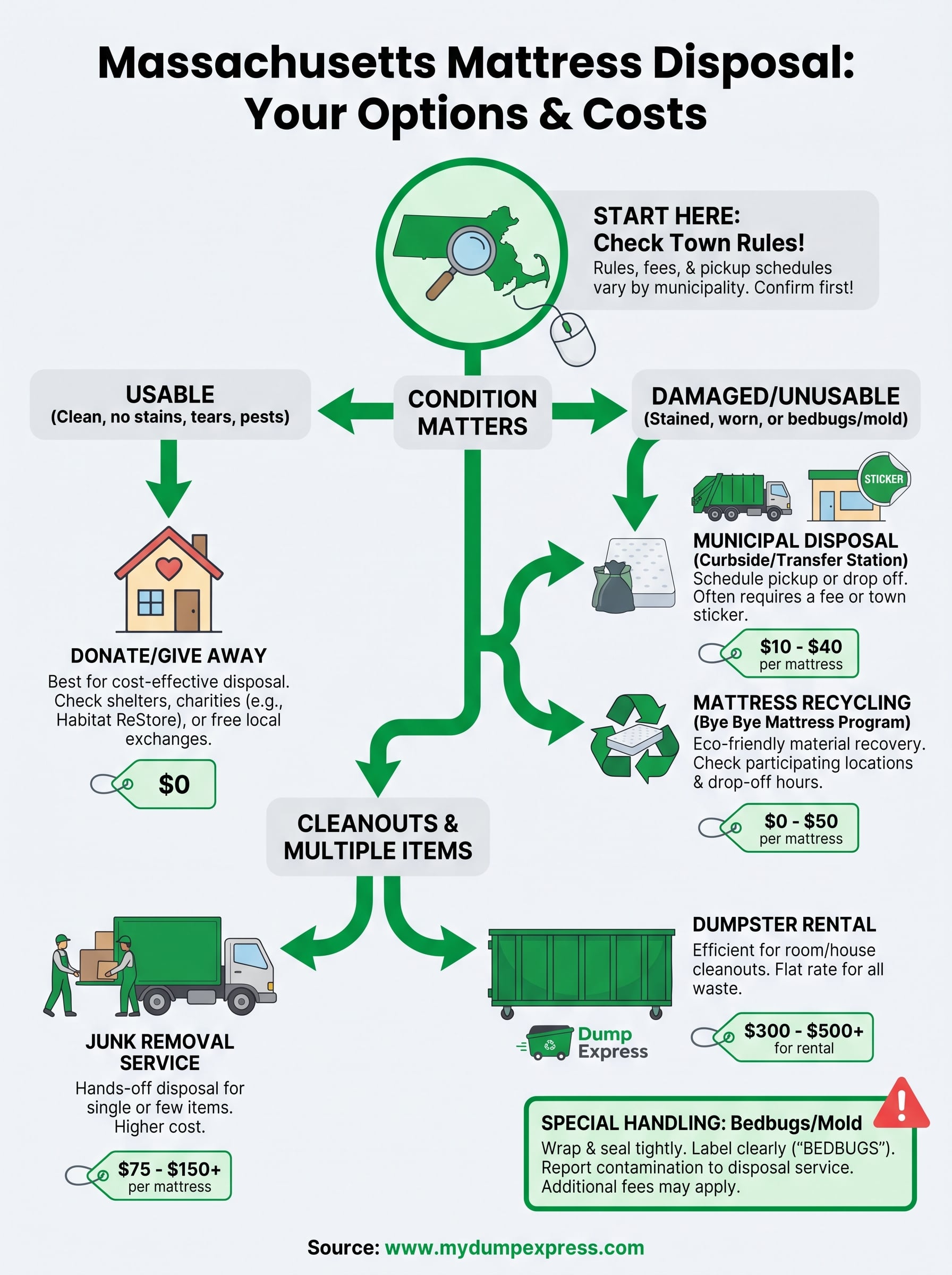
Cost depends on which method you choose, and the range is wide. Here’s a breakdown of what you can expect:
| Disposal Method | Typical Cost Range |
|---|---|
| Curbside bulky pickup (with fee/sticker) | $15 to $40 per mattress |
| Transfer station drop-off | $10 to $30 per mattress |
| Mattress recycling program | $15 to $50 per mattress |
| Junk removal service | $75 to $150+ per mattress |
| Dumpster rental (for multiple items) | $300 to $500+ for the full rental |
| Donation or free pickup | $0 |
Donation and municipal pickup are the most affordable options, but both come with conditions. Junk removal is the most hands-off approach but also the most expensive per item. A dumpster rental makes the most financial sense when you’re clearing out a room, a whole house, or a renovation job, not just a single mattress.
Condition Matters More Than You Think
The condition of your mattress determines which disposal options are actually available to you. A clean, lightly used mattress with no visible stains, tears, or pest issues can be donated to a shelter, charity, or sold through a local exchange. Once a mattress has significant wear, staining, or any sign of bedbugs or mold, those options disappear entirely.
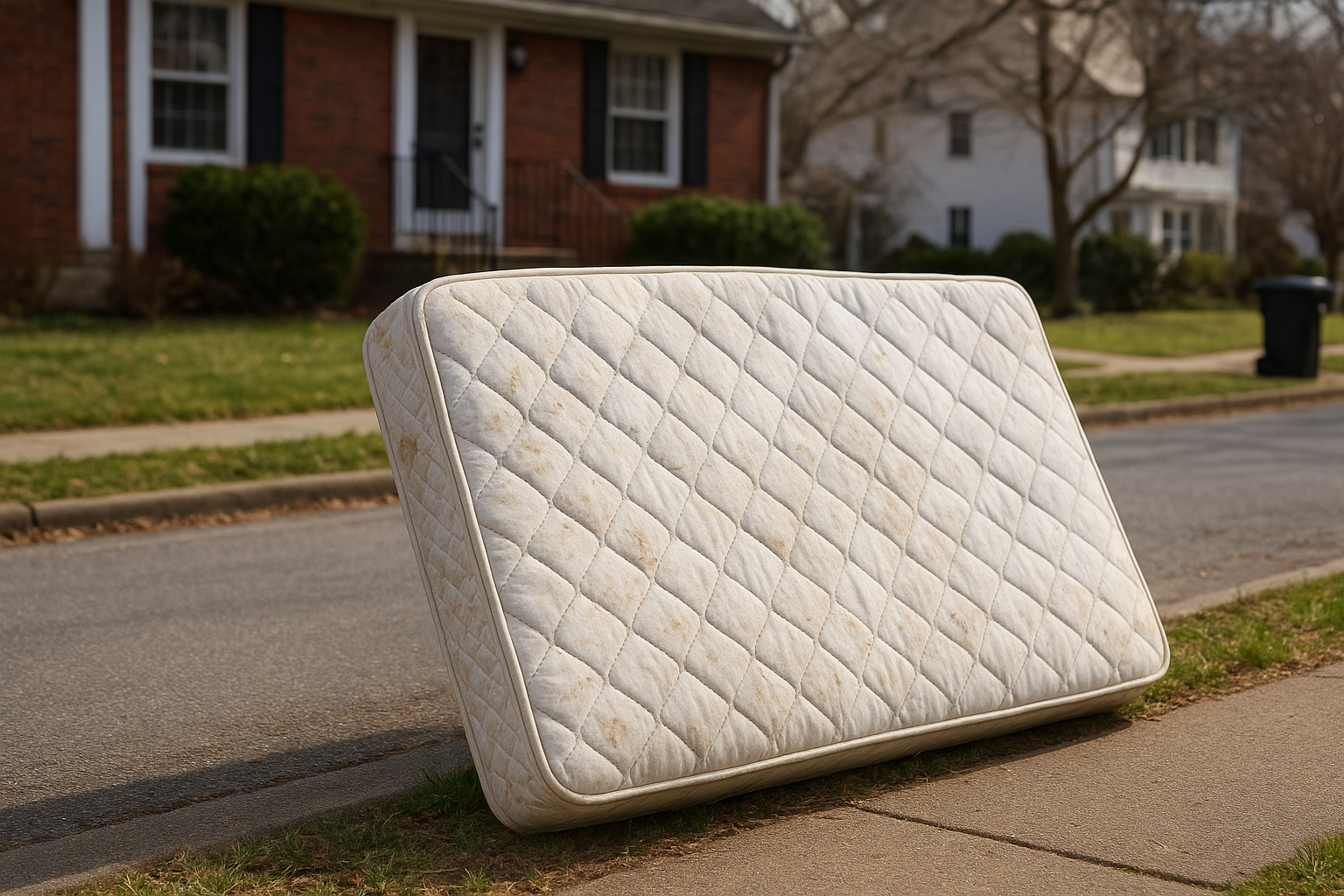
Recyclers and haulers also care about condition for different reasons. Most recycling facilities will still accept a damaged mattress for material recovery, but some donation centers will turn away mattresses that show any signs of contamination. Knowing your mattress’s condition upfront helps you skip the options that won’t work and go straight to the ones that will.
Planning ahead by even a day or two also gives you more choices. Same-day options like junk removal exist, but scheduling in advance usually lowers costs and gives you access to municipal programs that run on fixed pickup days.
Step 1. Confirm Your Town’s Mattress Rules
Before you do anything else with your old mattress, find out what your specific town allows. Massachusetts gives municipalities a lot of flexibility in how they handle bulky waste, and mattress rules vary enough that what works in one town won’t work in the next. Skipping this step is the most common mistake people make when figuring out how to throw away a mattress in the state.
Checking your town’s rules first takes five minutes and can save you from a fine, a rejected pickup, or a mattress sitting on your curb for a week.
Where to Look Up Your Town’s Policy
Your first stop should be your town’s official public works or highway department website. Search your town name plus "bulky item pickup" or "mattress disposal" and you’ll usually find a dedicated page with current rules, fees, and scheduling instructions. Most Cape Cod and Plymouth area towns post this information publicly, though some pages are more current than others.
If you can’t find the information online, call the town’s public works department directly during business hours. Have your address ready, since some towns have different rules by zone or neighborhood. Here’s a quick checklist of what to confirm when you contact them:
- Does the town offer curbside mattress pickup?
- Is a sticker, tag, or fee required before pickup?
- How far in advance do you need to schedule?
- Are there restrictions on condition, such as stains or bedbugs?
- What are the accepted drop-off hours at the transfer station?
What It Looks Like in Practice
To give you a concrete example, Barnstable requires residents to purchase a bulky item sticker before placing a mattress at the curb. In contrast, some smaller Cape Cod towns only accept mattresses at their transfer station with no curbside pickup option. Plymouth has its own fee structure and scheduling process through its highway department.
Writing down what you find before moving forward keeps you from backtracking. Note the specific fee, pickup day, and any condition requirements your town lists, then check your mattress against those conditions to confirm that disposal route is actually available to you before committing to it.
Step 2. Donate or Give It Away if It’s Usable
Donation is the simplest and most cost-effective way to get rid of a mattress you no longer need, and it keeps a usable item out of a landfill. If your mattress is clean, structurally sound, and free of stains, tears, or pest problems, several organizations across Massachusetts will accept it. This option works especially well when you’re working out how to throw away a mattress during a move or cleanout and you want to skip the fees entirely.
A mattress that passes a basic visual check — no stains, no odors, no visible sagging — is worth a phone call to a local shelter before you pay for disposal.
Where to Donate a Mattress in Massachusetts
Several types of organizations accept gently used mattresses, but each one has its own condition requirements, so contact them before hauling anything over. Here are the most reliable options to check in the Cape Cod and Plymouth area:
- Habitat for Humanity ReStores accept mattresses in select locations. Call your nearest store to confirm they’re currently taking them.
- Local shelters and transitional housing programs often need bedding for residents. Organizations like Housing Assistance Corporation on Cape Cod serve this population directly.
- Religious organizations and community nonprofits sometimes coordinate furniture donations for families in need. Your town’s community center can point you toward active programs.
Call ahead every time. Donation policies change frequently, and showing up with a mattress that a facility can’t accept wastes your time and theirs.
How to Give It Away for Free Locally
If your mattress doesn’t meet the condition standards that charities require, free local exchanges are another option worth trying. Facebook Marketplace and local Buy Nothing groups let you post items at no cost, and people in need will often pick up a mattress that a donation center would reject. List it as free, post clear photos from multiple angles, and specify that the pickup person must bring help since one person can’t safely move a mattress alone.
Craigslist’s free section works the same way and still gets consistent traffic in Massachusetts. Set a 24-hour pickup deadline in your post to avoid leaving it outside longer than necessary, and mark it unavailable immediately once someone commits.
Step 3. Use Bulky Pickup or a Transfer Station
If donation doesn’t work and you’re figuring out how to throw away a mattress through a municipal channel, two options exist in most Massachusetts towns: curbside bulky item pickup and drop-off at a local transfer station. Both are managed at the town level, which means the process, fees, and scheduling differ depending on where you live.
How Curbside Bulky Pickup Works
Most towns that offer curbside bulky pickup require you to schedule in advance rather than just leaving the mattress at the curb. The scheduling window varies, with some towns booking same-week appointments and others requiring two to four weeks of lead time. Once you schedule, pay any required sticker or tag fee before the pickup date, since collectors in many towns won’t take bulky items without proof of payment attached.
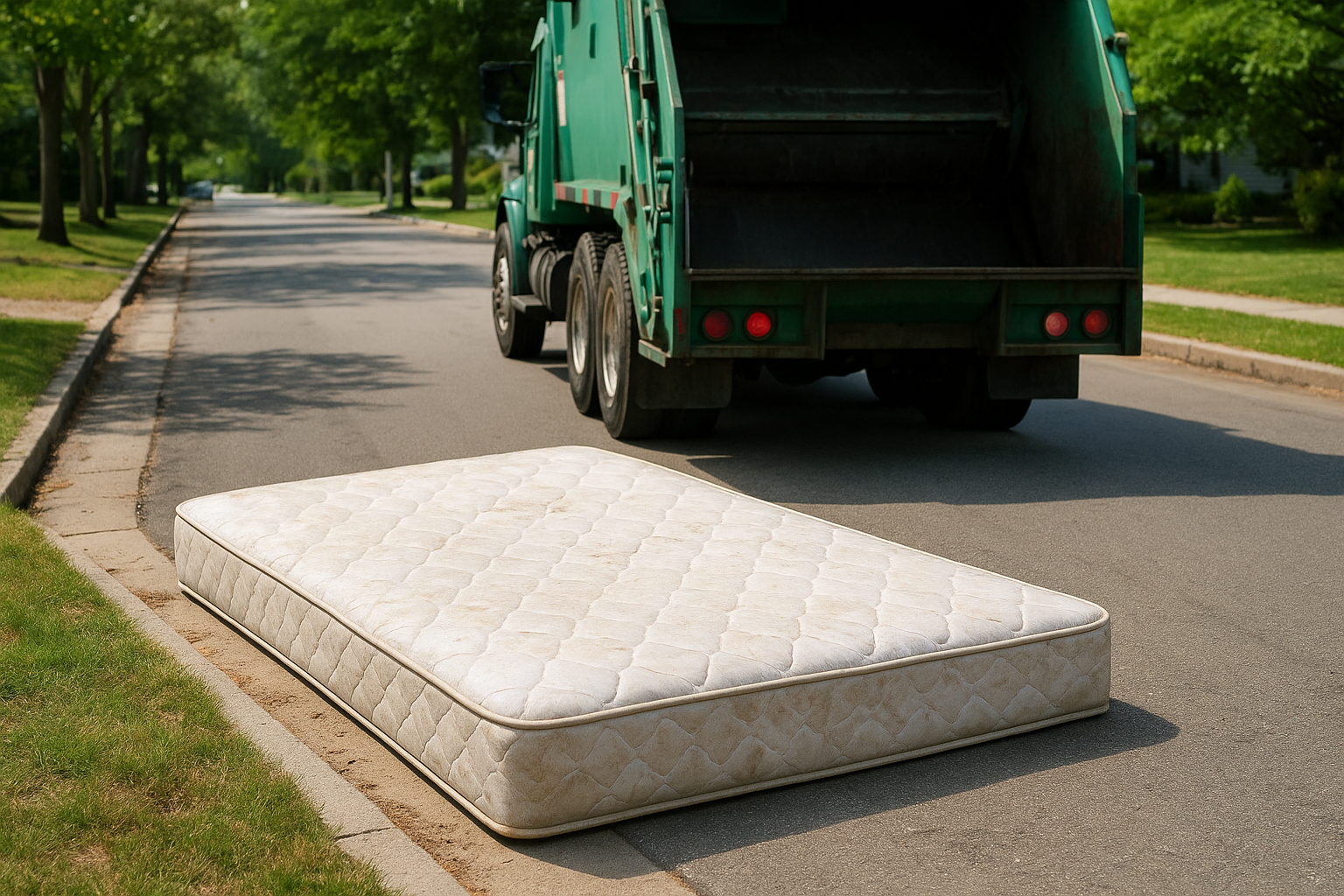
Missing the tag requirement is one of the most common reasons mattresses get left behind on pickup day.
Place your mattress outside no earlier than the night before your scheduled pickup, and set it somewhere the crew can access without moving other items. Keep it out of traffic lanes and away from utility boxes or vehicle paths. If rain is expected before pickup, cover it with a plastic sheet or tarp, because some towns will refuse a waterlogged mattress.
How to Use a Transfer Station
Transfer stations, sometimes called recycling centers or dumps, let you drop off a mattress on your own schedule rather than waiting for a pickup day. Most Cape Cod and Plymouth area towns charge a flat per-item fee at the gate, typically between $10 and $30 for a mattress or box spring. Bring cash or a check if the station doesn’t accept cards, since many smaller facilities have limited payment options.
Before you go, confirm the transfer station’s current hours and accepted items by calling ahead or checking your town’s website. Hours often change seasonally, and some stations close on certain days. You’ll also want to verify that your town’s transfer station accepts mattresses directly rather than routing them to a regional facility. Bring proof of residency, such as a utility bill or town sticker, since most transfer stations only serve residents of that specific town.
Step 4. Recycle the Mattress When Possible
Recycling is one of the most environmentally sound ways to deal with an old mattress, and it works even when donation isn’t an option. A single mattress contains recoverable materials including steel springs, foam padding, wood, and fabric that recyclers can process and redirect to manufacturers. Figuring out how to throw away a mattress through a recycling program keeps those materials out of the landfill and is often cheaper than hiring a junk removal crew.
Massachusetts Mattress Stewardship Program
Massachusetts participates in a statewide mattress recycling program managed by the Mattress Recycling Council, operating under the name Bye Bye Mattress. The program funds drop-off locations across the state where residents can bring mattresses and box springs at low or no cost. You can locate participating sites by visiting the Bye Bye Mattress website and entering your zip code to see what’s available near you.
This program was created specifically to reduce mattress landfill waste in states like Massachusetts, and it’s one of the most accessible recycling options available to Cape Cod and Plymouth residents.
Several transfer stations on Cape Cod and in Plymouth County participate in this program directly, so you may already have a qualifying drop-off site close to home. Most locations charge between $0 and $20 per mattress, though fees vary by facility. Call the site before you load up your vehicle to confirm current hours, fees, and whether they’re actively taking mattresses, since availability changes.
How to Prepare a Mattress for Recycling Drop-Off
Recyclers accept mattresses in most conditions, including stained, torn, or heavily worn units that a donation center would turn away. A few simple steps before you go make the drop-off smoother for you and the facility. Wrap the mattress in plastic sheeting or a mattress disposal bag to contain odors and loose debris during transport. These bags are available at most moving supply stores and hardware retailers.
Do not cut apart or compress the mattress before dropping it off. Recycling facilities process mattresses intact using industrial equipment designed to separate materials efficiently. Arriving with a partially dismantled mattress can result in a refusal at the gate. When you call ahead, also ask whether box springs count as a separate item with their own fee, since most facilities treat them differently from mattresses.
Step 5. Hire a Hauler or Rent a Dumpster
When municipal options don’t fit your timeline or your mattress can’t be recycled or donated, hiring a junk removal crew or renting a dumpster gives you the most control over when and how you dispose of it. Both options handle the situations where you’re working out how to throw away a mattress alongside other bulky items, facing a tight deadline, or need a solution that doesn’t require you to coordinate with a town schedule.
When to Call a Junk Removal Service
Junk removal works best when you have one mattress and no other large items to move. A crew arrives at your scheduled time, carries the mattress from wherever it’s located in your home, loads it into their truck, and takes care of disposal without you moving anything yourself.
Ask upfront whether the company donates or recycles usable mattresses, or sends everything to a landfill, since the answer varies significantly by provider.
Before you book, get clear answers on these points:
- What is the exact fee for one mattress versus a mattress and box spring together?
- Is there an added charge for upper-floor removal?
- How much notice do they require, and do they offer same-day availability?
- What disposal method do they use for mattresses in acceptable condition?
Expect to pay between $75 and $150 for a single mattress pickup, with higher rates for same-day jobs or items located above the ground floor.
When a Dumpster Rental Makes More Sense
Renting a dumpster makes far better financial sense when you’re clearing out more than just a mattress. A 10-yard or 15-yard container from a local provider like Dump Express lets you load a mattress, furniture, renovation debris, and general household junk all in one rental without coordinating separate pickup windows for each item.
This option also fits better when you need several days to work through a space rather than finishing in a single session. You load at your own pace, and the container gets picked up once you’re done. For a full room cleanout or whole-house project on Cape Cod, a dumpster rental typically runs between $300 and $500 total, which works out to a much lower cost per item than calling a junk removal crew back multiple times for individual pieces.
Step 6. Handle Bedbugs, Mold, and Other Issues
A mattress with bedbugs, mold, or significant contamination requires a completely different approach than a standard disposal. Most standard disposal options close off immediately once you identify these problems, and moving a compromised mattress incorrectly spreads bedbugs through your home or into a vehicle. Knowing what to do before you drag the mattress through the house protects you, your family, and whoever handles the mattress next.
Identifying the Problem Before You Move the Mattress
Checking your mattress thoroughly before you move it is the most important step when figuring out how to throw away a mattress that may be contaminated. Bedbugs leave visible signs including small rust-colored stains on the fabric, tiny dark fecal spots along seams, and in heavier infestations, live insects or shed skins visible along the edges and piping. Mold typically appears as dark discoloration on the surface or beneath the cover, often accompanied by a musty odor that doesn’t go away with airing.
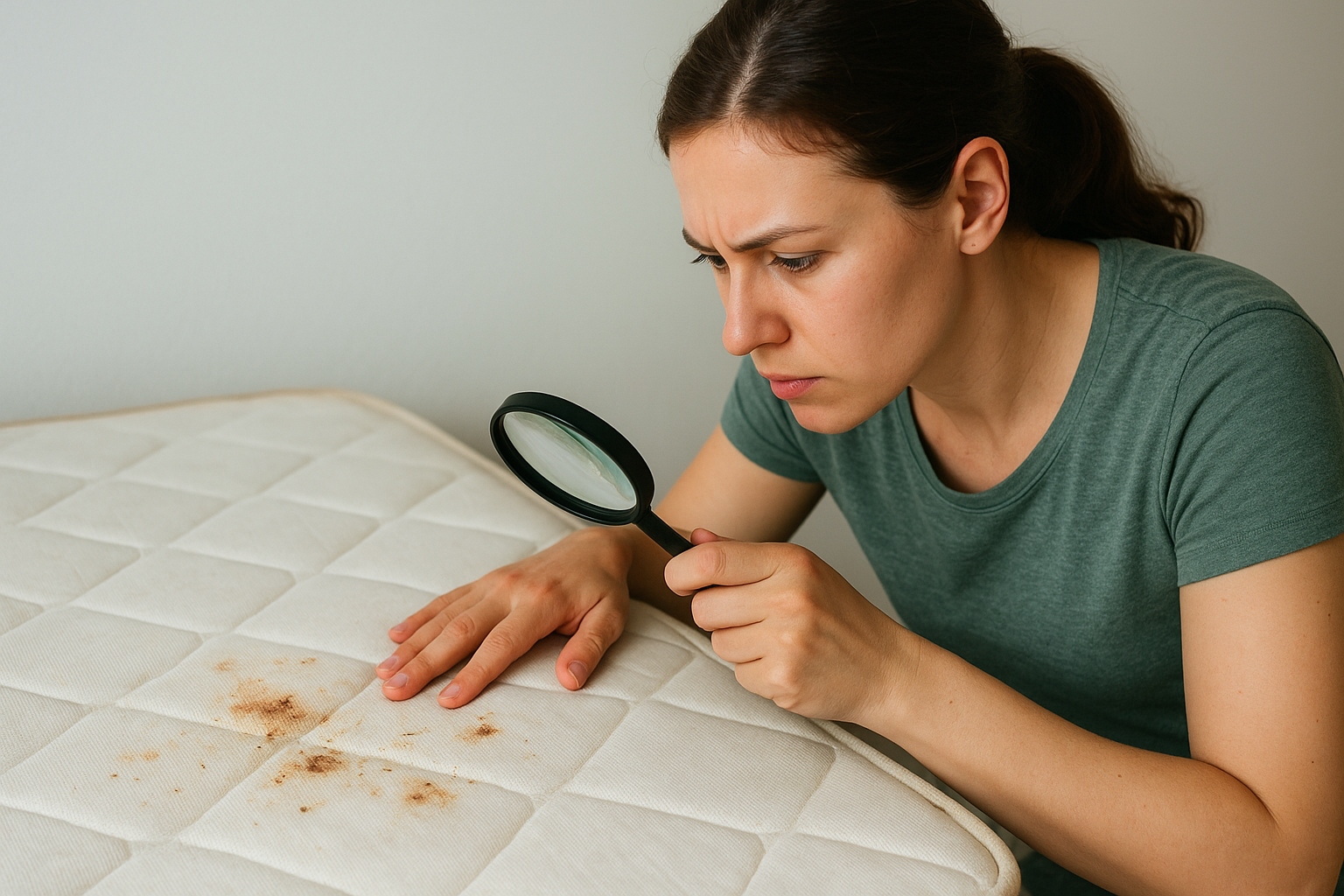
If you spot bedbugs, seal the mattress in a plastic bag before moving it a single inch, since open transport spreads the infestation to every room the mattress passes through.
Do not lean the mattress against walls, drag it down carpeted hallways, or load it into a shared vehicle without containment. Mattress disposal bags, available at most hardware and moving supply stores, provide a sealed barrier that prevents transfer during transport and keeps debris contained throughout the disposal process.
How to Wrap, Label, and Dispose of a Contaminated Mattress
Once you’ve confirmed the issue, wrap the entire mattress tightly in a thick plastic mattress disposal bag and seal every seam with packing tape before moving it anywhere. Write "BEDBUGS" or "MOLD" directly on the outside of the bag in permanent marker so that anyone who handles it downstream understands the risk. This labeling step is required in many Massachusetts towns before a collection crew will touch a compromised item, and skipping it often results in a refused pickup with no refund of any fees you’ve already paid.
Call your town’s public works department to report the contamination before you schedule any pickup. Most towns have a separate protocol for infested items, which may include a dedicated fee or a different collection vehicle. Junk removal companies that accept contaminated mattresses typically charge a higher rate than standard jobs. Recycling programs generally will not take mattresses with bedbug or mold issues, so plan on either municipal disposal or a licensed hauler as your realistic options in this situation.
Next Steps
You now have a complete picture of how to throw away a mattress in Massachusetts, from checking your town’s rules to handling contaminated units safely. The right disposal method depends on your mattress’s condition, your timeline, and how much else you need to clear out at the same time.
If you’re dealing with a single mattress in decent shape, donation or a municipal bulky pickup is usually the fastest and cheapest route. If you’re clearing out a full room, a garage, or a property after a renovation or move, renting a dumpster is the smarter call because you handle everything in one shot without juggling multiple services.
Dump Express delivers dumpsters across Cape Cod and Plymouth seven days a week, with upfront pricing and no surprise fees. If you’re ready to make disposal easy, book your dumpster rental with Dump Express and get your project done on your schedule.