

You’re staring at an old mattress and wondering, can you put a mattress in a dumpster? It’s one of the most common questions we get at Dump Express. The short answer is: it depends on the dumpster rental company, the type of dumpster, and, if you’re on Cape Cod, the specific rules your town enforces.
Massachusetts has its own regulations around mattress disposal, and Cape Cod towns often add their own layer of restrictions on top of that. Tossing a mattress into a dumpster without checking first can result in rejection at the disposal facility, surcharges, or the item being left behind entirely. It’s not as straightforward as most people assume, and getting it wrong costs you time and money.
This guide breaks down exactly what’s allowed, what’s not, and what your best options are for getting rid of a mattress on Cape Cod. We’ve been delivering and hauling dumpsters across 40+ towns in this region for over 20 years, so we know the local rules inside and out. Below, you’ll find town-specific details, alternative disposal methods, and practical advice to help you handle this the right way on the first try.
Massachusetts rules for mattresses and dumpsters
Massachusetts has one of the clearest state-level positions on mattress disposal in the country. Most dumpster rental companies in the state cannot accept mattresses in their standard roll-off containers because disposal facilities simply won’t take them. Before you can answer whether you can put a mattress in a dumpster, you need to understand the state-level ban that affects nearly every disposal option available to you on Cape Cod and in Plymouth County.
Massachusetts prohibits mattresses from being disposed of at solid waste transfer stations and landfills, which means dumpster rental companies must follow suit.
The Massachusetts mattress disposal ban
Massachusetts placed mattresses on its solid waste disposal ban list, which means these items cannot be buried in landfills or processed at most solid waste facilities. The state enforces this through the Massachusetts Department of Environmental Protection (MassDEP), which maintains a list of banned materials that facilities are required to refuse. Mattresses contain recoverable materials, including steel coils, foam, and fabric, and the state’s position is that those materials should be recycled rather than buried.
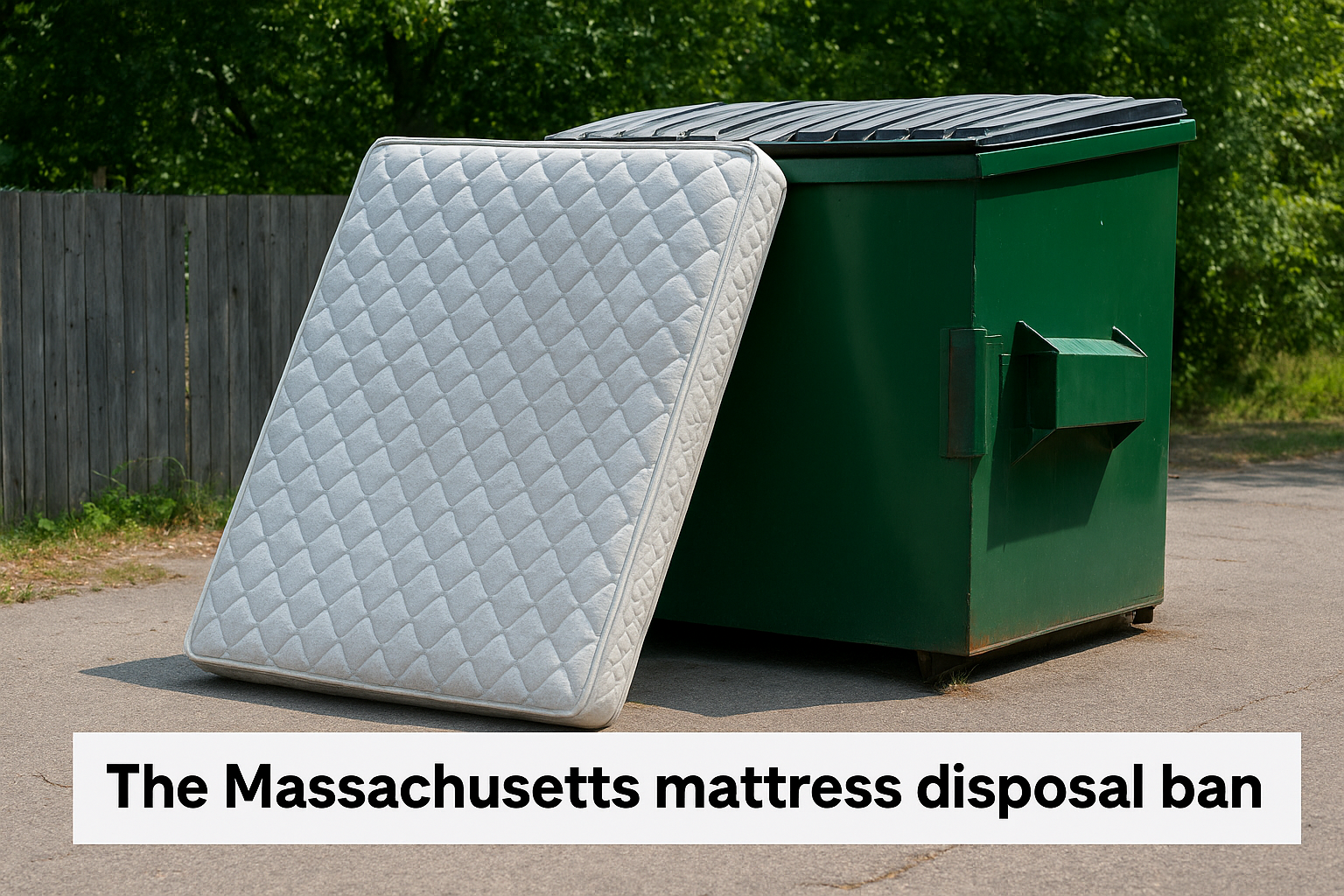
The ban has been in place long enough that local transfer stations, landfills, and disposal facilities across Cape Cod and Plymouth County have built firm policies around it. Staff at these facilities inspect incoming loads and are trained to identify banned items. Facilities that accept banned materials face regulatory penalties, which is why no reputable hauler will risk it, even if you ask nicely.
What the ban means for dumpster rentals
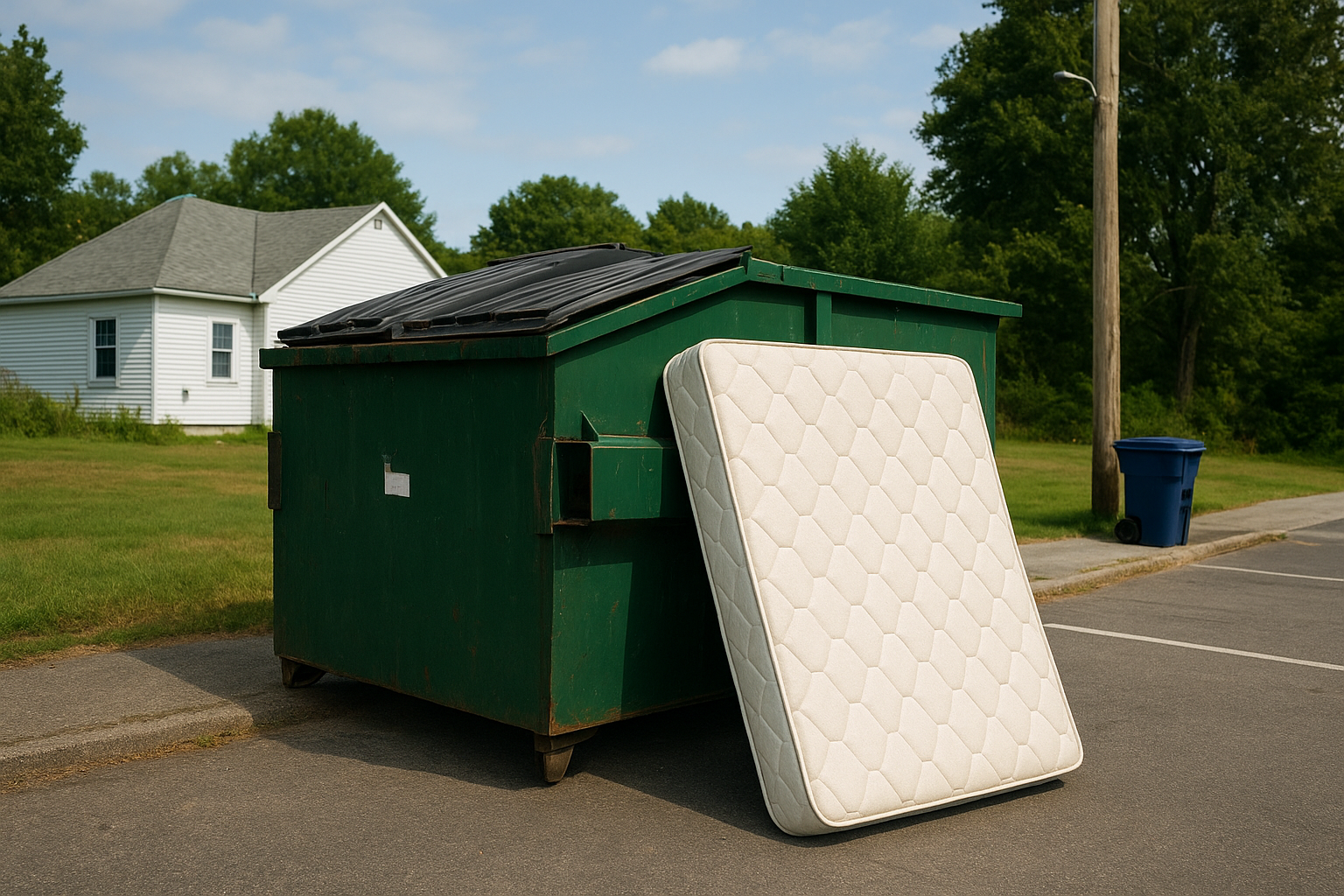
When a dumpster company hauls your container to a transfer station or disposal facility, the staff at that facility will inspect the load. If they find a mattress, they can reject the entire load outright or charge the hauler a banned item surcharge that gets passed directly to you. Some companies will catch the issue before hauling and refuse to move the container until the mattress is removed, which means your project timeline takes a hit.
This is why Dump Express communicates mattress restrictions upfront before a dumpster is ever delivered. A rejected load or a surprise surcharge creates problems for your project schedule and adds costs that nobody budgeted for. The simplest way to avoid that situation is knowing what belongs in the dumpster before it arrives at your property.
When a dumpster company will accept a mattress
There are a small number of circumstances where a dumpster rental company can legally accept a mattress. Some disposal facilities maintain separate processing agreements with certified mattress recyclers. A hauler contracted with one of those facilities may be able to take mattresses with an additional handling fee built into the order. This arrangement is not standard on Cape Cod, and most local haulers currently do not offer it.
Your best move is to call your rental company directly before you load a mattress into the container. Ask specifically whether mattresses are accepted and whether any extra charge applies. That conversation takes two minutes and protects you from a rejected load or an unexpected line item on your invoice. If the answer is no, Step 2 of this guide walks you through the disposal alternatives that actually work in this region, so you won’t be left stuck with a mattress and no plan.
Step 1. Check your town rules on Cape Cod and Plymouth
The state ban sets the baseline, but Cape Cod and Plymouth County towns each manage their own transfer stations and bulk waste programs, and the details vary more than most people expect. Before you ask can you put a mattress in a dumpster at your property, the smarter first move is confirming what your specific town offers for mattress disposal. Some towns provide low-cost drop-off options that make the whole problem disappear quickly without needing a dumpster at all.
How Cape Cod towns approach mattress disposal
Most towns in the region allow residents to drop off mattresses at the local transfer station or recycling center for a flat fee, typically between $10 and $25 per mattress. That fee covers routing the mattress to a certified recycling facility, which keeps everything compliant with the MassDEP ban. Some towns also run seasonal bulk waste pickup days where mattresses are accepted curbside, though those programs usually require advance registration and have limited dates each year.
Call your town’s Department of Public Works or transfer station before doing anything else. One phone call often reveals a straightforward, low-cost solution you didn’t know existed.
Common Cape Cod and Plymouth town disposal options
The towns below cover the most active service areas for Dump Express customers. Policies and fees change, so treat this as a starting point and verify current details directly with each town:
| Town | Transfer Station Drop-Off | Notes |
|---|---|---|
| Barnstable | Yes | Fee per mattress |
| Bourne | Yes | Resident sticker required |
| Falmouth | Yes | Seasonal bulk pickup available |
| Sandwich | Yes | Fee per mattress |
| Plymouth | Yes | Appointment may be required |
| Yarmouth | Yes | Check bulk pickup schedule |
| Dennis | Yes | Fee per mattress |
| Harwich | Yes | Resident sticker required |
What to ask when you call your town
When you reach your town office or transfer station, ask three direct questions: Does the transfer station currently accept mattresses from residents? What is the drop-off fee? Are there any upcoming bulk waste collection days? Write down the answers before you make any disposal decisions.
Those answers also help you have a more informed conversation with your dumpster rental company. Knowing your town’s options upfront means you’re not scrambling to remove a mattress from a loaded container the morning of pickup, which is a situation that delays your whole project and adds unnecessary stress.
Step 2. Choose the right disposal option for your mattress
Once you know what your town allows, you can match your situation to the best available disposal route. The right choice depends on your timeline, the condition of the mattress, and how many you need to remove. If you’re still asking can you put a mattress in a dumpster, the short answer remains no in most cases, but the alternatives below are practical, widely available across Cape Cod and Plymouth County, and several of them cost nothing at all.
Donation, resale, and retailer take-back
If your mattress is clean, stain-free, and structurally sound, you have real options before you pay anyone to haul it away. Many mattress retailers offer take-back or haul-away services when they deliver your replacement, so ask specifically at the point of purchase. If you’re not replacing the mattress, local thrift organizations sometimes accept them, and posting a free listing on Facebook Marketplace can move the item with zero effort on your end. Someone else handles the pickup, and the mattress stays out of the waste stream.
The delivery day for a new mattress is the simplest moment to solve the old mattress problem at the same time.
Here’s how these options compare so you can pick the right fit for your situation:
| Option | Typical Cost | Condition Required | Best For |
|---|---|---|---|
| Retailer take-back | Free or small fee | Good condition | Replacing a mattress |
| Donation (thrift store) | Free | Clean, no visible damage | Non-urgent removal |
| Free listing (Marketplace) | Free | Usable condition | Flexible timeline |
Junk removal and certified mattress recycling
Junk removal companies handle single-item pickups and route mattresses directly to certified recycling facilities, which keeps disposal fully compliant with MassDEP requirements. Expect to pay $75 to $150 per mattress on Cape Cod depending on the company and your location. This option works well when your town transfer station requires an appointment and your timeline is tight.
For certified recycling on your own, the Mattress Recycling Council’s Bye Bye Mattress program maintains a locator that helps you find the nearest drop-off facility. Many locations accept mattresses from residents at no charge and process the materials in full compliance with the state ban. If your mattress has any moisture, mold, or visible contamination, wrap it in plastic sheeting before transport to prevent rejection at the facility and protect your vehicle during the haul.
Step 3. If you use a dumpster, avoid fees and problems
A dumpster is often the right call for a larger cleanout or renovation project, but that doesn’t automatically mean your mattress belongs in it. Most Cape Cod dumpster rental customers run into problems not because they ignored the rules, but because they loaded a mattress without confirming first whether their specific rental company could accept it. You can avoid every common issue in this step with a short phone call and a clear checklist before loading day.
Confirm mattress acceptance before you load anything
Call your dumpster rental company before the container arrives, not after. Ask two specific questions: Does your current disposal facility accept mattresses? If so, what is the additional handling fee? Some companies work with facilities that have certified recycling agreements, and they can accommodate mattresses for a set charge. Most cannot. Getting a clear answer before delivery protects your project timeline and your budget.
Assuming a mattress is acceptable without asking directly is the single most common reason customers face a rejected load or surprise invoice.
Use this quick checklist when you call:
- Does your facility accept mattresses in a standard roll-off container?
- Is there an additional fee per mattress?
- Are there any condition restrictions (mold, bed bugs, moisture damage)?
- What happens if a banned item is found at the facility during unloading?
Know what surcharges look like and when they apply
Banned item surcharges on Cape Cod typically run between $50 and $100 per mattress, depending on the hauler and the facility. That fee applies when the disposal facility identifies a restricted item in your load and charges the hauler, who then passes the cost to you. Some rental companies will pull a mattress from the container before hauling if they spot it during pickup, but they charge a removal handling fee for that service. Either way, you pay more than if you had handled the mattress separately from the start.
Remove the mattress before the dumpster is picked up
If a mattress ends up in your container by mistake, remove it before pickup day. Set it aside and arrange a separate disposal route using one of the options in Step 2. Asking the driver to leave the container an extra day while you sort it out may be possible, but extended rental fees can add up fast. Acting before pickup is always cheaper and simpler than dealing with a rejection at the facility, and it keeps your project on schedule without the stress of last-minute problem-solving.
Step 4. Prep the mattress for safe, accepted disposal
Whether you’re dropping a mattress at your town transfer station or scheduling junk removal pickup, a little preparation before moving day prevents rejection at the facility and protects everyone handling the item. Most people skip this step and then wonder why a facility turned away their mattress or why a driver refused to load it. Proper prep takes about 15 minutes and keeps your disposal plan from falling apart at the final step.
Wrap and protect the mattress before moving it
Most certified recycling facilities and transfer stations require mattresses to arrive covered or wrapped if there’s any visible moisture, staining, or surface contamination. Even if your mattress looks clean, wrapping it prevents loose debris from falling off during transport and protects your vehicle or the hauler’s truck from any contact with surface materials. Stretch wrap or a plastic mattress bag works best and costs under $10 at most hardware stores. Mattress disposal bags are sold specifically for this purpose and are wide enough to cover a king-size mattress without cutting.
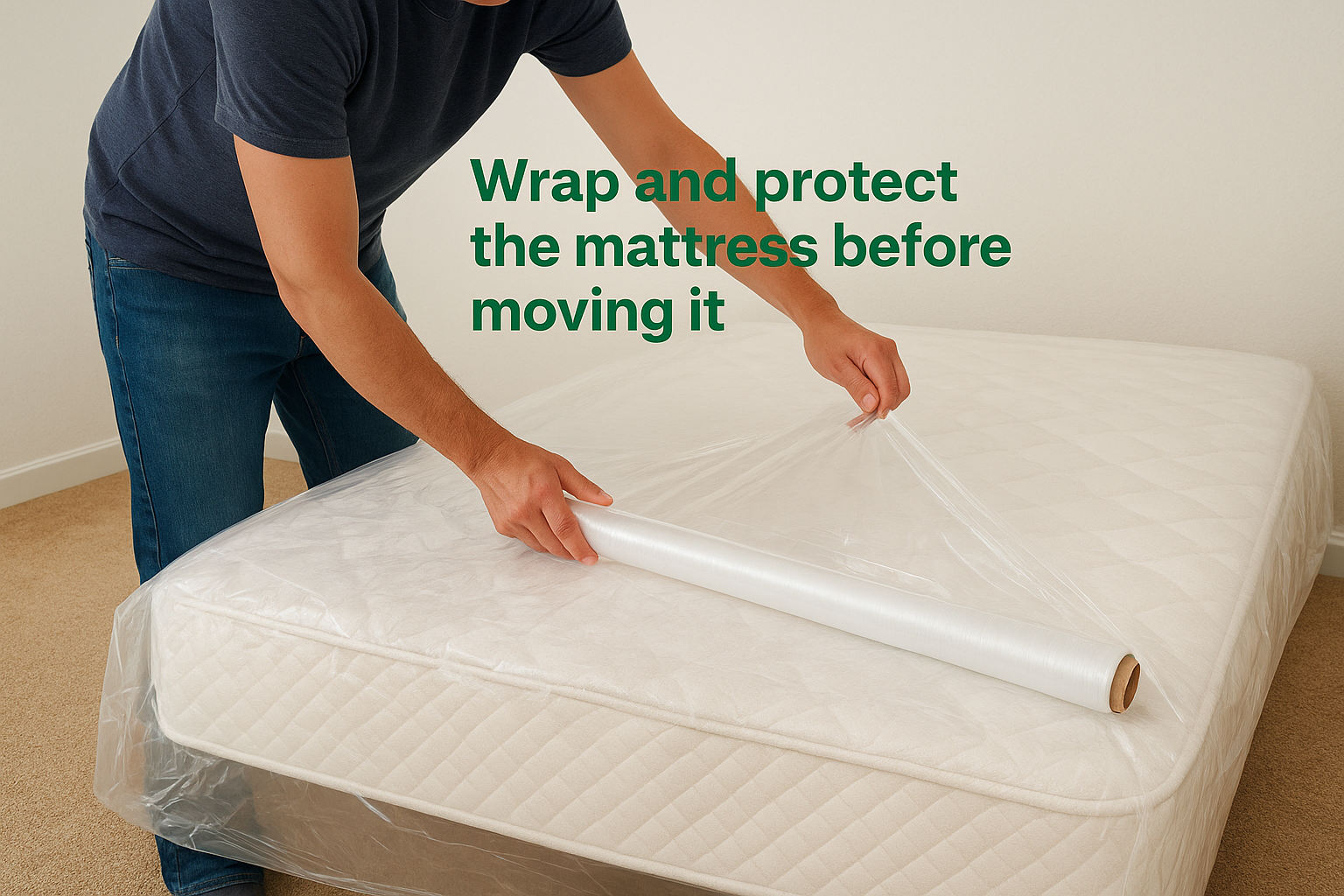
Wrapping also signals to facility staff that you handled the item responsibly, which reduces the chance of extra scrutiny or rejection at the drop-off point.
Start at one end and work the wrap around the full perimeter, overlapping each layer by a few inches. Seal both ends with heavy-duty packing tape so nothing shifts during loading and transport. If you spot any moisture inside the mattress during this step, stop and read Step 5 before continuing, since moisture signals mold and changes your disposal options significantly.
Remove personal items and check both sides
Before wrapping, flip the mattress over and check both sides thoroughly for anything tucked into the fabric or attached to the surface. Remove any bed frame hardware, mattress toppers, or attached straps. Recycling facilities process mattresses as a single item and won’t separate attachments on-site, so items left attached can cause the entire mattress to be rejected rather than processed. This applies whether you’re using a dumpster company that can answer yes when you ask can you put a mattress in a dumpster, or dropping the item off yourself.
Run through this short checklist before loading day:
- Both sides inspected and cleared of attached items
- Mattress topper removed and disposed of separately
- Plastic wrap or bag secured with packing tape on both ends
- No visible moisture or liquid present before wrapping
- Mattress positioned flat or upright based on your transport method
Step 5. Handle special cases like bed bugs and mold
Contaminated mattresses require a different approach than standard disposal. If you’re dealing with bed bugs, mold, or moisture damage, the answer to can you put a mattress in a dumpster changes immediately, and so does your entire handling process. Most facilities and junk removal crews will refuse a visibly infested or contaminated mattress on contact, so knowing the right protocol before you move the item protects you, your household, and anyone else who handles it downstream.
Disposing of a mattress with bed bugs
A bed bug-infested mattress cannot go to a standard transfer station, donation center, or recycling facility. Transporting an infested mattress through your home or vehicle spreads the infestation, which creates a much larger problem than the mattress itself. The first step is to seal the mattress completely in a thick plastic mattress encasement bag before moving it even one foot. These bags are available at hardware stores and are specifically designed to prevent escape during transport.
Label the outside of the bag clearly with a permanent marker so no one handles the item unknowingly during pickup or disposal.
Once sealed, contact your town’s public health department or Department of Public Works to ask about infested item disposal. Many Cape Cod towns have specific protocols for bed bug-contaminated materials that go beyond the standard transfer station drop-off process. Some towns require that the item be scheduled for a specific collection date rather than dropped off during regular hours. Check before you move the mattress outside.
Disposing of a mattress with mold or moisture damage
A mattress with visible mold growth or significant moisture damage is rejected at most certified recycling facilities because the contamination interferes with material processing. Your primary disposal route in this case is direct contact with your town’s bulky waste or hazardous material disposal program, which can direct you to an approved facility that accepts contaminated items.
Before moving a moldy mattress, wear an N95 respirator and disposable gloves to limit exposure to mold spores. Wrap the mattress tightly in heavy-duty plastic sheeting and seal every seam with packing tape. Do not attempt to dry the mattress and reuse it. Use this checklist before transport:
- N95 respirator and gloves worn during handling
- Full plastic wrap sealed with packing tape on all edges
- Town disposal contact confirmed before moving the item
- Mattress transported flat to prevent liquid from shifting inside
Next steps
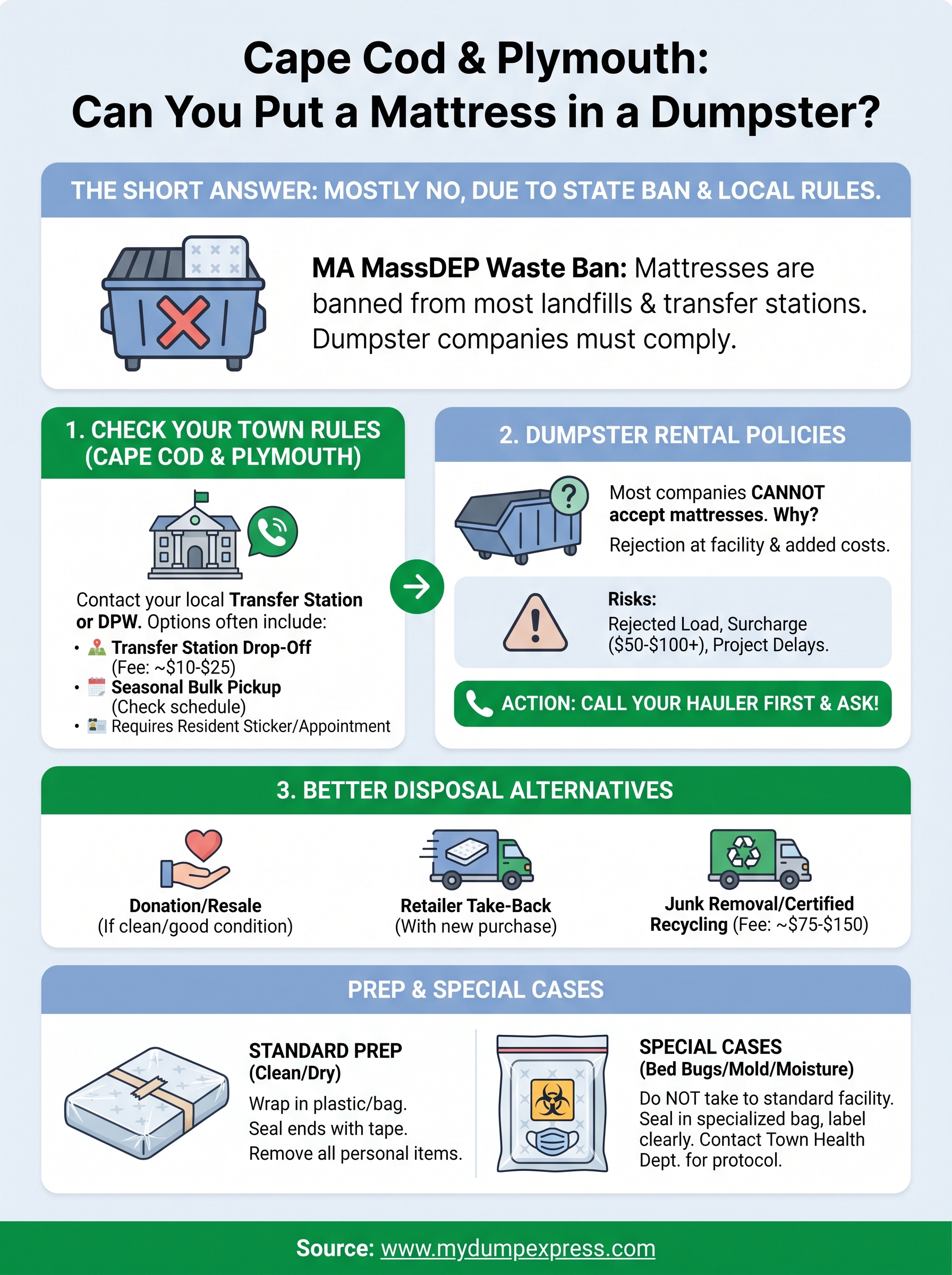
Now you have a clear picture of how mattress disposal works on Cape Cod, what your town likely offers, and why the answer to can you put a mattress in a dumpster is almost always no under the Massachusetts ban. The fastest next step is to call your town transfer station, confirm the drop-off fee, and schedule the mattress separately from your main cleanout project.
If you’re managing a larger cleanout, renovation, or construction project alongside the mattress removal, a roll-off dumpster handles everything else efficiently. Dump Express delivers 5-yard, 10-yard, 15-yard, and 20-yard containers across 40+ towns in Cape Cod and Plymouth County, with upfront pricing and no hidden fees. Our team can tell you exactly what your rental covers and what requires separate handling before your container arrives.
Book your dumpster rental with Dump Express and get your project moving without surprises.